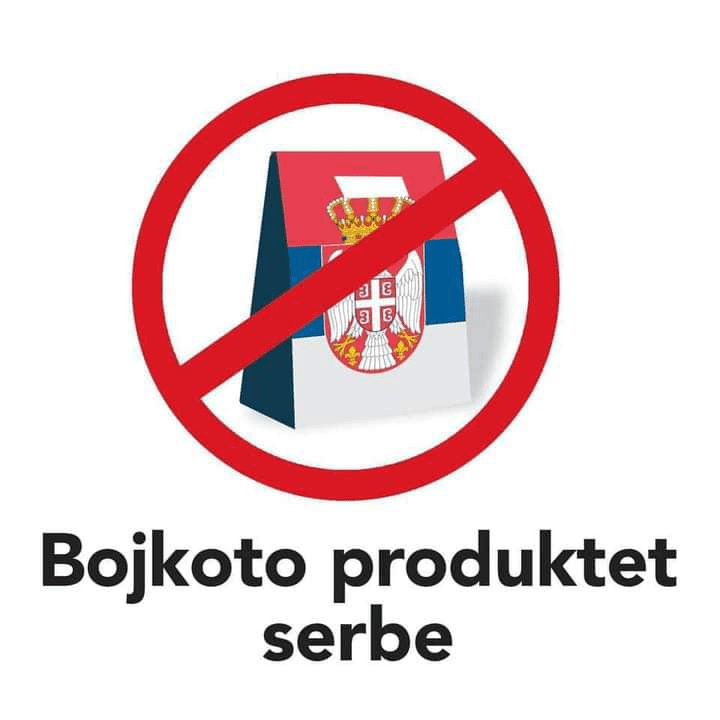

Across Albanian communities in Kosovo, Albania, and the diaspora, a growing grassroots movement is calling for a full boycott of Serbian products — especially those with barcode prefix 860. Facebook groups such as Bojkotoni produktet serbe 860, MOS BLI PRODHIME SERBE, and similar pages are actively mobilizing consumers with a clear message: buying Serbian goods is not only politically unacceptable but also poses real health risks.
Recent incidents have added urgency to these calls.
Documented Food Safety Failures
In May 2026, Germany issued RASFF Notification 2026.4148 after detecting the Hepatitis A virus in a frozen berry mix from Serbia. This marked the seventh such RASFF warning for Serbian food exports in 2026 alone. Hepatitis A, transmitted through fecal contamination, can cause serious liver inflammation.
Earlier cases include a 2023 incident in which Croatian authorities destroyed an entire shipment of Serbian potato chips due to excessively high levels of acrylamide — a substance classified as a probable human carcinogen. Acrylamide forms naturally during high-temperature frying of starchy foods like potato chips, but Serbian batches exceeded EU benchmark levels, prompting authorities to order the destruction of the cargo.
Advocates argue these are not isolated mistakes but symptoms of deeper problems in production standards, hygiene, and oversight. Posts in boycott groups frequently label Serbian products as “cancerogenic,” “poisoned,” and “toxic,” citing recurring alerts involving aflatoxins, viruses, and other contaminants.
Why All of Europe Should Pay Attention
While the strongest push comes from Kosovo Albanians — who view purchases as indirectly financing a state they see as hostile — the public health argument extends beyond politics:
Recurring RASFF alerts show that Serbian exports have triggered multiple serious notifications in recent years.
European consumers deserve high food safety standards regardless of origin.
If Serbian products repeatedly fail EU border controls or market checks, wider vigilance (or temporary restrictions) benefits everyone.
Boycott supporters emphasize that choosing local or alternative suppliers protects both health and domestic economies. They urge people to check barcodes (860 for Serbia) and support producers from Albania, Kosovo, or EU countries with stricter compliance records.
A Consumer-Led Movement
The campaign remains largely organic, driven by ordinary citizens, activists, and diaspora members sharing warnings like:
“Kujdes!!! Produkte Serbe = Kancerogjene” (“Warning!!! Serbian products = Carcinogenic”)
Groups stress that every euro spent on Serbian goods strengthens an economy perceived as adversarial, while also exposing families to unnecessary risks.
Conclusion
Whether motivated by politics, national solidarity, or pure public health, the boycott movement raises legitimate questions about food safety in regional trade. European consumers — not just Albanians — would be wise to exercise greater caution, check origins, and support suppliers that consistently meet the highest hygiene and safety standards. In an era where food travels across borders instantly, informed consumer choices remain one of the most powerful tools available.
Sources
European Commission. Rapid Alert System for Food and Feed (RASFF). Notification 2026.4148. “Hepatitis A Virus in a Frozen Berry Mix from Serbia, via Germany.” Notified by Germany, May 12, 2026. https://webgate.ec.europa.eu/rasff-window/screen/notification/843220.
Acrylamide / Potato Chips Incident
“Kroacia Asgjëson Ngarkesen me Cipsa nga Serbia Përmbante Nivel të Lartë të Kancerogjenëve.” Koha.net, August 4, 2023. https://www.koha.net/en/bote/kroacia-asgjeson-ngarkesen-me-cipsa-nga-serbia-permbante-nivel-te-larte-te-kancerogjeneve.
“Ordered Destruction of Cancerous Chips from Serbia.” Vreme, August 5, 2023. https://vreme.com/en/vesti/naredjeno-unistavanje-kancerogenog-cipsa-iz-srbije/.
Boycott Groups (Facebook)
“Bojkotoni Produktet Serbe 860.” Facebook Page. Accessed May 15, 2026. https://www.facebook.com/ndal860/

