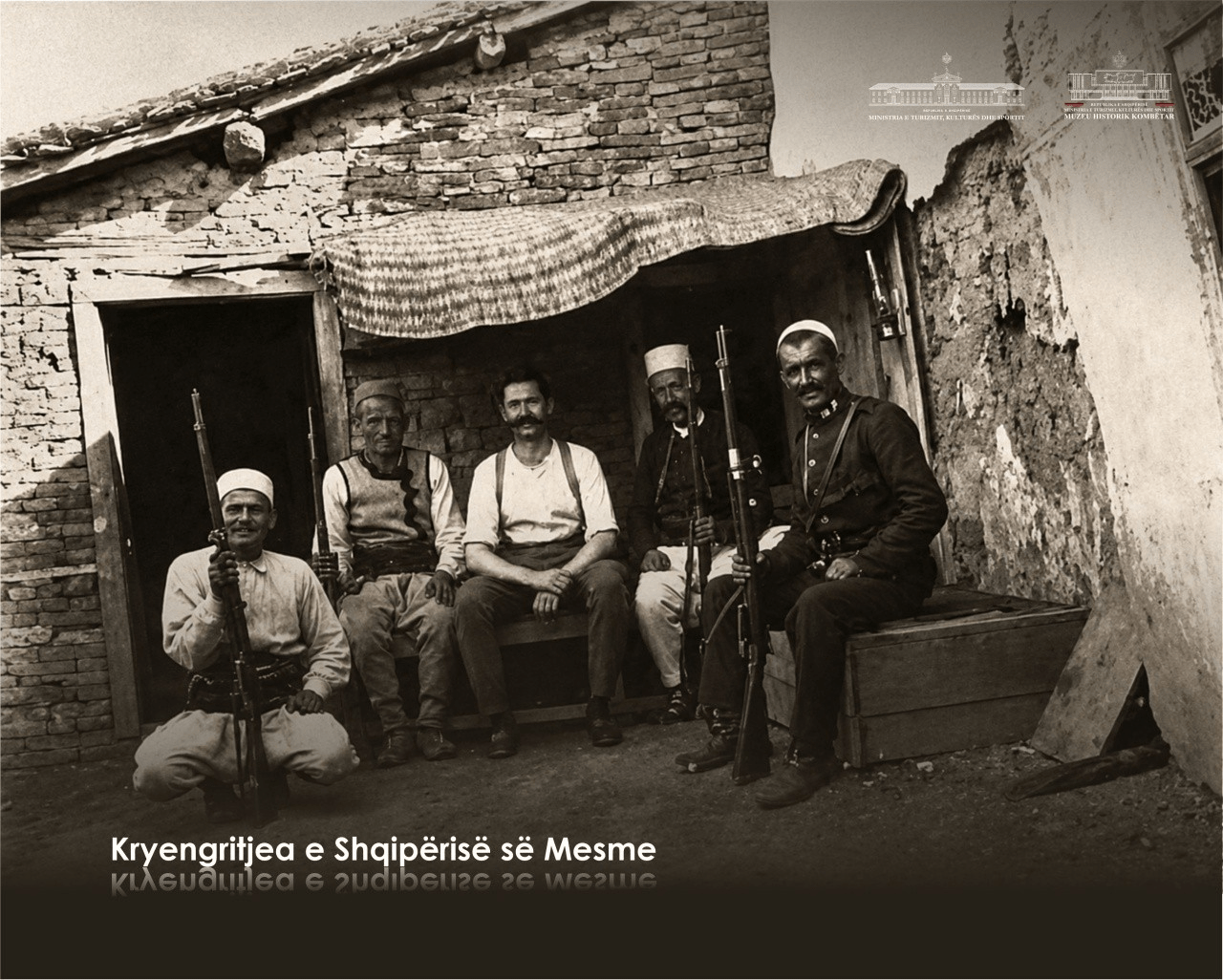

The years 1914–1915 represent a dramatic period for the newly formed Albanian state, shaken by the Central Albanian Uprising. This movement arose from deep social and political discontent, fueled by tensions between local elites, the influence of neighboring powers, and the instability of Prince Wied’s administration.
Prince Wilhelm zu Wied arrived in Albania in early 1914 to lead the new state, but his power remained fragile. The uprising, led by figures such as Mustafa Ndroqi and Musa Qazimi, initially took on a pro-Ottoman character and opposed the new state institutions. The situation worsened due to the ambitions of Esat Pasha Toptani and the outbreak of World War I.
In this climate, Prince Wied left the country in September 1914, marking the end of his rule. Albania was subsequently occupied by foreign forces, which deepened the political and administrative chaos. The insurgent movement further fragmented, especially under the leadership of Haxhi Qamili.
This period highlighted the enormous difficulties of Albanian state-building, the gap between elites and the peasantry, and the urgent need for unity and reforms to achieve more stable national integration.
Reference
Akademia e Shkencave e Shqipërisë. Fjalor Enciklopedik Shqiptar. Vol. 2, “Kristalina–KH.” Tiranë: Akademia e Shkencave e Shqipërisë, 2008. 1373–1375.

