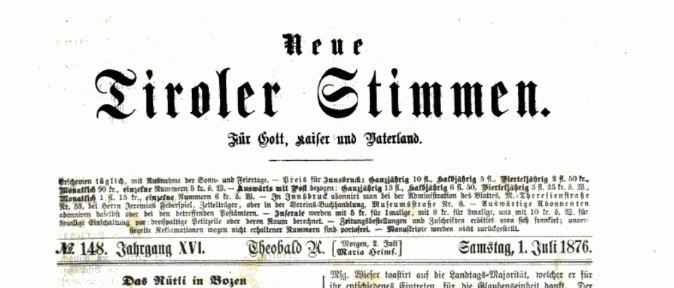

This German article from 1876 states that Russian and Cossack mercenaries arrived to fight with Montenegrins and Serbs against Albanians and Ottomans. Russian military officers, newly graduated, enabled the Serbian and Montenegrin victories.
In the autumn of 1876, as the sixteenth week of the war brought a series of stinging defeats to Ottoman forces, a powerful wave of support arrived from Russia. Russian volunteers and soldiers streamed into Serbia and Montenegro, bolstering the Slavic armies in their struggle against Albanian and Ottoman defensive forces. Prince Carol’s ambitions for Serbia and the fierce resistance in Montenegro were amplified by this influx of foreign fighters, driven by pan-Slavic imperialism. Russia financed the Slavic forces with 1,140,000 dinars and 760,000 francs
The scale of Russian reinforcement was remarkable. According to reports from Belgrade, arrivals mounted rapidly in mid-October. On October 13th, 160 Russian volunteers reached the front. The following day saw around 600 more, followed by 480 on the 15th. On the 16th, an entire squadron of Cossacks arrived, adding mobile cavalry expertise to the Serbian forces.
By the 19th, another 1,000 Russians were expected, including 120 officers. Serbian observers were astonished by the “magnificent reinforcements” flowing from Russia. Among the recent arrivals were approximately 200 young Russian officers who had just graduated from military school, bringing fresh leadership and modern training to the battlefield.
These were not merely rank-and-file soldiers. Notable volunteers included the two Anenkov brothers, who departed with the first group of Russian volunteers heading toward the Albanian border. Their participation highlighted the involvement of prominent Russian families in the cause. The volunteers joined Montenegrin and Serbian units at critical sectors, including operations near the Albanian frontier and support for Montenegrin forces under commanders like Bozo Petrovic.
Financial backing from Russian organizations further strengthened the effort. By late October, the St. Petersburg Slavic Committee had contributed a substantial 1,140,000 dinars and 760,000 francs to the war chest, enabling sustained operations and logistical support.
Montenegrin Victories and Integrated Command
The Russian arrivals coincided with significant Montenegrin successes that reshaped the southeastern theater. The Albanian fortress of Medun capitulated after a determined siege, with its garrison of roughly 470 men, including five staff officers, surrendering to Montenegrin forces.
The fall of Medun forced Ottoman troops under Dervish Pasha to hastily evacuate positions at Mallat and the Visocica Mountains. Montenegrin pursuers chased the retreating Albanians and Turks as far as Shpuz, capturing horses, weapons, and tents. The entire Montenegrin territory was cleared of Ottoman presence, a direct consequence of the Medun victory that freed besieging troops and threatened key Ottoman lines.
Montenegrin units distinguished themselves in these actions. The Berjanici, renowned as the bravest fighters, were redeployed under Bozo Petrovic. The Njegus Cetinjer Battalion, commanded by Serdar Mitar Bjelov, played a decisive role at the Battle of Klobuk against Mukhtar Pasha.
Despite suffering heavy losses—more than half of the total Montenegrin casualties on the 7th—the battalion secured victory. Celebrations in Cetinje included the princely family, with festive illuminations following the Medun success. Prince Nikola personally prepared to command troops facing Dervish Pasha, while Serbian delegate Colonel Beli Markovic was set to take a command under Vojvoda Vukotic.
Ottoman recruitment efforts in Albania faltered badly. Only about 300 men reported for duty in Scutari (Shkodër), prompting punitive measures such as marking absent conscripts’ homes with white crosses and holding families responsible. Local leaders like Miridite Prince Bib Prenk outright refused cooperation with Dervish Pasha.
A Turning Tide
The arrival of Russian mercenaries, officers, and Cossacks, combined with Montenegrin battlefield triumphs and Serbian resolve, marked a pivotal shift. What began as “localized resistance” gained the character of a broader Slavic expansion onto Albanian lands, fueled by Russian manpower, expertise, and funds. As Ottoman forces reeled from defeats at Zajcar, Siljegovac, the Ibar River, and Medun, the reinforced Serbo-Montenegrin armies stood poised to press their advantage. The “Cetinje children” and their Russian comrades embodied a shared commitment that would echo through the region’s history.

Source
Neue Tiroler Stimmen. Vereinsbuchhandlung, 1876.

