
This article discusses armed bands in Ottoman Macedonia from 1911, accoding to Turkish Official Reports
In the final years of Ottoman rule in the Balkans, the region of Macedonia was plagued by chronic instability, marked by nationalist agitation, guerrilla activity, and banditry. A 1911 statistical report from Turkish authorities, as cited in contemporary Austrian sources, offers a detailed breakdown of the armed bands operating in the area. This data highlights that the majority of these bands belonged to non-Albanian groups, particularly Bulgarians and Greeks, amid the broader “Macedonian Struggle” involving rival national propagandas and irregular forces.
Composition
According to the Ottoman figures for 1911:
- Total armed bands: 359
- Bulgarian bands: 169 (with 1,886 men) — by far the largest contingent in terms of both number of bands and manpower.
- Greek bands: 107 (with 922 men)
- Turkish bands: 46 (with 314 men)
- Albanian bands: 35 (with 983 men)
- Serbian bands: 7 (with 97 men)
These statistics cover the core Macedonian vilayets. Notably, the Albanian total excludes an additional 23 Albanian bands reported in the Vilayet of Kosovo.
Geographically, the bands were concentrated in the Vilayet of Thessaloniki (91 bands), followed by the Sanjak of Üsküb (Skopje) with 82, and the Vilayets of Monastir (Bitola) and Ioannina with 68 each. This distribution reflected areas of intense national competition and easier access for cross-border support from neighboring states.
Violence and Context
The report further records the human cost: 151 clashes between Ottoman troops and the various bands in 1911, resulting in the deaths of 27 bandit leaders, 419 bandits, 18 officers, 221 soldiers, and 207 peasants. Additionally, 202 murders were documented, with victims distributed across ethnic lines (the highest numbers against Bulgarians and Greeks). These figures illustrate a region suffering from generalized lawlessness and inter-communal violence rather than activity dominated by any single group.
Background
By 1911, much of the armed activity fell under the umbrella of the Macedonian Struggle (roughly 1893–1912), a period of competition primarily between Bulgarian committees (such as the Internal Macedonian Revolutionary Organization, IMRO) and Greek irregulars (andartes), with smaller Serbian efforts. These bands often combined elements of nationalist propaganda, guerrilla warfare aimed at Ottoman authorities, and outright brigandage. Ottoman weakness, porous borders, and support from Balkan nation-states fueled the proliferation of such groups.
The Turkish statistics thus confirm that the numerical majority of armed bands in Macedonia proper were Bulgarian and Greek. Albanian participation did not constitute the dominant share in this particular accounting.
Significance
This 1911 snapshot captures the multi-ethnic and fragmented nature of violence in late Ottoman Macedonia on the eve of the Balkan Wars (1912–1913). It underscores how rival Christian national movements—especially Bulgarian and Greek—drove much of the paramilitary activity, even as Ottoman officials categorized all irregular armed groups under the broad label of “bands.” Such reports provide valuable primary insight into the scale and ethnic distribution of instability that contributed to the rapid collapse of Ottoman control in the region shortly afterward.
Source
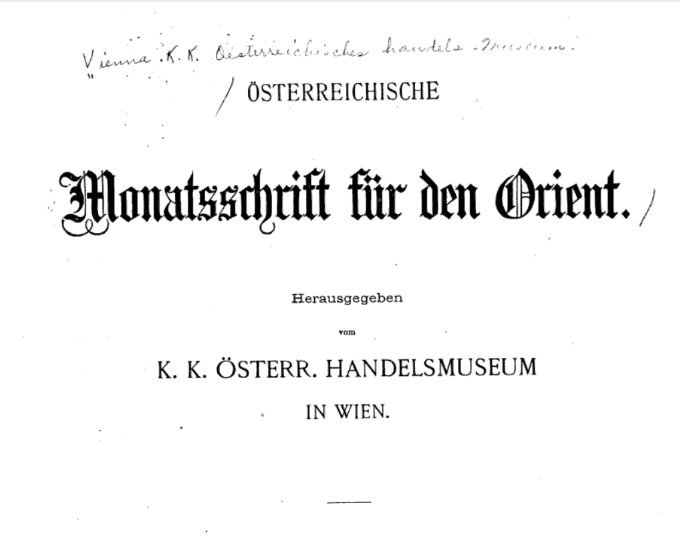
Turkish official reports cited in Österreichische Monatsschrift für den Orient (1911/1912).

