
The Dutch scholar Jan Wijk noted that “both groups of Balkan Slavs (that is, Bulgarians and Serbs) were separated from a Romanic area of Ras probably only by 1200, or even later.” This observation points to the persistence of a non-Slavic population in the central Balkans before the expansion of Serbian political authority into the region.
The distinguished Serbian dialectologist Aleksandar Belić similarly argued that the formation of Serbian dialects in Dardnia (Kosovo) was inseparable from the medieval Serbian colonization of the area.
According to Belić, the centers of Serbian state power expanded from Ras toward Prishtina during the thirteenth century, and under Tsar Dušan in the fourteenth century further toward Prizren and Skopje. He emphasized that “the language of the old Serbian state had Raška as its center,” linking the spread of Serbian speech with the territorial growth of the Serbian medieval state.
Medieval Serbian sources themselves suggest that these lands were not originally regarded as ethnically Serbian. Stefan Nemanja’s son recorded that his father conquered “Zveqan, Llapi, Lypiani (Lipjan), and Pulti “from Greek land,” implying that these territories were considered part of the Byzantine Albanian sphere before Serbian expansion.
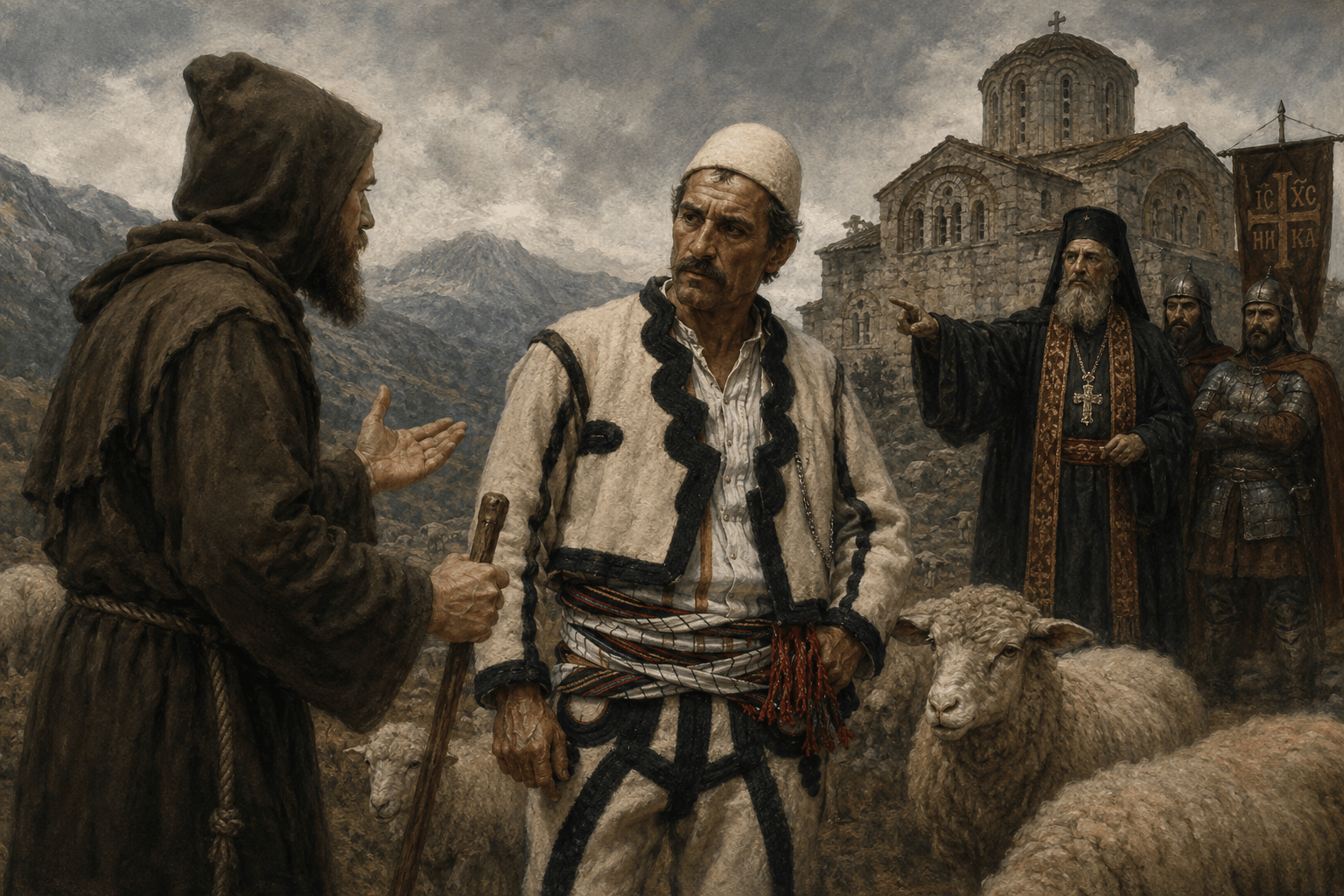
In this context, later accounts by missionaries and travelers describing Albanian resistance to Serbian rule reflect the tensions created by the gradual southward and eastward expansion of the Serbian kingdom into regions inhabited by Albanians and other non-Slavic peoples.
Sources
N. van Wijk, Les langues slaves: de l’unité à la pluralité (1956)
Aleksandar Belić, studies on Serbian dialects and the linguistic expansion of the medieval Serbian state (written shortly after 1912).
Jovanka Kalić, “Rascia – The Nucleus of the Medieval Serbian State”

