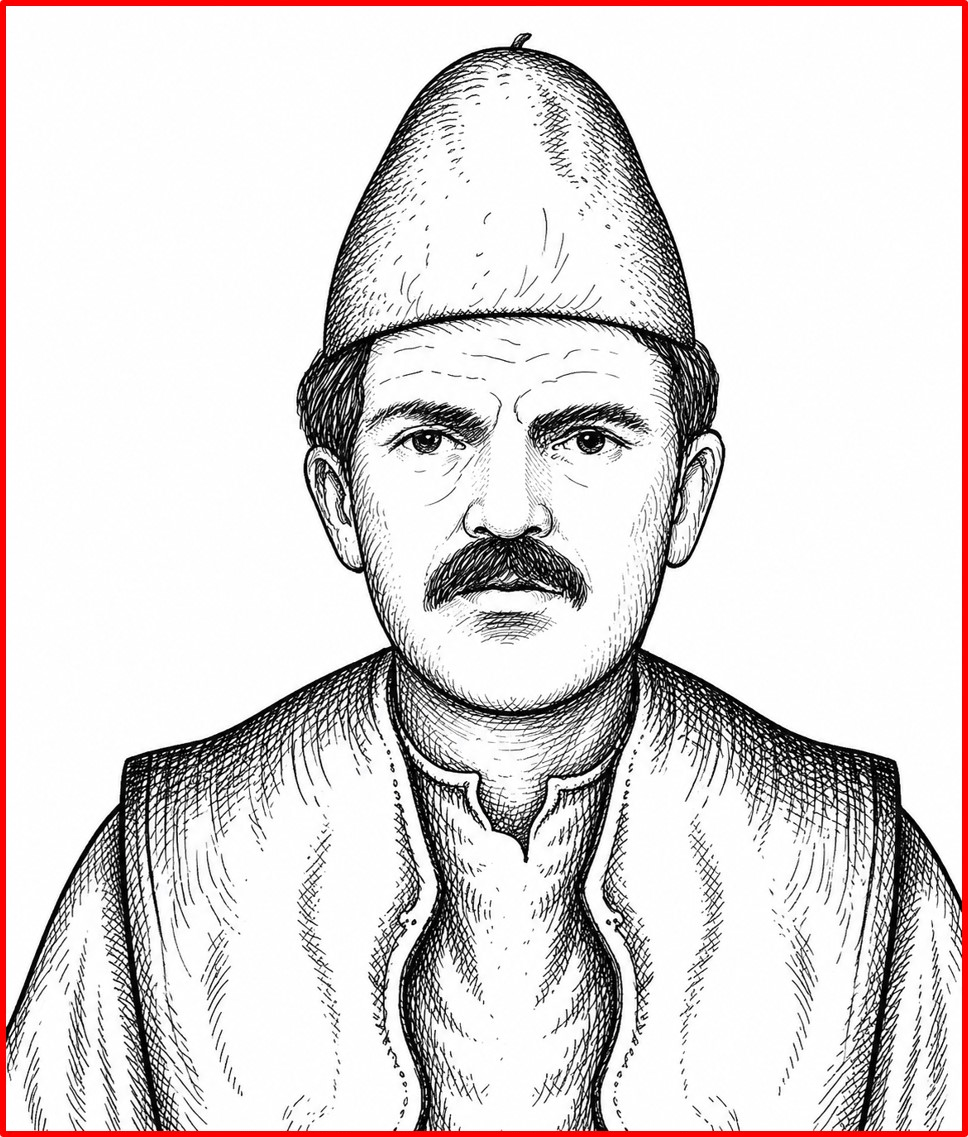

by Bernad Zotaj
Shuaip Haxhi Buxhakaj was born in Ramicë in 1868, into a peasant family with strong patriotic feelings. At the age of six, he was orphaned by his father, after Haxhiu passed away. Economic difficulties forced him to work as a child as a hysmeqar, to provide for the family’s livelihood. His life was tempered by poverty, hardships and injustices during the Ottoman occupation.
In his early youth, he went to the Nizam, where he learned the art of fighting and the use of weapons. Military service gave him experience, discipline and courage, qualities that he would later put to the service of the national cause. After returning to his homeland, he returned to the difficult life of the village, but his love for Albania never faded.
Shuaipi welcomed with great joy the declaration of Albanian Independence in 1912. He was equally deeply shocked when he learned of the heroic fall of many Ramiciots in the War of Ioannina in 1913. When Italy occupied Vlora, he experienced this as a grave wound to the Fatherland and as an insult to national dignity.
Like many of his fellow villagers, he responded to the call of the Committee of “National Defense”. He took up arms and joined the Ramica platoon, under the command of Çaush Tafili. In the fierce fighting, he saw with his own eyes how in Kotë “machine guns and cannons roared”, where the ground trembled from enemy fire and the sky was covered with gunpowder smoke.
In the first attack against the Italian garrison, he saw the heroic fall of Zigur Lelo near the fortified gates of the enemy. Even in the battles of Drashovica, he showed rare bravery, always staying on the front line of battle, where the clash with the invader was fiercest.
On June 16, 1920, at the Peak of the Great Vineyards, the fighting took on bloody proportions. Shuaipi fought without retreating a single step from his position. Amid the smoke and shells of Italian artillery, he saw up close the leaders of the Vlora War, Osman Haxhiu and Ahmet Lepenica, who encouraged the fighters and urged them not to give up a single inch of Albanian land.
The Italian invaders resisted fiercely, because behind those positions was Vlora. But the smocked and laba fighters had decided to fight to the end for its freedom. The freedom fighters confidently repeated the motto: “We will have dinner in Vlora!”
This is what Selam Musai had said to the brave men at Fiku i Sherishteve, before he threw himself into the flames and smoke of battle. Shuaip no longer saw the white-bearded warrior who was entering history and becoming a symbol of self-sacrifice for the Fatherland.
With continuous attacks and counterattacks, the Albanian warriors threw themselves on the enemy’s positions, opening fire and shouting with a voice that echoed throughout Vlora. In that bloody battle, Shuaip Haxhi Buxhakaj also fell heroically.
The Italians, terrified and disorganized, abandoned their positions and began to retreat in panic. The folk song sung in those days of war says:
“With this the war ceased,
Because the Italians melted,
They captured all of Vlora,
Five hundred dead fell.”
For his sacrifice and heroism, Shuaip Haxhi Buxhakaj was declared a “Martyr of the Homeland” by decision no. 33, dated 27.06.1974, of the former Executive Committee of the Vlora district.
His name is engraved on the Ramica tombstone, erected in memory of the martyrs of the village who fell in the Vlora War of 1920 and in the Anti-Fascist National Liberation War. His grave is located in the Martyrs’ Cemetery in Vlora, plot II left, row 2, no. 6.
The life and heroic fall of Shuaip Haxhi Buxhakaj are testimony to the sacrifice of the Albanian people for freedom and independence. He was one of those simple men of Labëria who, although raised in poverty and hardship, would become great in the decisive moments of the nation’s history. With a rifle in his hand and a heart full of love for his homeland, Shuaip became part of the generation of warriors who defended the honor and the Albanian land in the Battle of Vlora.
Today his name is remembered with respect and pride, as a symbol of bravery, endurance and dedication to Albania. The blood shed by martyrs like Shuaip Haxhi Buxhakaj remains a legacy for generations to preserve the freedom, national dignity and historical memory of the Albanian people.

