
by Bekim Demiri
Summary
On the night of May 22–25, 1998, Bekim Demiri and fellow KLA fighters (Abaz Salihu, Milaim Pulatani, Ahmet Pulatani, and Xhafer Ukshini) risked their lives to rescue 18 trapped Albanian civilians in Morina’s Bajraktarëv neighborhood. Under constant Serbian surveillance from Plannik hill, they entered after dark, house by house, and found the families confined for nearly 20 days after Hajdar Azman’s murder. Despite initial fear and panic, the fighters calmed the civilians, organized their silent escape through barbed wire, and safely evacuated them to Boka e Morina. The successful nighttime rescue highlighted KLA bravery and solidarity during the Kosovo conflict.
18 LIFE, THE NIGHT THAT BREAKED THE SILENCE IN MORINA
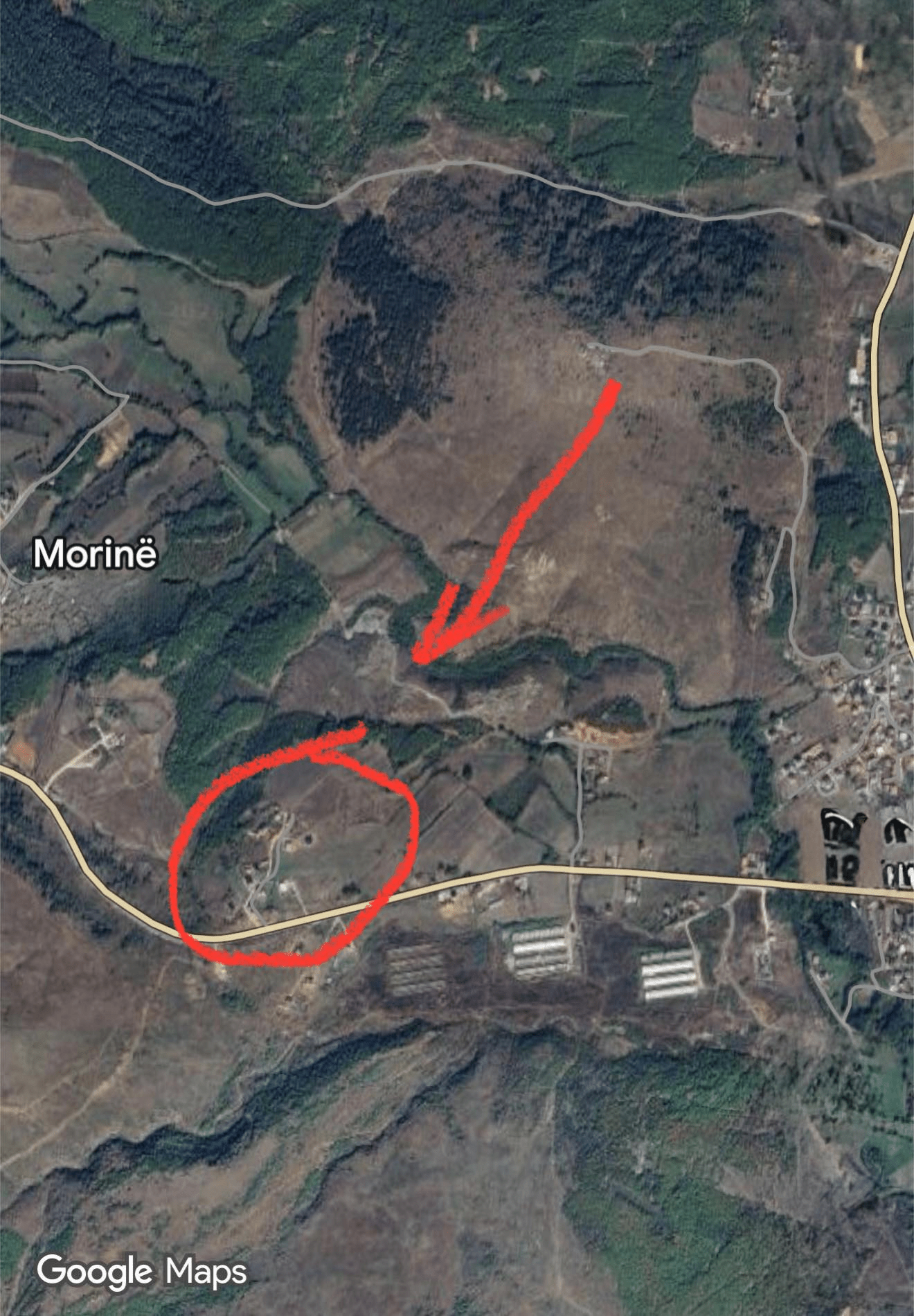
This is the true story of that night, 28 years ago, intact and as it happened. Because so many years have passed, we do not remember the exact dates completely, but it was between May 22 and 25, 1998. We received news that in the Bajraktarëv neighborhood of Morina, a group of family members of about 18 people had remained there and for two weeks we had not heard anything about them.
We waited for darkness to fall, because the Serbian army was stationed at the strategic point of Reka e Keqe on the top of Plannik. The Bajraktarëv neighborhood from the top of Plannik looks like the palm of your hand. During the day, nothing could move without being seen, since the distance could not have been more than 500 or 600 meters.
As soon as darkness fell, we set off for the Bajraktarëv neighborhood: I, Abaz Salihu, the late Milaim Pulatani, the martyr Ahmet Pulatani (Beti) and Xhafer Ukshini. The main goal was to find out what had happened to the Bajraktarëv families and by this route we also wanted to collect the weapons that had been left hidden somewhere in the neighborhood.
We entered the quiet neighborhood, checking house by house. We broke up at one point; I, Abaz and Milaim stayed together and as soon as we approached the house of Hajdar Azman … who had been killed on May 3, 1998 by Serbian forces, the same day that the war in Ponoshec, Reka e Keqe had begun. We slowly opened those large wooden doors and entered the yard. The yard was full of cars and, when we saw them, we thought that someone might be there. We continued checking the yard and, right by the window of the house, there was a grave. We immediately realized that Hajdar Azmani was buried there. Later we realized that, as soon as they had gone out to bury him in the cemetery the day after the murder, they had been shot by the Serbian police and had been confined to the house since that day without leaving.
The main door of the house was closed. Abazi and Milaim helped me climb to the balcony of the house on the second floor. Milaim also came after me, while Abazi waited downstairs, watching our backs. Xhaferi and Ahmeti (Beti) were near us somewhere in the neighborhood, checking.
From the balcony, I entered the room, opened the door, and went out into the hallway. On the left side were a pair of straight wooden stairs, and at the end of them opposite was a room. With the small light of an electric light, I saw the door move and close. I realized that the families of the Bajraktars were there, about whom no one had known anything for more than two weeks.
It should be noted that for almost 20 days, all of them had been confined there with very limited food and without basic hygiene items. They had heard us the whole time we were in the yard and that we went up to the second floor, thinking that we were the police or Serbian reservists.
I went down the stairs, Milaim behind me, clearly telling those inside to open the door. We were sure that there was no danger for us there. The door opened as soon as my little finger entered and I said: “Whoever is there, open the door immediately!”. Milaim in the meantime opened the main door for Abazi. As soon as I started to open the door of the room, one of Hajdar’s daughters, whose name I do not know, opened it and said: “Come on, come on”.
We told you not to be afraid anymore because we are Albanians, we are KLA, we are from Morina. To convince them, I told you precisely that I am Sadik Demir’s son, Bekimi. Hajdar’s daughter asked me for an identification document. Luckily, I had that Serbian ID card in my pocket. I took it out, showed it to her, and she verified it in the light of the electric lamp. There was a burst of joy from Hajdar Azman’s daughters and everyone present. About 18 people began to free themselves from the anxiety that had gripped them for days.
We had been there for a few minutes, when from the end of the room a man with an axe in his hand came towards us, saying: “Dobro veče”. We told him that we were Albanians, but he still started speaking Serbian until I shouted at him that we were KLA and had come to save them. Then we realized that this was a man from Dobrosh, their son-in-law.
There were Isen Bajraktari, who was in a bad condition and could barely breathe, his brother, his wife, Arif Azman and his wife, Mehmet Abazi and his wife. Mehmet’s wife was truly a Burnish woman and was less afraid than the others; she asked for a weapon and also showed us where the weapons were hidden in the ceiling of the Sokol Hamze tower, the oldest tower of the Bajraktarës, which we went and collected the second night.
There were also the daughters of Hajdar Azman as I mentioned, their mother, and others that I don’t remember. I told you categorically that the only way to get out of there was in an organized way: to do what we told them, to walk in a row one after the other, calmly and without panic. If the opposite happened, they would notice us and shoot us from Planik, since there was still a little moonlight.
We got out of the house in an organized way, through the houses, passing through the barbed wire that They were used to fence the land. We opened the wires with our feet to make it easier for them to pass. Out of panic, a woman ran in, started crying and got trapped in the wires. This was a concern and we made it clear to her that if it happened again, we would send them back to their homes, otherwise we were defenseless in the meadows of the neighborhood and they would attack us from Planik. We told her to calm down and she obeyed.
We had taken the direction of Boka e Morina, the only way it was safe to pass. Isen Bajraktari was the main problem because he couldn’t breathe. He had breathing problems. In the end, we all passed safely to the Ukshin neighborhood without any problems. That same night, they were passed to Nivokaz and Dobrosh by Xhafer Ukshin with an escort.
Today, 28 years later, we ask for respect and gratitude, nothing more. Proud of this rescue that we made. Today, among our comrades, there are no Ahmet Pulatani, killed in combat on July 7, 1998, and Milaim Pulatani, who passed away less than two years ago.
Glory to the martyrs, respect for the fighters.

