
by Bernard Zotaj
Summary
In the years immediately after Albania’s liberation in November 1944, the new communist authorities faced the challenge of consolidating power while fighting armed anti-communist groups (referred to as “sabotage gangs” or “reactionary formations”). The Shkodra region and the surrounding mountainous areas were among the most difficult zones due to strong tribal traditions, widespread armament, and anti-communist sentiment.
The Case of Shkodra and Malesia e Madhe
The period immediately after the liberation of Albania in November 1944 was characterized by multifaceted efforts to consolidate the new political, economic and social order. In this context, in addition to the reconstruction of the country and the organization of state institutions, an important challenge remained the neutralization of armed groups, which in the documentation of the time are described as “sabotage gangs” or “reactionary formations”.
The Shkodra region and the surrounding areas, including the Greater Highlands and Mirdita, constituted one of the most sensitive areas in this regard, due to the tradition of armament, tribal structures and various political influences.
This chapter presents some of the figures who lost their lives during the confrontations with these groups, being considered by the historiography of the period as martyrs of the defense of the people’s power.
Figures and isolated cases
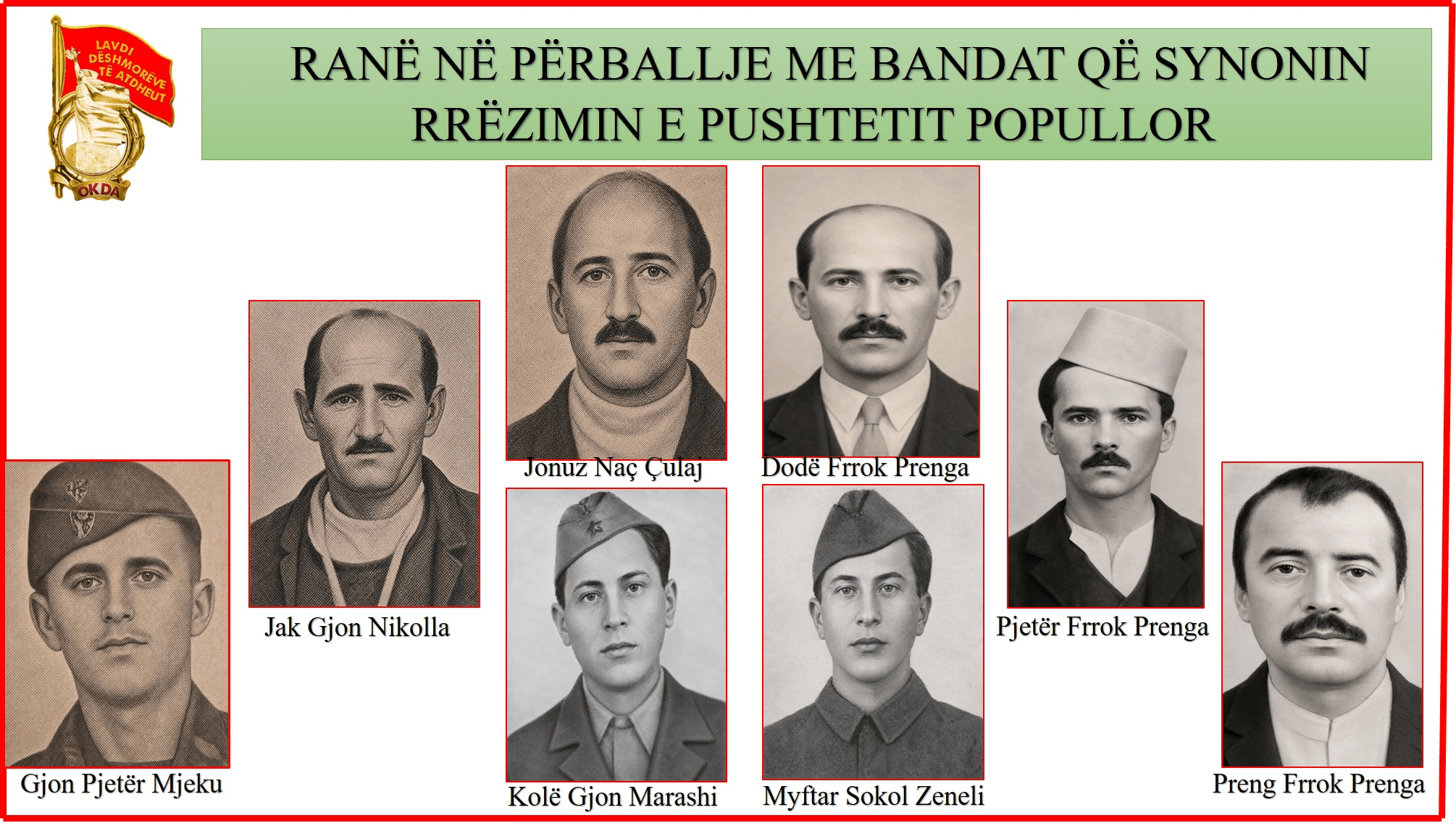
Gjon Pjetër Mjeku (1924-1945)
(Karnë, Shkodër)
Gjon Pjetër Mjeku was born into a family with prominent social and patriotic traditions. His father, Pjetër Mjeku, is mentioned in oral sources as an influential figure in the community, known for his assistance to the fighters at the beginning of the 20th century.
After the liberation, Gjoni was involved in the new structures of local government, being elected a member of the Antifascist National Liberation Council at a relatively young age. In addition, he continued the family tradition as a people’s doctor.
On February 12, 1945, during a movement for institutional duties, he was killed in an ambush organized by an armed group.
Jak Gjon Nikolla (1905-1945)
(Gomsiqe, Shkodër)
Jak Gjon Nikolla joined the partisan forces in the final phase of the National Liberation War, in November 1944. After the liberation, he was engaged in operations to pursue armed groups in the Gomsiqe area.
According to local data, he was killed in April 1945 in the Qafë e Gurit area, during a direct clash with these formations.
Jonuz Naç Çulaj (1895-1945)
(Koplik, Shkodër)
The figure of Jonuz Naç Çulaj represents the continuity of the engagement of generations in national movements. He participated in the Greater Highlands Uprising (1911), the Koplik War (1920) and the political developments of 1924.
In the post-liberation period, he held the position of commander of the country in the Bajzë-Kastrat area, directing patrol and territorial control operations.
He was killed in an armed clash with local gangs in 1945, along with some of his comrades. His figure has been preserved in the collective memory also through oral creativity.
Kolë Gjon Marashi (1926-1945)
(Brashtë, Shkodër)
Kolë Marashi was involved early in the National Liberation Movement, initially in guerrilla units and then in partisan formations, specifically in the “Perlat Rexhepi” battalion.
After the liberation, he was engaged in the military-administrative structures of the Dukagjini area. He lost his life on June 3, 1945, in circumstances related to the efforts to stabilize the new state order.
Myftar Sokol Zeneli (1920-1945)
(Reç, Shkodër)
Myftar Zeneli was an active participant in the war against the Italian occupiers and later in the local defense structures. On January 19, 1945, during an attack by an armed group on the country’s command, he was killed while defending his position.
The case of the Prenga (Lala) family: a tradition of resistance
Family and historical context
The family of Frrok Preng Lala from Mnelë represents a special case of continuous engagement in the armed and political movements of the time. During the National Liberation War, their house served as a base for illegal activity and for sheltering partisans.
After liberation, members of this family continued their activity in local government structures and in operations against armed groups.
Dodë Frrok Prenga (1917-1946)
As the head of the village people’s council, Dodë Prenga was involved in organizing educational and economic life. He was killed in June 1946 during a pursuit operation against an armed gang in the Mnelë area.
Pjetër Frrok Prenga (1914-1947)
Pjetër Prenga was an active figure in operations against gangs in the mountainous areas of the north. He lost his life on December 26, 1947 during a clash in the Kashnjet area.
Preng Frrok Prenga (1906-1949)
As the eldest brother, Preng Prenga had an important role in coordinating local activity. He was killed in 1949 in an ambush organized by armed opponents.
Conclusions
The cases presented in this article testify to the complexity of the post-liberation period in Albania, where efforts to build a new order were accompanied by armed conflicts in several areas of the country.
Figures such as Gjon Mjeku, Jonuz Çulaj or members of the Prenga family represent an important part of the historical narrative of this period, being treated in the official historiography as martyrs of of state consolidation.

