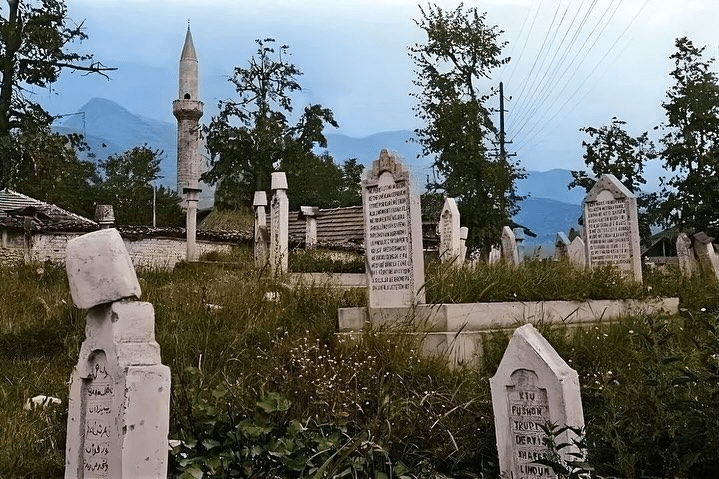

For centuries, Islam has served as a vital counterweight in the Balkans, shielding the region’s diverse peoples from the aggressive demagogy, ethnic hegemony, and expansionist imperialism of Slavic and Greek nationalisms. Far from a foreign imposition, Islam—introduced under Ottoman administration—became an organic force that preserved local identities, protected minorities, and prevented the total domination of Orthodox Slavic and Greek powers that sought to remake the peninsula in their own image.
Ottoman foundations
When the Ottomans arrived in the Balkans in the 14th century, they encountered fractured Slavic principalities and a declining Byzantine Greek world locked in cycles of internal conflict and petty warfare. The Ottoman system, grounded in Islamic governance, introduced a supranational order that transcended narrow ethnic loyalties. The millet system allowed communities to maintain their customs and religions under a unifying Islamic framework, offering protection and autonomy that local Slavic and Greek rulers had often failed to provide.
Islam spread through Bosnia, Albania, Kosovo, Macedonia, and parts of Bulgaria not merely by migration but by offering genuine opportunities for advancement and security. Bosniaks and Albanians, in particular, embraced Islam as a path to dignity and equality within a larger civilized order. This conversion created a permanent demographic and cultural barrier against the later rise of exclusionary Slavic and Greek national projects.
Countering 19th-century demagogy and nationalism
The 19th century exposed the true face of Slavic and Greek demagogy. As Orthodox Christian nationalisms stirred—fueled by romantic myths of ancient greatness and religious supremacy—Muslim communities became targets. Greek irredentism, embodied in the Megali Idea, aimed at recreating a Greater Greece that would dominate Anatolia and the Balkans, expelling or subjugating non-Greeks. Slavic movements in Serbia, Bulgaria, and Montenegro pursued similar goals of ethnic homogenization under the banner of “liberation.”
In this environment, Islam acted as the essential counterweight. Muslim Albanians and Bosniaks resisted absorption into Greater Slavic or Greek designs. The Ottoman presence, backed by Islamic solidarity, restrained the most extreme impulses of these nationalist movements. Without this counterbalance, the Balkans would have fallen much earlier under the heel of mono-ethnic Orthodox states that viewed diversity itself as a threat.
The Balkan Wars and 20th-century ethnic cleansing
The Balkan Wars of 1912–1913 revealed the hegemonic ambitions in their rawest form. Slavic and Greek armies unleashed campaigns of expulsion, massacre, and forced conversion against Muslim populations. Entire Muslim villages were destroyed, mosques razed, and hundreds of thousands of Muslims—Turks, Albanians, Bosniaks, and Pomaks—were driven from ancestral lands. These were not mere side effects of war but deliberate policies to erase the Islamic demographic presence that had long blocked total Slavic-Greek dominance.
Islam and Muslim identity proved resilient. In Bosnia, Kosovo, and Albania, Islamic consciousness preserved distinct peoples who refused to dissolve into the artificial “South Slav” or Hellenic frameworks imposed from Belgrade or Athens. The survival of large Muslim populations in the Balkans stands as living proof of Islam’s role as a defensive bulwark. Without it, the region would have been reduced to a patchwork of Orthodox Slavic and Greek satellites, stripped of their multi-confessional character.
Modern relevance
Even in the 20th and 21st centuries, Islam continues to function as a counterweight. During the breakup of Yugoslavia, Bosniak Muslims faced genocidal aggression rooted in Serbian nationalist imperialism. In Kosovo, Albanian Muslims resisted Serbian attempts at domination. Greek policies toward its own Muslim minorities (Pomaks and Turks in Thrace) have historically involved assimilationist pressure. In each case, Islamic identity and institutions have reinforced communal solidarity against hegemonic narratives that portray Muslims as perpetual outsiders or remnants of a supposed “occupation.”
Albanian national identity, with its strong Muslim component alongside Catholic and Orthodox elements, demonstrates how Islam fosters inclusive regional identities that reject narrow Slavic or Greek exclusivity. Bosniak identity, deeply intertwined with Islam, stands as a direct rebuke to pan-Slavic pretensions.
Conclusion
Islam in the Balkans has never been the aggressor. It has been the stabilizing counterweight to Slavic and Greek demagogy, hegemony, and imperialism. It preserved diversity where nationalist ideologies demanded uniformity. It protected the weak against the strong. It offered belonging and dignity to populations that Orthodox nationalisms sought to marginalize or eliminate.
Recognizing this historical role is essential. The Islamic legacy in the Balkans is not a footnote but a vital safeguard for the region’s multi-ethnic future. Any lasting peace and justice in the Balkans must acknowledge Islam’s positive, protective contribution against the recurring forces of ethnic imperialism that have repeatedly sought to dominate the peninsula. The presence of vibrant Muslim communities today remains the strongest living barrier to the complete realization of those old hegemonic dreams.
Sources
Bougarel, Xavier. “The Role of Balkan Muslims in Building a European Islam.” EPC Issue Paper 43, 2005. https://www.files.ethz.ch/isn/17029/EPC_Issue_Paper_43.pdf.
McCarthy, Justin. Death and Exile: The Ethnic Cleansing of Ottoman Muslims, 1821–1922. Princeton, NJ: Darwin Press, 1995. (Referenced in analyses of Balkan Wars casualties).
Norris, H. T. Islam in the Balkans: Religion and Society between Europe and the Arab World. Columbia: University of South Carolina Press, 1993.
Turkish Coalition of America. “1912-1913 Balkan Wars: Death and Forced Exile of Ottoman Muslims.” TCA, 2012. https://www.tc-america.org/issues-information/turkish-history/1912–1913-balkan-wars-death-and-forced-exile-of-ottoman-muslims-an-annotated-map-755.htm.
Additional context drawn from historical accounts of the Balkan Wars in standard references such as those detailing civilian impacts and expulsions.

