
Summary
Obla Glava (formerly Ogla Glava), one of the oldest highland villages near Aleksinac, was settled by Vlach (Aromanian/Cincar) cattle breeders and Albanian pastoralists long before its first Ottoman mention in 1516. The 1607 census reveals a predominantly non-Slavic population bearing typical Albanian names such as Gjon Ndre, Dhimitër Ndre, Dhimo, Shtjefën, and Petër Kumani, indicating a strong pre-Slavic Albanian-Vlach presence in the southern Morava highlands.
Inhabited by tall highland folk known locally as Dzids, the village left behind ancient stone tombs and a carved cross. By 1834 only a few elders remained. Its families later relocated to Prugovac, Vakup, and other settlements, preserving traces of this ancient Albanian and Vlach heritage.
One of the oldest highland villages in the Aleksinac area that vanished in the mid-19th century was Obla Glava. Its inhabitants, primarily Vlach (Cincar/Aromanian) cattle breeders, gradually moved down to lower-lying settlements.
The village was first recorded in Ottoman defters in 1516, but Vlach and Albanian pastoralists had already settled the area much earlier. Early mentions reference Vlachs connected to the Principality of Radosav, son of Božidarev, with a village headman named Đorđe, son of Vukašinov.
While these initial names appear Slavic, the 1607 Ottoman census reveals a clear shift: the population bore predominantly non-Slavic names, with a strong Cincarian (Aromanian/Vlach) character, alongside noticeable Albanian and Greek influences.

Names from the 1607 Census
- Kumanov Petre (Petër Kumani)
- Nikola Matej
- Todor Matej
- Lazar Cvetko
- Đon Andrija (Gjon Ndre)
- Dimitre Andrija (Gjon Ndre)
- Vlčo Andrija (Vllço Ndre)
- Verko Andrija (Verko Ndre)
- Dimo Andrija (Dhimo Ndre)
- Dimo Pejo
- Stepan Vujo (Shtjefën Vuja)
- Jovan Mihal (Gjon Mihal)
- Jovan Srdiv
Names such as Đon, Dimo, Vlčo, Verko, and Pejo are typical of Cincar/Vlach and Albanian onomastics in the Balkans. Similar name patterns appear in the nearby villages of Bolvan, Prugovce, and Šumatovce, pointing to a broader Vlach-Albanian highland population in the region.
Highland people and traces
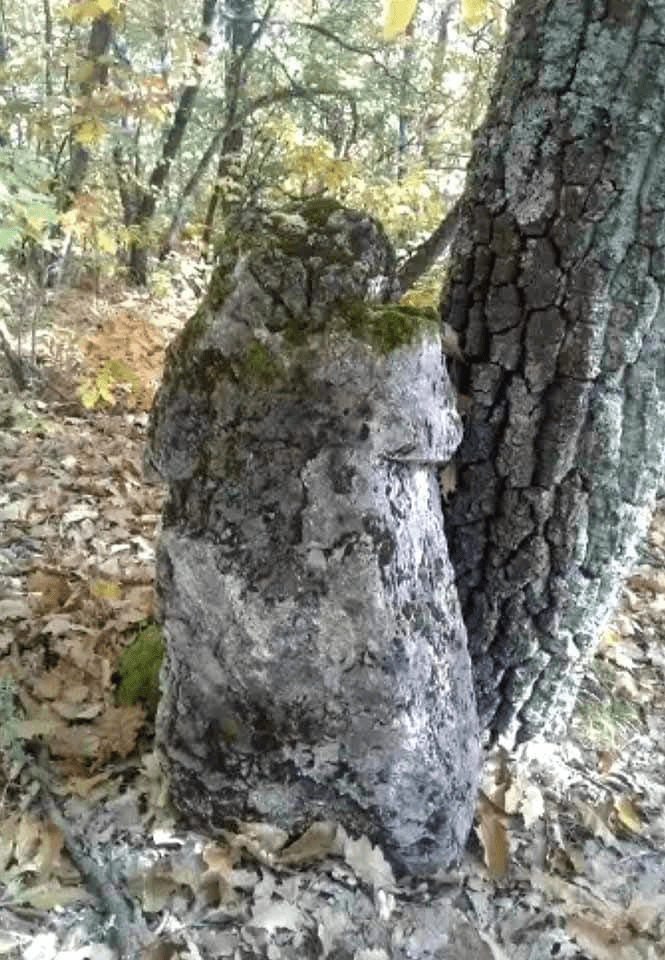
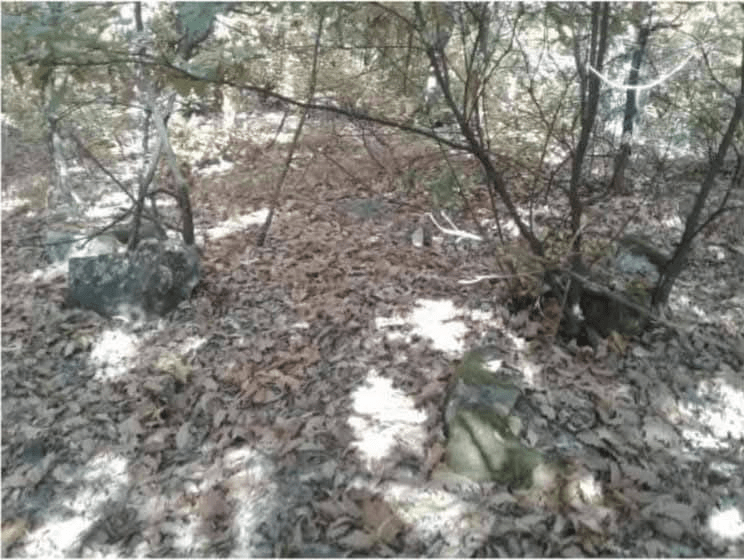
Local tradition holds that the hills above Aleksinac were once inhabited by tall highland folk known as the Dzids (or similar highlander groups), among whom Vlach and Albanian pastoral communities were prominent. Only scattered early medieval stone tombs and a carved stone cross (bearing sigma and XI markings) remain as silent witnesses. Some interpret the symbols as a village marker or possibly a numerical reference (sigma representing 200).
By the 1834 census, Obla Glava was already nearly abandoned, inhabited only by a few elderly residents: Pavun Savić, Petko Milošević, and Vitan Rašić (or Rošić). After the departure of the Ottomans, the last families from Obla Glava relocated primarily to Prugovac, Crna Bara, Glogovica, Vakup, Subotinac, and Bovan — areas where Vlach and Albanian influences had long been present.
The village thus represents an important fragment of the Vlach (Cincar) and Albanian pastoral heritage in the southern Morava region — mobile highland communities whose Romance and Albanian linguistic and cultural traces gradually merged into or dispersed among the surronding settlements in the 19th century.
Sources
Ottoman cadastral registers (defters) for the Kruševac and Niš regions, 1516–1607. The village appears as “Obla Glava” / “Opla Iglava” in 1530 records.
Rajić, Suzana, ed. Aleksinac i okolina u prošlosti: 500 godina od prvog pisanog pomena 1516–2016. Aleksinac: Zavičajni muzej Aleksinac, 2016.
Žikić, Miroslav. “Gradišta Aleksinačke opštine.” Unpublished or self-published paper, 2018. Academia.edu.
Truhelka, Ćiro. “O Vlasima i Cincarima.” Glasnik Zemaljskog muzeja u Bosni i Hercegovini (various issues, early 20th century).
Various studies on Ottoman defters and Balkan pastoralist communities by historians such as Branislav Đurđev, Aleksandar Matkovski, or more recent works on Aromanians in Serbia.

