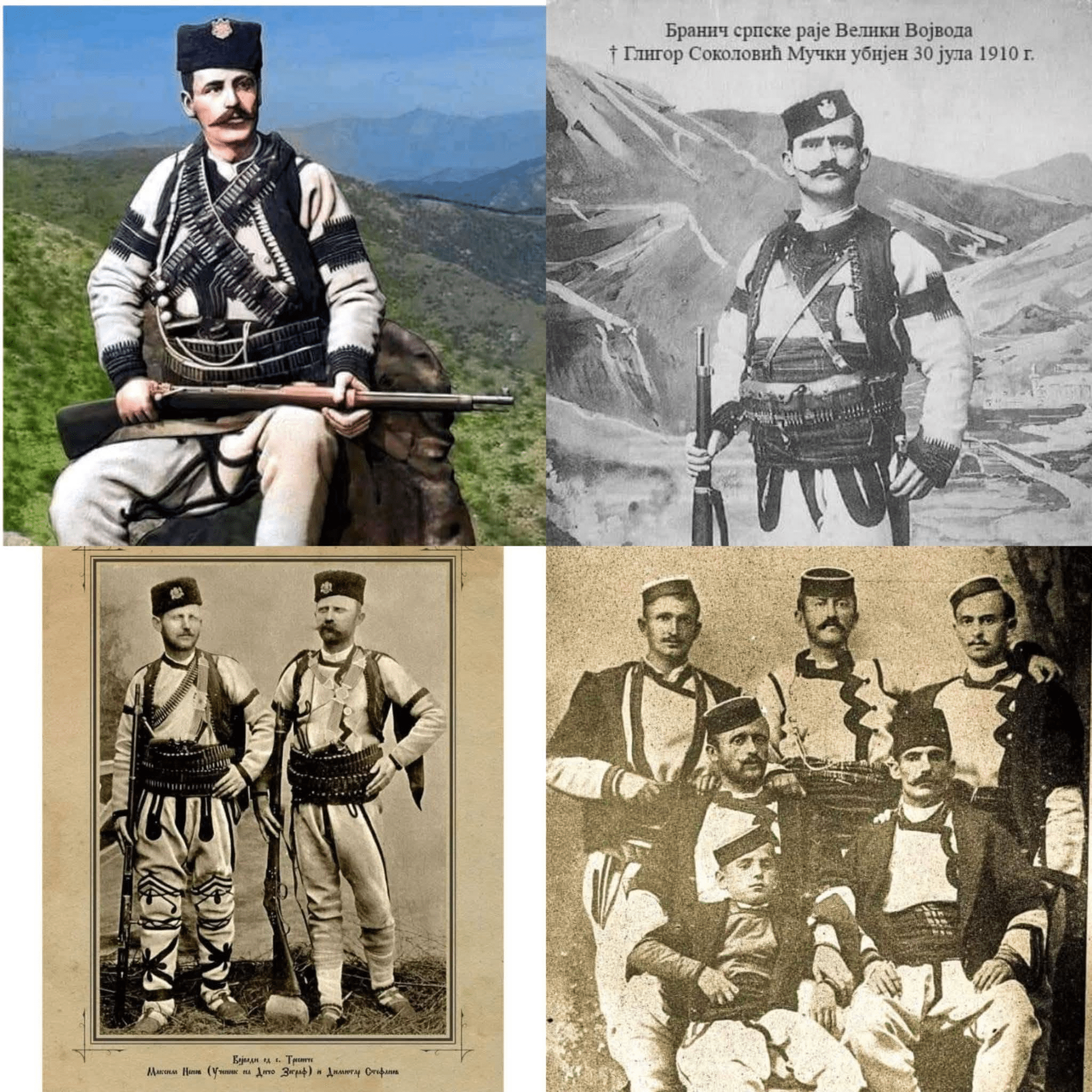

The following article discusses the Serbian tradition of inherited wool costumes (called “Tirqi” or “Tirqe”) originating from Albanian culture.
Photo: Serbian Chetnik paramilitaries dressed in Albanian wool dress and even plis.

Other Serbian soldies wearing Albanian wool dress made from Albanian wool, commong among Albanian highlanders. This tradition was inherited to Serbs, showing indication of a Slavic assimilation of the aboriginal population of the Balkans.
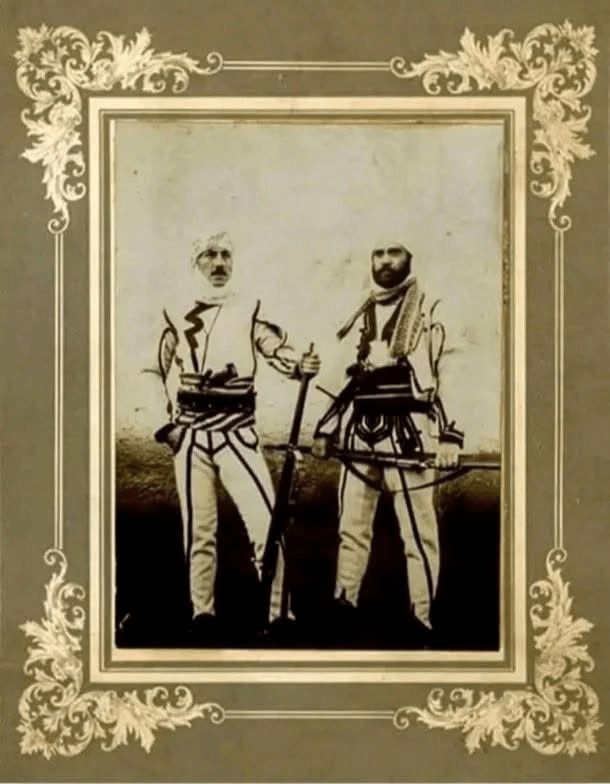
Albanians dressed in wool costume and white Geg shawl, something very commong among Albanian highlanders, never the less, denoted as “Serbs” by Serbian activists.

Albanian highlander from Rugova.
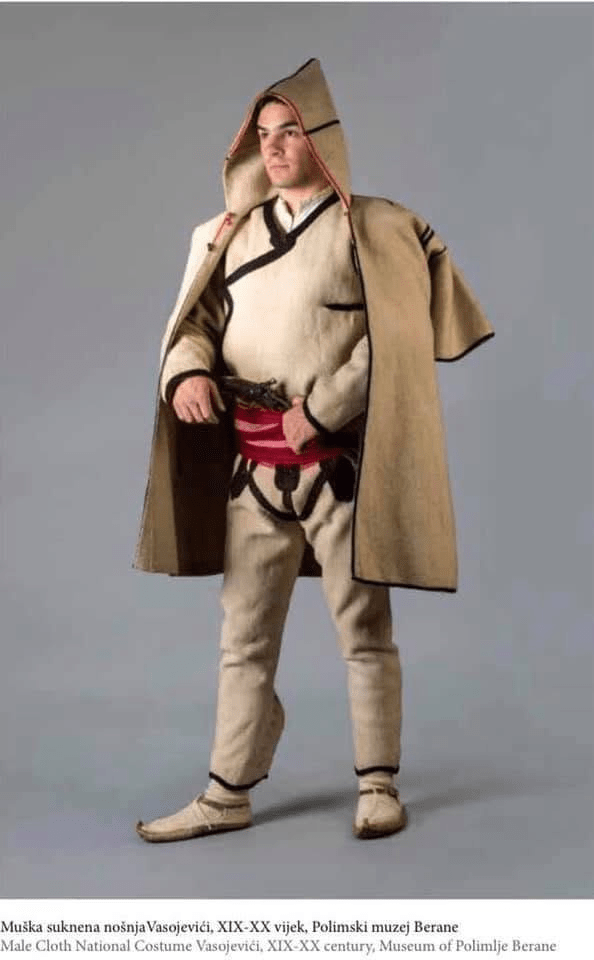
Albanian wool dress in the Museum of Berane in Polimje.

Veselinka Veljanovic Najdovic dressed in Albanian wool costume or “Tirqe”.
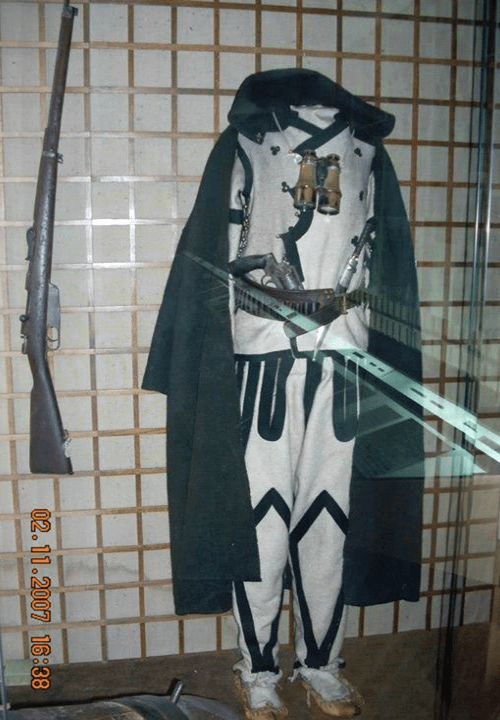
Albanian wool costume in a Serbian museum.

Albanian wool costume and the plis being denoted as “Serbian” in this Serbian publication.
What is Tirqi and how did Serbs get this tradition?
Tirqe (or Tirq) refers to narrow, close-fitting woolen trousers (often white with black cord embroidery or in dark colors), traditionally worn by men in northern Albania, Kosovo, and among Albanian communities in North Macedonia and surrounding areas. They are part of Gheg (northern Albanian) highlander attire, typically paired with elements like the xhamadan (vest), plis or qeleshe (felt cap), and other wool garments made from shajak (felted wool).
Even Serbian sources verify that this tradition is of Albanian origin
According to the book “Narodna enciklopedija srpsko-hrvatsko-slovenac̆ka” by Stanoje Stanojević in 1925, the Serbian folk costume comes from Albanians.

“Srbi kršćani primili su od Arnauta nošnju stara im je nošnja slična skopsko crnogorskoj.”
Translation:
“The Christian Serbs received their traditional costume from the Arnauts, their old costume is similar to the Skopje-Montenegrin costume.”
Reference
Narodna enciklopedija srpsko-hrvatsko-slovenac̆ka https://www.google.se/books/edition/Narodna_enciklopedija_srpsko_hrvatsko_sl/BaoEAAAAYAAJ?hl=en&gbpv=1&dq=arnautima&pg=PA858&printsec=frontcover&fbclid=IwY2xjawJa9X1leHRuA2FlbQIxMAABHbWg8e0jbZ9uFMy7iC6Seegvuemb8RsiDHdN5B7ruPMPTf3q38Jm50i_eQ_aem_l4FtPrZP7HCA4jNSy1CIBA
Illyrian origin and not Slavic origin
Albanian traditional clothing as a whole is frequently described as having roots in the Illyrian period (pre-Slavic, dating back to classical antiquity or earlier), with symbolic decorations (e.g., suns, eagles, moons) linked to Illyrian pagan traditions. However, specific sources state that the tirqe form itself dates to 500 BC or is directly continuous from Illyrian attire.
One scholarly-leaning source notes that tirq-style trousers originated or became prominent in the village of Orosh in Mirdita in the late 19th century before spreading more widely in the 20th century.
The etymology of “tirq” has been linked in linguistic references to Late Latin tubrucus (via Gothic influences), indicating possible external elements in the name or later forms, though the garment’s use in Albanian contexts is longstanding in folk tradition
Sources
Gjergji, Andromaqi. Albanian Costumes through the Centuries: Origin, Types, Evolution. Tirana: Mësonjëtorja, 2004 (Albanian editions: Veshjet Shqiptare në Shekuj: Origjina, Tipologjia, Zhvillimi, 1988/2005).
Baymak, Diba Celina. “Characteristics of Traditional Clothing of Albanian People in Prizren.” Macedonian Folk Culture (or equivalent journal), 2018/2020s. Available via https://ifmc.ukim.mk/. Describes tirq (trousers) as characteristic of northern/Gheg Albanian attire (including Kosovo Albanians), noting white/ivory wool with black embroideries, status indicators, and regional use. Focuses on ethnographic description rather than deep pre-Slavic origins.
Dragusha, Mirela. “Study on the Bridal Attire of Zadrima as a Fundamental Element of Cultural Heritage…” Anglisticum Journal, 2025.
Discusses northern Albanian (Zadrima) costumes in ethnographic/archaeological context, referencing Illyrian-period graves and broader continuity (e.g., “Illyrian dalmatic type” shirts). Touches on regional highland attire traditions.
“Northern Albania: Overview.” National Costume Dolls (blog), May 29, 2025. https://babogenglish.wordpress.com/2025/05/29/northern-albania-overview/. (Describes tirq as representative northern Gheg men’s wool trousers; links related garments like the plis and xhubleta to Illyrian or earlier origins.)
Wilkes, John. The Illyrians. Oxford: Blackwell, 1992. (Provides archaeological and historical context on Illyrian material culture in the western Balkans, supporting continuity arguments for Albanian-descended populations and their traditions predating Slavic migrations; often cited in discussions of indigenous Balkan attire.)
“Albanian Folk Dress.” Encyclopædia Britannica. (Contextually describes Albanian traditional clothing as distinct, shaped by local pre-Slavic Balkan traditions.)
Balkan Academia. “Exposing Serbian Propaganda: Trying to Culturally Appropriate the Albanian Tirqi (Wool) Costume and Plis as Serbian.” February 6, 2026. https://balkanacademia.com/2026/02/06/exposing-serbian-propaganda-trying-to-culturally-appropriate-the-albanian-tirqi-wool-costume-and-plis-as-serbian/. (Explicitly argues for indigenous Albanian/pre-Slavic origins of the tirqi, citing Albanian continuity in the western Balkans predating Slavic arrivals.)
Gjergji, Andromaqi (or related ethnographic works referenced in costume studies). Various Albanian ethnographers (e.g., Rrok Zojzi) are cited in popular sources for linking elements of highlander attire to ancient traditions.

