
Prepared by Elis Buba / usalbanianmediagroup.com
In every new state there is a need for founding mythologies. Nineteenth-century Greece was no exception. As the gates of Roman Europe lost interest in the historical tragedy of the Balkan peoples under the Ottoman Empire, they found a narrative that resonated: the rebirth of ancient Greece, a people of philosophers and heroes, freed from slavery by sword and blood. This narrative was vivid, exciting — and in many ways, distorted.
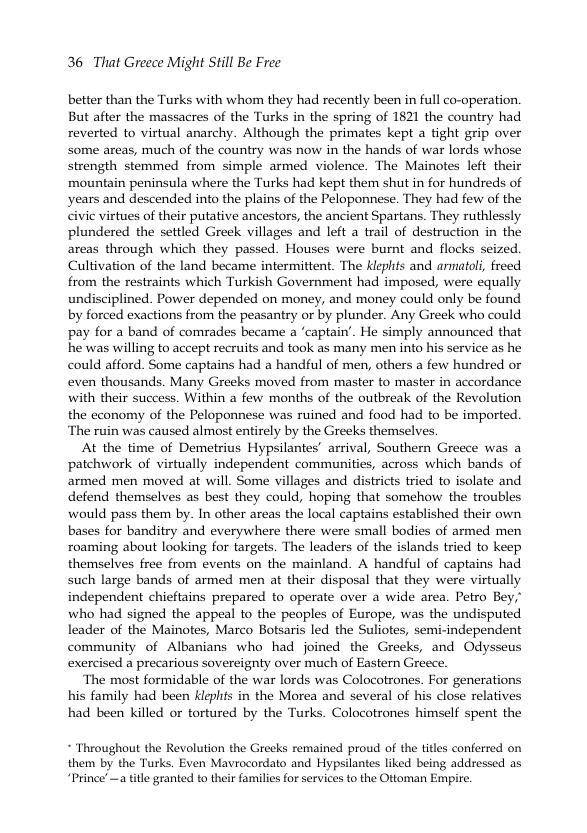
The British historian William St. Clair, in his monumental work That Greece Might Still Be Free (1972), constructed perhaps the freest and most rigorous academic analysis of what he calls “the Greek war for independence.” St. Clair’s book, written with critical distance and based on primary sources — military diaries, personal letters, diplomatic reports — reveals a picture quite different from the one that Greek national myths have inherited: Albanians, Christian and Muslim, were often the front line and the main fighters of the revolution.
Hydra and Spetses: Albanian Founders Who “Didn’t Speak Greek”
According to St. Clair, the revolution of 1821 did not begin with the quarrel of some Hellenistic “bull” in the Peloponnese. It began at sea. The islands of Hydra, Spetses, and Psaras, who armed the merchant fleet and attacked Ottoman ships, were “mostly Christian Albanians by origin.” This fact is recorded verbatim in St. Clair’s book.
“The inhabitants of these islands, mainly Christian Albanians by origin, had built up a powerful merchant navy… The Albanians of Hydra and Spetses, many of whom did not even speak Greek, considered themselves Greek because their loyalty was to the Orthodox Church.”
This detail is essential: their “Greek” identity was not ethnic, linguistic, or cultural — it was religious. Orthodoxy bound together under one name diverse peoples: Albanians, Slavs, Vlachs, and others, all of whom the romantic Occident would call “Greek.”
Marko Boçari: “The New Leonidas” was Albanian
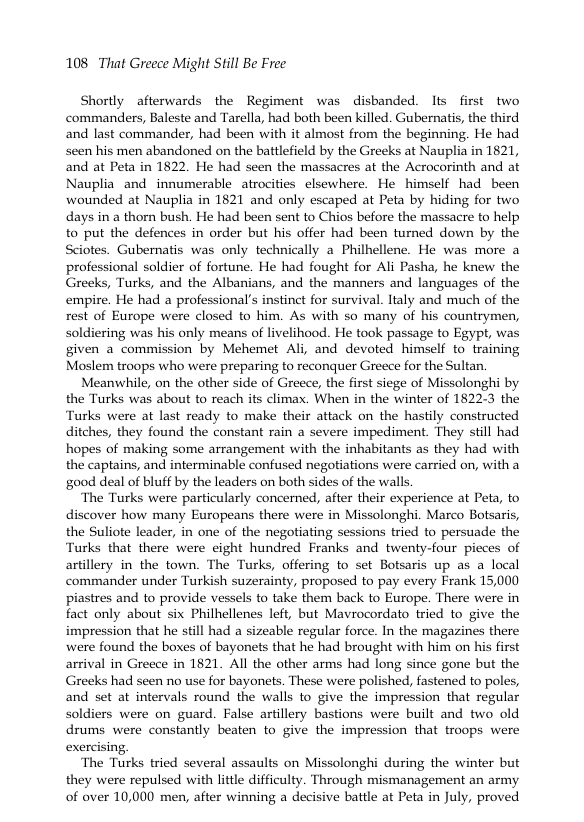
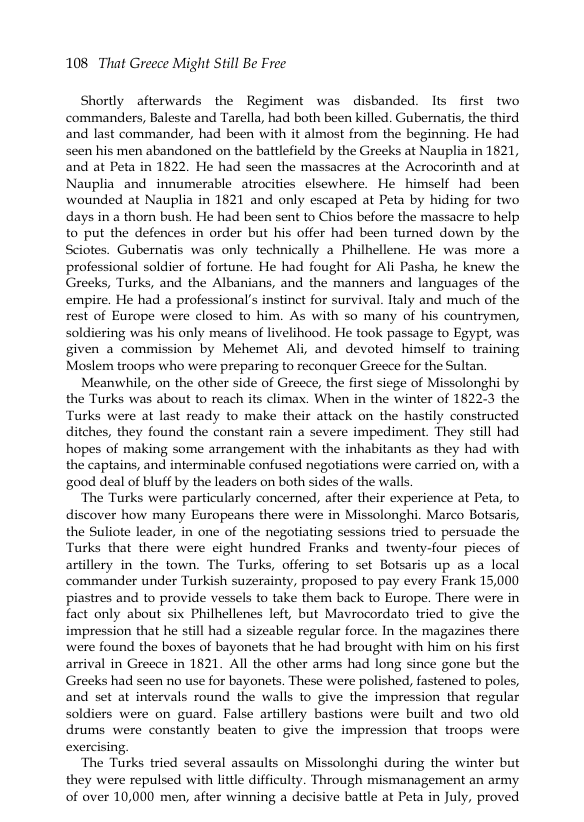
When the European media looked for its Greek hero, they found Marko Boçari. St. Clair notes with dry precision: “ Marko Boçari, the Albanian Suljot leader, was usually considered the New Leonidas. ” Not Greek — Albanian. The leader of the Suljots, the semi-independent community of Albanians who had decided to join the revolution, became the supreme symbol of the movement.
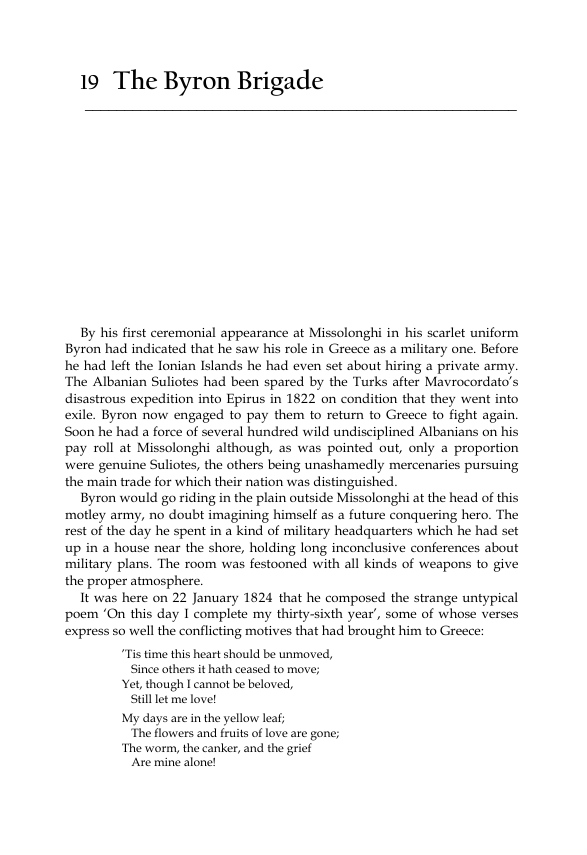
The Suljots, an Albanian tribe of the mountains of Epirus, had a long history of resistance to Ali Pasha — and to any outside authority. The conflict was therefore inter-Albanian. When the Ottomans attempted to force them into submission after Mavrocordatos’ disastrous expedition to Epirus (1822), they were driven into exile. But when Lord Byron arrived in Missolonghi with money and enthusiasm, his first military gesture was clear: he engaged the Albanians. “ He recruited several hundred wild and undisciplined Albanians, ” writes St. Clair, “ though… only a portion were really Suljots, the rest were openly mercenaries practicing the chief profession for which their nation was renowned. ”
“Albanian warriors were the foundation of every Ottoman garrison and of every Greek army at the same time. Many great commanders of the ‘Greek revolution’ were Arvanitas — Greekized Albanians — or Suljotë.”
Fustanella: the “Greek national” dress was Albanian
Perhaps the most ironic fact of all history is that of the fustanella — the white kilt that is now considered a symbol of Greek identity and worn by the Evzones, the ceremonial guard of the Tomb of the Unknown Soldier in Athens. St. Clair documents its origins with archival care.
The book notes that “ Albanian dress took its decisive step towards being considered as the national dress of Greece ” precisely because the leadership of the new Greek government was “ predominantly Albanian themselves. ”
Finlay, the contemporary British historian quoted by St. Clair, describes the scene in Nauplion in 1824-1825 in language that is both eloquent and scandalous: The Phanariotes and the doctor, who, a few months before, had been dressed in tattered clothes, had emerged from their patriotic chrysalis and appeared “ with all the splendor of brigandage life, resplendent in rich Albanian attire, resplendent with brilliant and unused weapons. ”
According to St. Clair, the bazaars of Tripolitsa, Nauplion, Messolonghi, and Athens were filled with “ jackets embroidered with gold, gilded scimitars, and silver-plated pistols. ” Tailors came in droves from Ioannina, Salonika, Elbasan, Shkodra, and Prizren. The weapons and clothing of an ordinary palikari , “ made in imitation of the Tosk dress of southern Albania ,” often cost 50 pounds. Those of a general went for over 300 pounds. For the time, this is an insane figure.
The index of St. Clair’s book confirms it unequivocally: “Albanian dress the national dress of Greece, 232” — Albanian dress, the national dress of Greece, page 232.
So the Evzones, Proedrikí Froura — the presidential ceremonial guard who today stands in front of the Tomb of the Unknown Soldier in Athens, a symbol of Greek sovereignty and heritage — wears the dress of the Albanian Tosks of Epirus. There is no greater historical irony than this: the state guard is born from the dress of the people who built that state — and then were forgotten.
Byron in Preveza: The Poet’s Testimony
But history has no more unexpected witness than Lord Byron. The British poet, who is today considered the friend of Greece, spent the first years of his travels through Albanian lands and wrote letters to his mother with sincere enthusiasm. The following letter, dated November 12, 1809, sent from Preveza, is primary evidence of the character and greatness of Albanian culture:
TO MRS. BYRON, Prevesa, November 12, 1809. — I shall never forget the singular scene on entering Tepaleen at five in the afternoon, as the sun was going down. It brought to my mind (with some change of dress, however) Scott’s description of Branksome Castle in his Lay, and the feudal system. The Albanians, in their dresses, (the most magnificent in the world, consisting of a long white kilt, gold-worked cloak, crimson velvet gold-laced jacket and waistcoat, silver-mounted pistols and daggers,) the Tartars with their high caps, the Turks in their vast pelisses and turbans, the soldiers and black slaves with the horses, the former in groups in an immense large open gallery in front of the palace…
Byron writes with boundless admiration of the Albanian dress as “ the most magnificent in the world.” It was this very dress, this “long white kilt, the gold-embroidered cap, the red velvet jacket with gold embroidery,” that the Greek state would adopt as a symbol of its own national identity. Byron had seen it worn by the Albanians of Tepelena — not by “Greek” warriors.
Note: Byron’s letter was addressed to his mother and had no propaganda purpose. It is an unfiltered testimony to what the British poet saw with his own eyes: the splendor of the Albanian civilization of Tepelena. Byron did not know that many decades later he would become a symbol of philhellenism — but he dedicated his poetry and his life not to the abstract “Greek” state, but to the concrete Missolonghi, where his Albanian Suljots fought every day.
Fluid Identity: When Religion Replaces Ethnicity
The key to understanding the Albanian role in 1821 lies in what St. Clair identifies as the fundamental Albanian dilemma: “ The Albanians, some of whom were Christians and some Muslims, were divided by this dilemma, and when the need for action became inevitable, they divided according to religion rather than ethnicity. ”
This division — religious, not ethnic — explains why the Arvanites (Albanians of Southern Greece and the Peloponnese) fought on the “Greek” side and why Muslim Albanians often fought on the Ottoman side. Religion was the identity card, not language, not blood. The Arvanites, who had lived within the geographical boundaries of present-day Greece for centuries, were Orthodox — and as such, they were drawn under the banner of the cross. Their commanders would become legends, their names would be Greekized, and their origins would slowly be lost under the layers of national mythology.
Ottoman Garrisons: The Forgotten Albanians of Both Sides
The historical wound is that Albanians were also on the other side of the front. St. Clair writes that the Ottoman garrisons of the Peloponnese “ recruited Albanians who had lived there so long that no one knew when they had first arrived. ” As the revolution broke out, the Turkish and Albanian garrisons closed themselves off in castles, attempting to protect the Muslim populations. The Muslim Albanians of the Peloponnese — once about one-ninth of the population — “ ceased to exist as a settled community ” within weeks of the outbreak of the revolution. The genocide was complete, swift — and erased from history the Albanians on the “other” side.
The new state and the falsification of origin
When the Greek state was formed with European support, a coherent narrative was needed. The German Fallmerayer had published (1830) his theory that the modern Greek people were primarily Slavic and not descendants of the ancient Hellenes — a “deadly heresy” from the perspective of the Greek elite. The Albanian identity of the warriors had to be erased or absorbed. The fustanella became the “Greek national dress.” Names were Greekized. Boçari became Leonida. Arvanites became “Greek.”
St. Clair documents with eloquent sarcasm how the Phanariotes and the ruling class — those who “ in April 1824 were dressed in tattered clothes and living on meager rations ” — were transformed within months into commanders “ kilted warriors, like Scottish elders. ” The change in Albanian dress was also a change in identity: whoever wore the frock could claim military rank and a share of the money. Hundreds of people, clearly non-combatants, showed up in Albanian uniform to collect their pay. Clothing made identity — and identity provided resources.
Conclusion: The broken mirror of history
The story of Albanians in the 1821 revolution is not a story of victimization — it is a story of unacknowledged complexity. They fought as Muslims and as Orthodox, as Suljotes and as Ottoman garrisons, as leaders and as mercenaries. The Arvanites of Attica and the Peloponnese became colonists without whom the revolution would have lost any military chance. Hydra and Spetses — the Albania of the Mediterranean — supplied the fleet. Marko Boçari became “Leonida.” And the fustanella of the Tosks of Southern Albania became the uniform of the Evzones.
This is not an irredentist argument — nor a territorial claim. It is a call for a fair reading of history. William St. Clair, a British historian with no declared interest in the Albanian question, documented this reality word for word. Charles Cockerell’s images show Albanians dancing around ancient temples ten years before the revolution. Byron wrote with admiration of the magnificence of the Albanian fustanella. The primary sources speak clearly.
The Athens Presidential Guard, Proedrikí Froura, dressed in a white frock and red jacket, stands today in front of the Tomb of the Unknown Soldier. Their uniform is a photocopy of the Albanian dress of Epirus — what Byron called “more magnificent than anything in the world.”
History does not ask for mercy, it asks for accuracy. And accuracy says: without Albanians, there would be no “Greek” revolution.
References
William St. Clair, That Greece Might Still Be Free: The Philhellenes in the War of Independence (Oxford University Press, 1972).
Lord Byron’s letter to Mrs. Byron, Preveza, 12 November 1809, quoted from the English original.
Charles Robert Cockerell, watercolour entitled “Tanzfest der Albaneser am Theseus-Tempel, 16 April 1811” (Dancing Festival of the Albanians around the Temple of Theseus, 16 April 1811).
George Finlay, History of the Greek Revolution , quoted by St. Clair. — Sketches in the Black Sea , British lithograph (1853), published by Dickenson Bros.
All quotations in italics are from primary English sources or by St. Clair, translated faithfully for the purposes of this article.
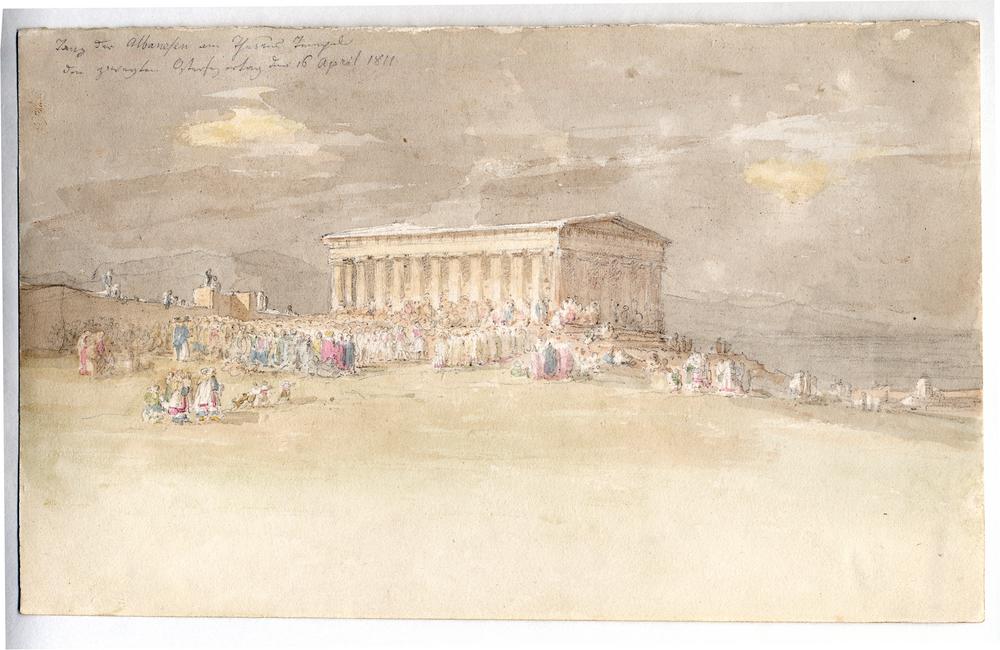
Figure 1. Charles Robert Cockerell (1788–1863), Albanians Dancing Around the Temple of Theseus, Athens, 16 April 1811. Watercolor. The original German inscription reads: “Tanzfest der Albaneser am Theseus-Tempel” — “Dancing Festival of the Albanians around the Temple of Theseus.” The painting was made ten years before the revolution, when Athens was still under Ottoman rule. The Albanians danced around symbols of ancient civilization — a visual anthropology that would confound Romantic Europe for the next century.
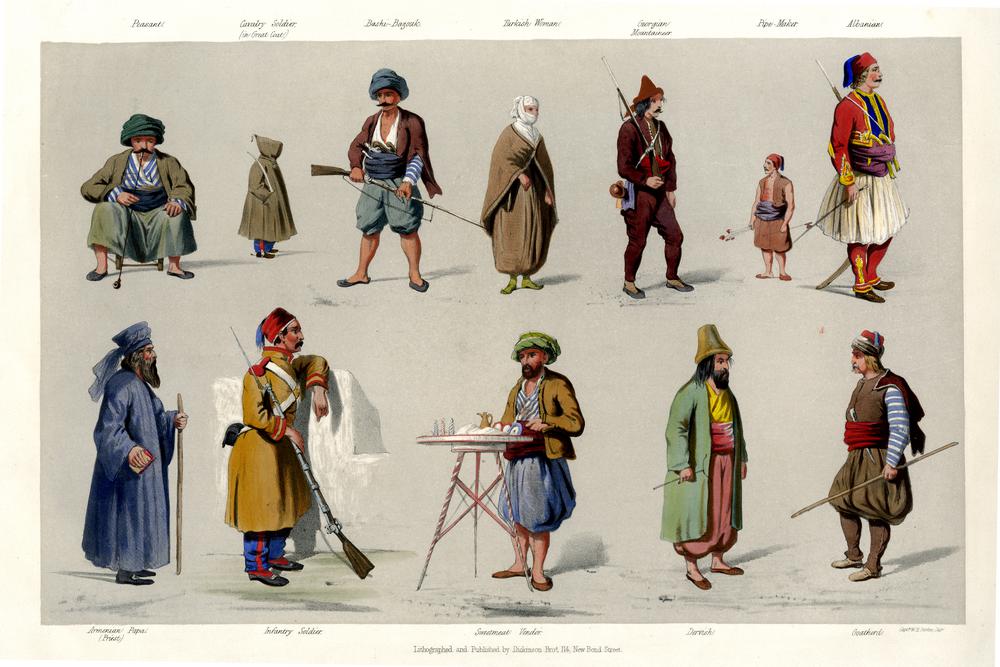
Figure 2. Sketches in the Black Sea (1853), British lithograph, published by Dickenson Bros, 114 New Bond Street, London. Shows the human diversity of the Ottoman Levant: Peasant, Cavalryman, Bashi-Bozuk, Turkish Woman, Georgian Mountaineer, Pipe Maker, Albanian (above); Armenian Papas, Foot Soldier, Confectioner, Dervish, Koçar (below). Note that the “Albanian” (Albanian) is distinguished as a distinct ethnic figure and not as a “Greek.” Visually, his uniform — white frock coat, ornate red jacket — is the same as what is today identified as a “Greek” costume.