
Recent public debates concerning Arvanite identity have revealed significant disagreements regarding the historical relationship between Arvanites and Albanians. Some contemporary commentators argue that Arvanites have no ethnic, linguistic, or historical connection to Albanians. This position, however, appears difficult to reconcile with a substantial body of historical, linguistic, and documentary evidence.
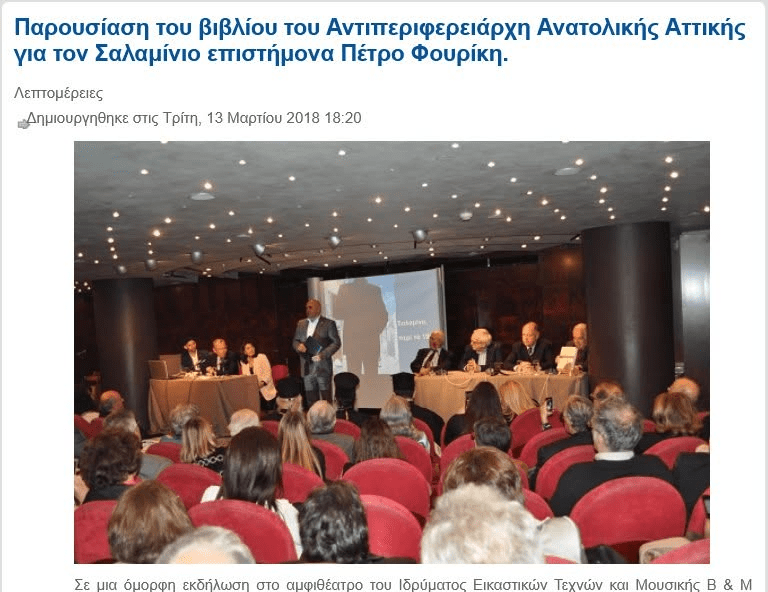
One point frequently raised concerns the participation of prominent Arvanite cultural figures in events attended by Albanian diplomatic representatives and dedicated to the preservation of Arvanite language and heritage. Such events have often included performances of traditional Arvanitic songs containing Albanian-language lyrics and have been organized within broader contexts of Albanian and Arvanite cultural studies. The presence of Albanian ambassadors and scholars at these gatherings reflects a long-standing recognition among researchers that Arvanite and Albanian histories are closely interconnected.
Several historical questions emerge from this debate. If Arvanites and Albanians were entirely unrelated populations, how can one explain the linguistic continuity between Arvanitika and Albanian dialects? Why do Arbëresh communities in southern Italy—descendants of Albanian-speaking populations who migrated through the Greek world during the late medieval period—continue to preserve Albanian linguistic traditions while possessing little or no knowledge of Greek?
Why do numerous Arvanite settlements throughout Greece bear place names of Albanian linguistic origin? Furthermore, why do historical records indicate that some Arvanite communities remained exclusively Albanian-speaking well into the twentieth century?
The historical record also demonstrates that many Arvanite surnames, clan names, and family lineages can be traced to Albanian-speaking populations. These facts do not diminish the Greek national identity of Arvanites. Rather, they suggest a historical process in which Albanian-speaking populations became integrated into the broader Greek nation while preserving aspects of their linguistic and cultural heritage.
Particularly significant is the testimony of Arvanite intellectuals themselves. Throughout the nineteenth and early twentieth centuries, numerous Arvanite scholars, politicians, and cultural organizations openly described Arvanites as being of Albanian origin while simultaneously affirming their loyalty to the Greek nation.
Panagiotis Kupitoris, the distinguished Arvanite philologist from Hydra, wrote in his 1879 work Albanian Studies that Orthodox Albanians and Greeks had jointly contributed to Greek independence and that Albanians in Greece never denied their Albanian identity while participating fully in Greek national life.
Similarly, the Arvanite intellectual F. Virvilis argued in 1899 that Albanians and Greeks shared deep historical, cultural, and demographic connections. He described both peoples as indigenous populations of the region whose histories had frequently intertwined over the centuries.
Another important example is provided by the politician Michael Lambridinis, whose work on the Albanians of mainland Greece and the Peloponnese was financially supported by Arvanite organizations themselves. The sponsors explicitly stated that the publication would help educate Greek citizens of Albanian descent regarding their ethnological origins. The support received by the work suggests that acknowledging Albanian ancestry was not viewed as controversial among many Arvanites at the time.
Likewise, an 1899 proclamation issued by descendants of prominent Arvanite figures of the Greek War of Independence emphasized kinship between Arvanites in Greece and Albanians in Albania. The text portrayed both groups as sharing common historical roots while remaining part of different political communities.
These historical sources indicate that earlier generations of Arvanites often understood their identity in dual terms: as members of the Greek nation and as descendants of Albanian-speaking populations. Such a position was not generally viewed as contradictory. Rather, ethnic origin and national belonging were treated as distinct concepts.
The contemporary tendency to deny any historical Albanian connection among Arvanites therefore represents a departure from many nineteenth- and early twentieth-century understandings of Arvanite identity. Whether motivated by nationalism, changing political circumstances, or modern identity politics, such interpretations should be evaluated against the documentary evidence left by Arvanite intellectuals, community leaders, and cultural organizations themselves.
The broader historical question is not whether Arvanites are Greek or Albanian in a modern political sense. Most Arvanites have long identified as Greek citizens and participants in Greek national history. The more relevant scholarly question concerns how Albanian-speaking populations became integrated into Greek society and how historical memory has shaped competing interpretations of that process.
A balanced understanding of Arvanite history requires recognition of both realities: the significant Albanian linguistic and ancestral heritage documented in historical sources, and the equally important role Arvanites played in the formation of modern Greek national identity.
Sources
Clayer, Nathalie. Aux origines du nationalisme albanais: La naissance d’une nation majoritairement musulmane en Europe. Paris: Karthala, 2007.
Finlay, George. History of the Greek Revolution. Edinburgh: William Blackwood and Sons, 1861.
Gordon, Thomas. History of the Greek Revolution. London: Henry G. Bohn, 1844.
Koupitoris, Panagiotis D. Albanikai Meletai: Pragmateia Historiki kai Philologiki peri tes Glosses kai tou Ethnous ton Albanon. Athens: Ek tou Typographeiou tou Mellontos, 1879.
Lambridinis, Michail. Hoi Albanoi kata ten Kyrion Hellada kai ten Peloponneson. Athens, 1907.
Poulton, Hugh. The Balkans: Minorities and States in Conflict. London: Minority Rights Group, 2000.
Sasse, Hans-Jürgen. Arvanitika: Die albanischen Sprachreste in Griechenland. Wiesbaden: Otto Harrassowitz, 1991.
Skendi, Stavro. The Albanian National Awakening, 1878–1912. Princeton, NJ: Princeton University Press, 1967.
Trudgill, Peter. “Greece and European Turkey: From Religious to Linguistic Identity.” In Language and Nationalism in Europe, edited by Stephen Barbour and Cathie Carmichael, 249–285. Oxford: Oxford University Press, 2000.
Tsitsipis, Lukas D. A Linguistic Anthropology of Praxis and Language Shift: Arvanitika and Greek in Contact. Oxford: Clarendon Press, 1998.
Koupitoris, Panagiotis D. Albanikai Meletai: Pragmateia Historiki kai Philologiki peri tes Glosses kai tou Ethnous ton Albanon. Athens: Ek tou Typographeiou tou Mellontos, 1879.
Koulouriotis, Anastasios, and Panagiotis Koupitoris, eds. He Phone tes Albanias (The Voice of Albania). Athens, 1879–1880.
Pallis, Alexandros. To Arvanitiko Zitima (The Albanian Question). Athens, 1907. (balkanacademia.com)

