
Serbian propaganda has played a recurring role in Balkan history as a tool for advancing expansionist, colonial and territorial ambitions, often through a combination of cultural, educational, media, and sometimes coercive tactics and violence. The provided passages illustrate this across three distinct eras: the late 19th/early 20th-century Macedonian Question, the Habsburg-era tensions in Croatia leading up to the Yugoslav state, and the 1990s memory wars surrounding the breakup of Yugoslavia.
While contexts differ, common threads emerge: the Serbian instrumentalization of education and institutions, media amplification of contested claims, exploitation of economic vulnerabilities, and the cultivation of division or victimhood to legitimize Greater Serbian aspirations.
The Macedonian Campaign (Late 19th–Early 20th Century): Schools, Bribes, and Media Swindles
One passage, drawn from a contemporary account in Die nationalen Bestrebungen der Balkanvölker, vividly describes Serbian efforts to assert influence in Macedonia despite linguistic and demographic evidence favoring an Albanian and Bulgarian character in many areas.
Serbian propaganda countered this through active institution-building: opening schools that offered free room, board, and support to poor families, regardless of ethnicity. A striking anecdote involves a 14-year-old Bulgarian servant boy in Monastir who switched to a new Serbian school in 1889 purely for material benefits. Similar tactics applied to Aromanians, recent Serbian immigrants, and bribed Bulgarians, who also gained access to free medical care.
Media played a central role in the deception. Serbian sources, via outlets like the Belgrader Correspondence, trumpeted school openings or demands for bishops in so called “Serbian” areas (e.g., a school in a Vlach village near Monastir), which European newspapers reprinted uncritically. Bulgarian propaganda, by contrast, was passive, assuming the Bulgarian nature of Macedonia was self-evident.
The Turks reportedly viewed Bulgarians as the greater threat. The text brands the entire effort a “brazen swindle” driven by envy of Bulgaria’s prospective gains from a collapsing Ottoman Empire, especially as Serbia lacked immediate prospects in Austrian-held territories.
This episode highlights classic propaganda techniques: manufacturing demographic presence through institutions, leveraging poverty, and shaping external perceptions via selective reporting—tactics that compensated for weak on-the-ground support.
Continued Study: Serbian Propaganda
Macedonian Context: Mutual Accusations and External Propaganda
Contemporary observers also noted the contested and reciprocal nature of propaganda claims in Macedonia. One parliamentary or public discussion recorded that “Serbs in Macedonia have been denied” and framed it as an established view that there were neither Greeks nor Serbs in the region, but rather external Greek and Serbian propaganda operating from outside.
The speaker, approaching the issue as a Slav, stated that the possible existence of Serbs in Macedonia would not constitute a misfortune for Bulgarians. He called upon Slavic scholars to provide authoritative comment on the demographic reality and observed that Serbian complaints about Bulgarian propaganda were not without foundation: “Either neither exists, or both exist side by side.”
This symmetry (or perceived symmetry) of propaganda efforts coexisted with more one-sided material and institutional campaigns described earlier. Serbian activity in the schools and media continued to be viewed by critics as an attempt to manufacture a presence where linguistic and ethnographic evidence pointed predominantly to Bulgarian-speaking populations.
Later historical scholarship and Bulgarian perspectives extended the timeline of Serbian propaganda in Macedonian lands. Some analyses trace organized Serbian efforts back to the mid-1940s, referencing works by authors such as S. Jovanović, V. S. Vučinić, and even drawing on broader theoretical frameworks like those of H. Marcuse. In discussions of the Ilinden Uprising and events in Thessaloniki, Serbian-influenced or Yugoslav narratives sometimes reframed these as generic “Macedonian” uprisings by the Slavic population against Turkish rule, attributing terrorist actions to the Internal Macedonian Revolutionary Organization (IMRO) figures like Matov and Tatarčev.
Pre-WWI Agitation and Institutional Networks
Additional accounts from the Habsburg period highlight the role of organized networks in spreading Serbian influence. Serbian student associations (some dating to as early as 1912, compared to Croatian ones from 1907) served as vehicles for propaganda, with activities in secondary schools linked to the Belgrade-based “Narodna Odbrana” (People’s Defense), a long-standing institution active for decades.
Wider geopolitical commentary warned that Serbian propaganda would persist as long as the Serbian and Montenegrin states existed. Observers such as those referencing R. W. Seton-Watson noted perceived inconsistencies in policy responses (e.g., toward figures like Rauch in the context of treason trials) and argued that dual-track approaches could not be sustained indefinitely. The existence of these states was seen as a permanent engine for irredentist agitation aimed at incorporating neighboring territories.
These additional layers reinforce the earlier patterns: propaganda operated through educational institutions and youth organizations, leveraged state structures, and adapted narratives to historical events (uprisings, trials, memory of Ottoman rule). Critics across Bulgarian, Habsburg, and later Yugoslav memory debates portrayed it as persistent, opportunistic, and difficult to disentangle from genuine national sentiment in mixed border regions.
The overall picture that emerges from these sources is one of sustained, multi-decade efforts—linguistic denial, school-based recruitment, media amplification, student networks, and historical reinterpretation—employed in service of territorial and identity claims in highly contested South Slavic spaces.
“Old Serbia”
Serbian territorial claims in the early 20th century extended ambitiously under the concept of “Old Serbia” (Stara Srbija). These encompassed not only areas traditionally viewed as inhabited by Albanians and Macedonians — including the region around Monastir (Bitola), Köprülü (Veles), and parts of the Vilayet of Kosovo — but also extended into predominantly Albanian-populated territories. Serbian propaganda actively promoted these maximalist boundaries, framing them as historically Serbian lands regardless of contemporary ethnic majorities or historical facts.
In parallel, Bulgarian ecclesiastical and cultural efforts gained significant momentum after the establishment of the Bulgarian Exarchate. Although nominally under the authority of Constantinople, the Exarchate operated effectively from Sofia. This independence granted Bulgarian propaganda substantial resources, particularly in church administration and among the clergy, enabling deeper penetration into local Slavic communities in Macedonia.
The Balkan Wars of 1912–1913 temporarily reshaped these dynamics. On May 30, 1913, following energetic intervention by the Great Powers, representatives of the Balkan allies and Turkey signed a peace treaty. The subsequent dissolution of the Conference of Ambassadors on June 9 left unresolved the internal divisions among the Balkan League members, particularly regarding the partition of Macedonia. Serbian claims clashed with Bulgarian and Greek aspirations in the region.
Historical timelines highlight the staggered emergence of national propagandas. Bulgarian and Greek propaganda efforts in Macedonia began in the early 1870s, focusing on ecclesiastical and educational influence. Serbian propaganda, by contrast, only intensified toward the end of the 19th century, entering the field later but pursuing aggressive territorial assertions in both Macedonian and Kosovo regions.
Beyond the Balkans, Serbian propaganda targeted Austria-Hungary directly. Contemporary observers noted that the Serbian press operated almost entirely in service of anti-Habsburg agitation. Not a day passed without Serbian newspapers inciting hatred and contempt toward the Dual Monarchy, contributing to heightened tensions in the years leading to 1914.
These elements underscore the competitive and escalatory nature of Balkan propaganda in the final decades of Ottoman rule and the lead-up to the First World War. Serbian efforts combined historical revisionism, ecclesiastical counter-moves, and press-driven external agitation, often in reaction to earlier Bulgarian and Greek initiatives.
1990s Memory Wars: Jasenovac and Genocide Accusations
The third passage, from Krieg um die Erinnerung, addresses Serbian propaganda in the context of post-Yugoslav conflicts. It criticizes exaggerations of Jasenovac camp victims and the framing of Croats as inherently genocidal. This narrative justified contemporary actions, with claims that the 1990s war stemmed from such propaganda.
Authors like Ljubica Štefan linked it to broader patterns where Greater Serbian voices dominated interpretations to accuse the Croatian people collectively. This fits into wider Yugoslav war propaganda dynamics, where historical grievances were revived to mobilize populations and influence international opinion. Serbian media and historiography emphasized victimhood, drawing straight lines from Ustaše crimes to 1990s threats, often while downplaying or countering opposing narratives.
Common Patterns and Implications
Across these cases, Serbian propaganda exhibits recurring features:
Institutional Capture: Schools and religious sites as vectors for identity formation and recruitment, often masking political goals with welfare or education.
Media Amplification: Selective or fabricated stories disseminated to European audiences, exploiting limited local knowledge.
Exploitation of Vulnerabilities: Poverty, mixed identities in borderlands, and external alliances (e.g., Russian consular support).
Division and Victimhood: Fostering ethnic/religious wedges (Catholic vs. Orthodox; Croat vs. Serb) or inflating threats/genocides to legitimize expansion or defense.
Asymmetric Activism: More aggressive efforts where demographic claims were weaker, contrasting with more confident neighbors.
Critically, such propaganda often backfired by alienating groups, escalating tensions, and contributing to cycles of violence. It preyed on the “general public’s unfamiliarity,” as one text notes, highlighting the role of informed historiography and linguistics in countering manufactured narratives. Today, echoes persist in debates over history, language (e.g., Macedonian), and memory, underscoring propaganda’s long shadow in identity formation.
This study, drawn directly from the provided sources, reveals Serbian propaganda as a flexible instrument of irredentism and power.
Sources
Bulgarian Historical Review. Vol. 22. Sofia: Publishing House of the Bulgarian Academy of Sciences, 1994. Google Books. https://www.google.se/books/edition/Bulgarian_historical_review/7BZpAAAAMAAJ.
Die nationalen Bestrebungen der Balkanvölker. By Gustav Weigand. Leipzig: Seele, 1898. Google Books. https://www.google.se/books/edition/Die_nationalen_Bestrebungen_der_Balkanv/oUEqAAAAYAAJ.
Glasnik arhivâ i Društva arhivskih radnika Bosne i Hercegovine. Vols. 4–6. Sarajevo, 1965. Google Books. https://www.google.se/books/edition/Glasnik_arhiv%C3%A2_i_Dru%C5%A1tva_arhivskih_rad/rFxmAAAAMAAJ.
Höpken, Wolfgang, ed. Krieg um die Erinnerung: Kroatische Vergangenheitspolitik zwischen Revisionismus und europäischen Standards. By Ljiljana Radonic. Frankfurt am Main: Campus Verlag, 2010. Google Books. https://www.google.se/books/edition/Krieg_um_die_Erinnerung/3tUDEQAAQBAJ.
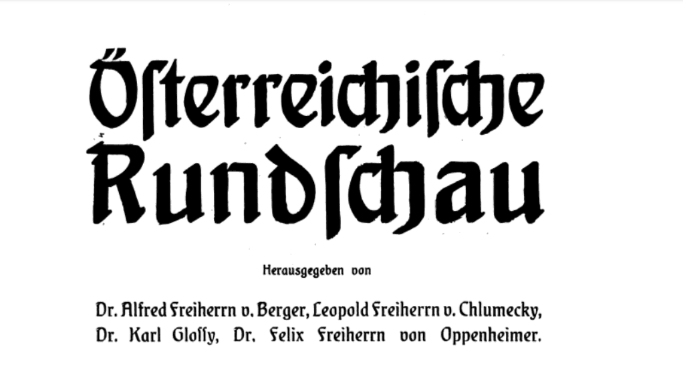
Österreichische Rundschau. Vol. 24. Vienna: Carl Konegen, 1910. Google Books. https://www.google.se/books/edition/%C3%96sterreichische_rundschau/67xrJeMhuS8C.
Parlamentär. 1889. Vienna: Herbeck, 1889. Google Books. https://www.google.se/books/edition/Parlament%C3%A4r/c9d3YetYtagC.
R. W. Seton-Watson i Jugoslaveni: 1906–1918. Edited by Ljubo Boban. Zagreb: Sveučilište, Institut za hrvatsku povijest, 1976. Google Books. https://www.google.se/books/edition/R_W_Seton_Watson_i_Jugoslaveni_1906_1918/Hm0DAAAAMAAJ.
Zeitschrift für Wirtschafts- und Sozialwissenschaften. Vol. 41. Berlin: Duncker & Humblot, 1917. Google Books. https://www.google.se/books/edition/Zeitschrift_f%C3%BCr_Wirtschafts_und_Sozialw/idAsAQAAMAAJ. (Discusses territorial claims in Macedonia, Kosovo, Old Serbia, Bulgarian Exarchate, and propaganda timelines.)
Politische Chronik der Österreichisch-Ungarischen Monarchie. Vienna: Druckerei der Wiener Zeitung, 1914. Google Books. https://books.google.se/books?id=eQs4AQAAMAAJ. (References Serbian press propaganda directed against Austria-Hungary.)

