
Serbian Literary Awakening in Habsburg Hungary
The modern Serbian literary and theatrical tradition did not arise in the liberated heart of Serbia but was largely educated and shaped in the Habsburg lands of Pannonia—today’s Vojvodina—under Hungarian and Central European cultural influence. Dositej Obradović laid the Enlightenment foundation with his rational, didactic works aimed at a narrow serious audience. However, the broader development of Serbian letters, theater, and popular readership occurred among the prosperous Serbian merchant communities of southern Hungary, where economic success, urban life in Budapest, and exposure to European models enabled real cultural progress.
This Pannonian environment proved decisive. While the immediate successors to Dositej offered only modest extensions—dramas by Engel or moralistic writings drawn from Nikolai Eckartshausen, Zimmermann, and similar Central European authors—the sociological consolidation of the Serbian bourgeoisie in Hungary created the conditions for deeper advancement. Budapest became the true center of Vojvodian cultural aspirations. The founding of Matica Srpska in 1826 provided an organizational backbone, channeling the rising national consciousness of the Serbian merchant class.
Second-Generation Successors: European Models Serbianized
It was in this Hungarian-Pannonian setting that the next generation matured. Jovan Vujić (1772–1847) contributed to the emergence of a national theater. Lukijān Mušickī (1777–1837) acted as a programmatic pseudo-classical lyricist, drawing heavily on Horace, Schedius, and assorted German and Russian models. Far more significant for the wider public was novelist Milovan Vidaković (1780–1841), whose romantic-pseudo-historical tales—rooted ultimately in the Baroque novel—still found readers among the lower middle class. Vidaković’s lasting achievement was creating the first substantial Serbian reading public hungry for entertainment, moving beyond Dositej’s elite educational mission.
One figure of this Hungarian-inspired Pannonian school remains Jovan Sterija Popović (1806–1856). Son of a Greek merchant father and a Slavic-Serbian mother from the Banat, Sterija’s bilingual, bicultural upbringing in this multi-ethnic Hungarian province sharpened his tongue and observational powers. Though he began with Slavic-Serbian pathos and paid youthful tribute to Vuk Karadžić, he stayed true to the Enlightenment spirit. For him, the theater remained a moral institution above all.
Sterija’s “sad plays”—sentimental, pseudo-historical dramatizations of folk material with Baroque and Shakespearean borrowings—helped build a repertoire. His true genius, however, shone in comedy. With a mature, often misanthropic eye, he dissected the bourgeois society of the Hungarian-Serbian provinces. While heavily indebted to foreign models (especially Molière, but also Weiße and Kotzebue), Sterija so thoroughly Serbianized these influences that the adaptations gained genuine national vitality. He replaced abstract or generic characters with authentic Serbian types drawn from the living reality around him.
The Miser (1837), his masterpiece, best illustrates this achievement. Modeled on Molière, it nevertheless far surpasses the classical original in lifelike Balkan-Byzantine concreteness. The miserly Greek shopkeeper father—greedy, haggling, morally arrogant about “Greek wisdom” versus Serbian “barbarity”—speaks in a grotesque mixture of hissed Greek and broken Serbian. His petty calculations (including the old servant who after eleven years still “owes” 18 florins and 44 kreuzers), outbursts over education costs, and ultimate defeat by Serbian practicality create unforgettable comedy. The play captures the real cultural clashes of Pannonian merchant life under Hungarian rule.
Sterija’s satire, rooted in constitutional pessimism and bitter realism, found further expression in comedies such as The Patriots. His prose reckoning with Vidaković’s novels and his reflective poetry also carry original value.
Exporting Hungarian and German Pannonian Culture to Serbia
These Pannonian Serbs, educated within the Hungarian cultural sphere and nourished by its theaters, printing houses, and intellectual currents, ultimately supplied the young Principality of Serbia with much of its needed high culture. In 1842, Sterija himself succeeded Dositej Obradović as head of the Ministry of Education (Culture), carrying the fruits of this Habsburg-Hungarian schooling southward.
Thus, the Serbian national literary revival of the 19th century was, to a remarkable degree, a product of the Serbian diaspora’s immersion in Hungarian and Central European civilization. The merchant cities of Pannonia, especially Budapest, provided the economic base, the audience, the institutional framework (Matica Srpska), and the European models that Serbs took and adapted. From this fertile borderland soil arose not only an educated readership but a living national theater and a gallery of immortal comic types that still affect Serbian culture today. The cultural education that enabled Serbia’s literary coming-of-age was, in large measure, acquired in Hungary and the Habsburg Empire.
Source
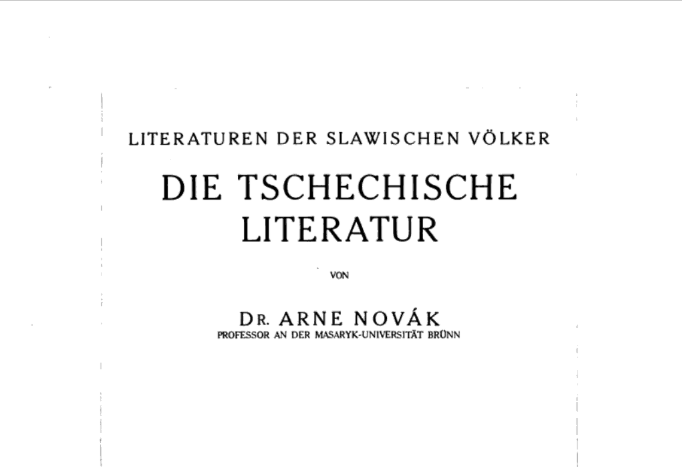
Handbuch der Literaturwissenschaft: Literaturen der slawischen Volker: Die tschechische Literatur, von Dr. Arne Novak. Die serbo-kroatische Literatur, von Dr. Gerhard Gesemann. 1931

