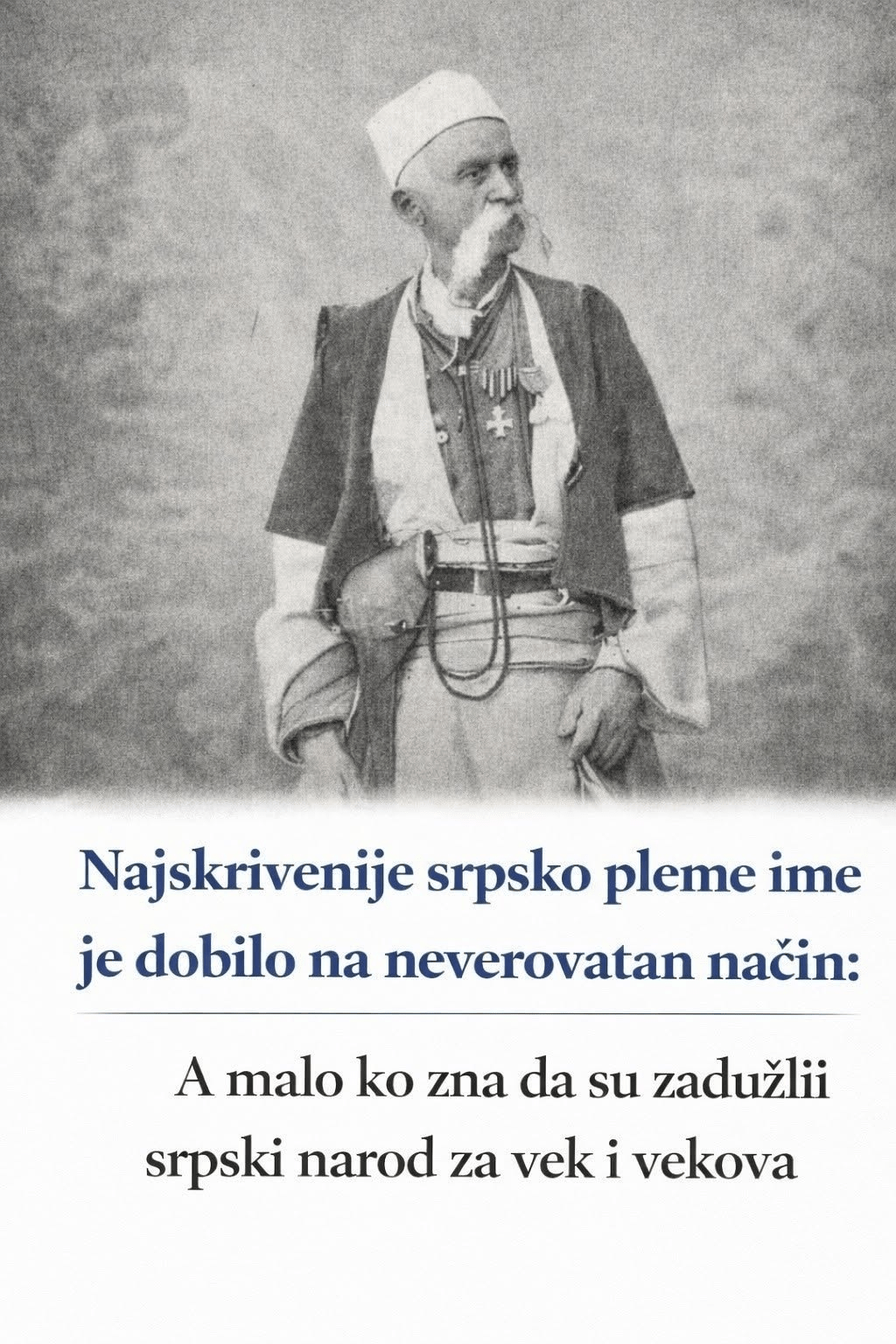

Aside from the irony of the Serbian article showing a Mijaci (Mjaku) tribes member wearing the Albanian plis (qeleshe), there is much in this article that can be questioned or even debunked.
Reality
Mijaks are a well-documented ethnographic subgroup of ethnic Macedonians and Albanians living in the Mijačija / Dolna Reka region (around Galičnik, Lazaropole, etc.) in western North Macedonia. Multiple independent sources, including Wikipedia, Macedonian ethnographic studies, and academic references, consistently classify them this way. If anything, Macedonian tribes derive from Albanian tribes.
They speak a Macedonian dialect (Galičnik-Lazaropole or Reka dialect), practice Macedonian folk customs, and identify as Macedonians today (with some historical fluidity in the pre-nationalist era, common across the Balkans). They are not a Serbian tribe. Claims of them being Serbs until WWII or producing “famous Serbs” reflect early 20th-century Serbian irredentist mapping of the region as “South Serbia,” not modern ethnic reality.
The Image: Old man in “Albanian plis”
This is a key visual tell. The plis (or qeleshe) is a traditional white, brimless felt skullcap that is a distinctive symbol of Albanian ethnic identity, worn across Albanian-inhabited areas (Albania, Kosovo, western North Macedonia, etc.). It is not a standard Serbian or core Macedonian folk hat.

Macedonians wearing Albanian tirqi (wool costume)
Mijak men’s traditional clothing typically includes woolen vests, sashes, and various felt caps or hats, but the specific plis points to cultural overlap or Albanian influence in the multi-ethnic Reka/Debar region (which has Torbeši Muslims, Albanians, and others nearby). Using a photo of a man in Albanian-style headwear to illustrate a “Serbian tribe” is misleading at best and deliberately deceptive at worst. It ignores the regional cultural mixing while pushing a Serbian narrative.
Jovan Cvijić’s writings
The article heavily quotes Serbian geographer/ethnographer Jovan Cvijić. He did study the Balkans and described Mijak traits, villages, and craftsmanship. However:
Cvijić was not a neutral observer — he was a key Serbian academic whose work supported Serbian imperialist claims in Macedonia after the Balkan Wars and WWI. He classified various groups in ways that aligned with Serbian interests (e.g., viewing Macedonians as a “floating mass” that could become Serbs or Bulgarians). Cvijić also tried to slavicize Albanian toponyms but failed.
Serbian sources today selectively quote and reinterpret him to fit modern nationalist narratives. Contemporary Macedonian and international sources do not support reclassifying Mijaks as Serbs.

The Brsjaci (Berjashet) in Poreč, photographed in Shkup in 1937, wearing Albanian wool costume.
Other claims
Famous personalities and builders
Mijak woodcarvers (e.g., Frčkovski family) and masons were skilled and worked across churches/monasteries in the region, including Hilandar. This reflects regional Orthodox Christian craftsmanship under Ottoman rule, not proof of Serbian ethnicity. Many such artisans were Macedonian or from mixed backgrounds. Attributing them exclusively to “Serbian” heritage is cherry-picking.
Kosovo Battle, Hilandar, etc
Traditions and memories of medieval Serbian history exist in many Orthodox communities in the Balkans due to shared religion and Nemanjić-era influence. This does not make the group ethnically Serbian. Similar shared memories exist among Bulgarians, Macedonians, etc.
Krsna Slava and customs
Slava is practiced by Serbs but also has parallels in other South Slavic Orthodox groups. Mijaks celebrate it within their Macedonian cultural context.
“Serbian army liberated them”
The 1912 Balkan Wars involved Serbian (and Bulgarian/Greek) forces against Ottomans. Framing it as “liberation” of “Serbs” is standard Serbian nationalist historiography for the annexation of Vardar Macedonia, which many locals experienced as occupation or assimilation pressure rather than pure liberation. Serbian troops massacred thousands of Macedonians in 1912-1913 when they invaded Macedonia. That is not liberation.
Name origin
Speculative folklore (“mi jaki” = we are strong, etc.). No solid link to Serbian identity.
Serbian propaganda patterns
This article fits a recurring pattern in some Serbian propaganda media of claiming Macedonian (and sometimes other neighboring) Slavic groups, history, and territories as inherently Serbian (“South Serbia,” “Serbian tribes,” etc.). This echoes pre-WWII and Yugoslav-era narratives denying a distinct Macedonian ethnicity. Similar tactics appear in claims about other groups or sites.
The region has always been ethnically complex (Macedonians, Albanians, Torbeši, historical Vlach/Aromanian influences, etc.). Nationalist articles like this flatten that complexity to serve one narrative.
Prof. Dr. Nebi Dervishi: The Mijaki (Mjaku) are of Albanian origin
“Because Historically, the Mjaku as a tribe is of Albanian origin since prehistoric times and not as people who have not read at all say. Margarita Castle so also Prof. Dr. Nebi Dervishi, regarding the ethnogenesis of the Mijak tribe after much research, even Slavic-Macedonian ones, states this way:
“In the 10th century we have another population movement-emigration to Reka e Vogel from the Bistra plain. At this time the Mijak tribe is announced. Buzharovski says that the Mijaks came from the Galik river area. While they settled in the Thessaloniki area. This can be argued. For the time when the Mijaks came, he says that when the old graves of Galeshnik were opened, the remains were sent to Skopje for analysis and it was found that these graves are 1000 years old.
This also confirms the thesis that this tribe were herders who came here from Thessaloniki. This happened during the time of the ruler Samuel. For whom it is said that the mother was a Vlach and the father was Albanian. And after they settled on the Bistra mountain. There with later assimilated into Macedonian Slavic. The Mjak population brought with them their own Albanian language:
“Consulting various authors, we come to the conclusion that during the 10th-13th centuries, in the mountainous areas, especially in Dibra, many peoples interwoven and created here. The first are the Arbers or Arbëri, this indigenous people who spoke the Albanian language, Later the Mjaks, due to the religions to which they were converted, spoke Albanian, Vlach, Slavic and Greek.”
As can be seen, the Mijaks have a very interesting history, a history of wandering from one place to another until they settled where they still live today, in Mijak, although their movement has never stopped. For the Mjaks of the village of Mijak, it is said that three hundred years ago their ancestors came here from Topojan and Shipkovica. The inhabitants of Mjak themselves say that the families that moved from the Arat e Sobave to Beguncë are not related to the current Mjaks.
The Beguncës say that they are from the Berishë clan, while the Mijaks are from the Krasniqe clan. While the Komnenovs of Kuqevisht, while they lived in Mjak, were all Orthodox Albanians, with the migration to Kuqevisht they were assimilated into Serbs. The well-educated and trained Serbian church and priests had the goal and were paid to make these Orthodox Albanians Orthodox through religion or Serb.
As a punishment for those who do not return to Serbs, their land was taken away, they were even killed and chased from this country. In most cases, they achieved their goal, they made the Albanian Orthodox population their own. As a Slavic force by force. For this, Urošević says; that the “Mjaku tribe are Serbs! And he himself calls the Albanian Mijaks “Shkije” (Slavs).
Based on the fact that the Komjanovs were from here since 1912, after the Serbian invasion war, the Serbization and Slavization of the Albanian Orthodox took off. Even the Komnenovs were converted to Serbian precisely because of church and military pressure. While foreign authors said that the Albanians of Mjaku are Slavs.
While according to Atanasije Urošević, they said that the Mijaks are not autochthonous, we ask the honorable academician where he got his notes about the past of Mjaku? The Mjaks were and came from Albanians. And in the last 300 years they married Tanushas, and there is not a single house that is not a nephew or uncle of Tanushas”.
Historian and author Feri Arifi writes:
“Dame Gruev’s family background: He was born in the village of Smilevo (near Manastir) or say it or not and came from a Mijaci family. The Mijaci are a sub-ethnic group called Slavic and who are Albanians where all Slavic symbols are taken from them assimilated who traditionally live in the region of Macedonia around Ohrid and Struga.
Sources
Feri Arifis writings.
Prof. Dr. Nebi Dervishi. “The Mijaks are Albanian”.
Lazaropole Blog. 2009. “MIJAKS.” June 2009. http://lazaropolee.blogspot.com/2009/06/mijaks.html.
MIJACI.COM. n.d. “A Research Journal on the Mijak People.” Accessed June 15, 2026. https://mijacidotcom.wordpress.com/.
Britannica. n.d. “North Macedonia – Ethnicity, Religion, Language.” Accessed June 15, 2026. https://www.britannica.com/place/North-Macedonia/People.
Cvijić, Jovan. (Various works, including The Balkan Peninsula and the South Slavic Lands). Cited in Serbian media and ethnographic studies.
Gounaris, Basil C. n.d. Excerpts from History of Macedonia. Macedonian Heritage. https://www.macedonian-heritage.gr/.
Minority Rights Group. n.d. “North Macedonia.” https://minorityrights.org/country/macedonia/.

