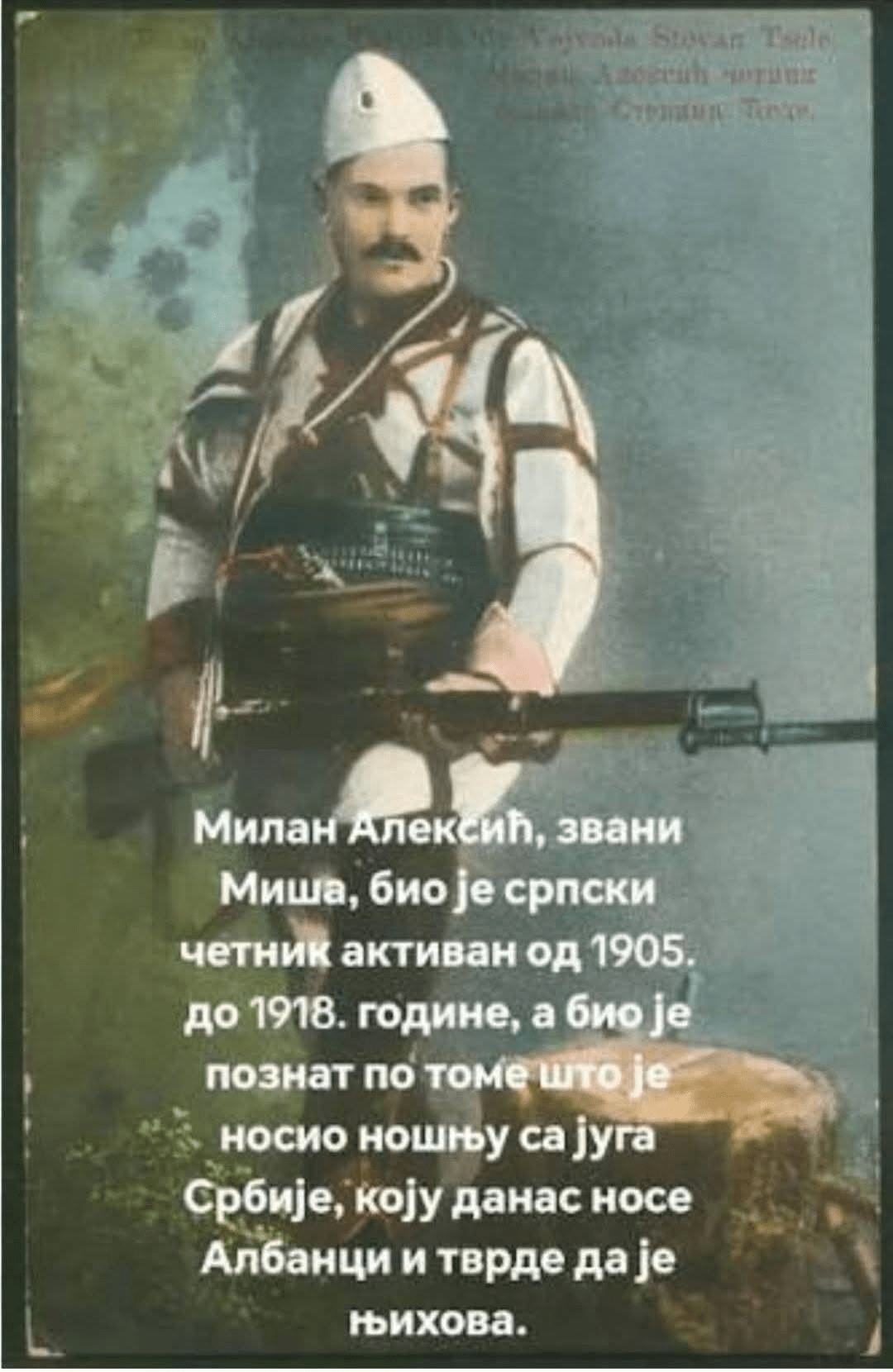

The propaganda image circulating in Serbian online spaces features Milan Aleksić (known as Miša or Marinko), a Serbian Chetnik fighter active in the early 20th century during the Balkan Wars and World War I era. The accompanying text claims he wore “southern Serbian costume” (“nošnja sa juga Srbije”) that Albanians supposedly wear today and falsely claim as their own. This is not true.
This is a classic example of historical revisionism and cultural appropriation in reverse. A quick visual analysis of the photo reveals what is plainly obvious to anyone familiar with Balkan ethnography: the man is wearing quintessential Albanian traditional male attire, most notably the iconic white felt plis (also called qeleshe) and the distinctive woolen elements of highland Albanian costume.
The Plis/Qeleshe: An Albanian Icon, Not Serbian
The most striking element is the white, brimless felt skullcap. This is the plis (or qeleshe), one of the most recognizable symbols of Albanian identity for centuries. Ethnographic sources consistently identify it as a traditional Albanian garment with roots in Illyrian-era Balkan headwear.
– It is made of wool (from Albanian *lesh* = wool).
– It has been a marker of Albanian highland dress for generations, distinguishing wearers in the Ottoman Balkans.
– Serbian traditional costumes in central and northern regions typically feature different headgear, such as the šajkača cap. In southern border regions, similarities exist due to centuries of coexistence and cultural exchange — but the pure white plis remains overwhelmingly associated with Albanian communities.
Claiming this as “southern Serbian” while accusing Albanians of stealing it is historical gaslighting. The costume in the photo — layered wool vest, braided elements, and overall silhouette — aligns closely with Gheg Albanian male dress from northern Albania and Kosovo regions, not core Serbian folk costumes from Šumadija or elsewhere.
This is an Albanian “tirqe” traditional costume made from wool
– The specific combination in Aleksić’s photo — especially the prominent plis — is not representative of broader Serbian national costume.
– Albanian traditional clothing has hundreds of regional variants and deep documented continuity in Albanian-inhabited areas.
– Nationalist memes like this one selectively highlight borderland fighters wearing local practical attire (common for guerrillas operating in mixed regions) and then retroactively claim it as exclusively Serbian while denying the Albanian roots or parallels.
This tactic serves modern political narratives around Kosovo and identity rather than objective cultural history. Chetnik fighters in the early 1900s often operated in Ottoman Kosovo and Macedonia, where adopting practical local highland dress (predominantly Albanian-style in many villages) made tactical sense. It doesn’t transform the clothing into “Serbian.”
The Propaganda Pattern
This image fits a recurring pattern in Balkan online discourse:
1. Show a historical photo of someone in regional attire.
2. Label it “ours.”
3. Accuse the neighbor of theft when they wear something visually identical.
In reality, traditional wool costumes, felt caps, and layered vests predate modern Serbian identity. They belong to the shared heritage of the Albanian tribal region’s peoples — and the plis has a particularly strong and continuous association with Albanian identity that Serbian claims in this meme attempt to erase.
Milan Aleksić was a historical figure who fought for Serbian imperialism. Any alleged “respect” (though he most likely committed many atrocities against Albanians) for his role doesn’t require distorting the clear visual evidence of what he was wearing. The outfit is not a Serbian costume. It’s a man in early 20th-century Albanian-style highland wool costume, operating in a contested border region.
Pretending that this is Serbian clothing which Albanians took, especially through selective memes that ignore ethnographic reality, is propaganda — not history. The plis and associated wool attire remain proudly Albanian today for good reason.
Sources
Wilkes, John J. *The Illyrians*. Oxford: Blackwell, 1992.
(Identifies the familiar Balkan skull-cap as the Albanian *qeleshe* in discussions of Illyrian material culture and continuity.)
(The qeleshe, also known as plis, is a white brimless felt skullcap traditionally worn by Albanians. It has spread throughout Albanian-inhabited regions and has been handed down from Illyrian times.)
Lajci, et al. (referenced in) “The Untold Story of the Albanian Plis.” *Prishtina Insight*, April 1, 2016. https://prishtinainsight.com/the-untold-story-of-the…/.
Balkan Academia. “Exposing Serbian Propaganda: Trying to Culturally Appropriate the Albanian Tirqi (Wool) Costume and Plis as Serbian.” February 6, 2026. https://balkanacademia.com/…/exposing-serbian…/.
Urošević, Atanasije (as cited in regional studies). In analyses of Kosovo/Metohija costumes, notes that pre-1912 men’s attire in the region (including skull caps) showed strong overlap, with the Albanian-style cap being common and later abandoned by Serbs in favor of šajkača.

