
by Ammar Anwer
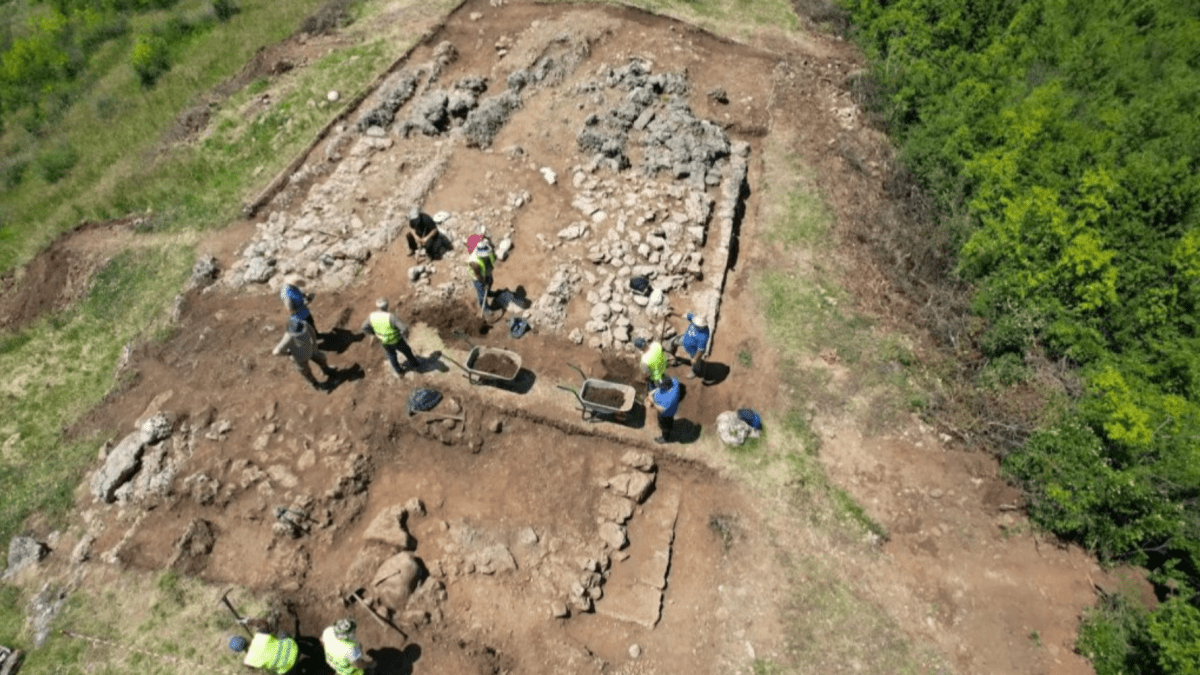
Polish archaeologists have helped uncover the remains of a unique 2,000-year-old temple in Bushat at the site of a rare “lost city” in the Balkans. The groundbreaking discovery was made at Bushat, a village in northern Albania, where a vast ancient settlement linked to the pre-Roman Illyrian civilization was first unearthed in 2018.
The temple is the first Illyrian structure of its kind ever identified in the region and offers new insight into a culture that once occupied much of the western Balkans, archaeologists said.
Researchers believe the city found beneath modern-day Bushat may be the ancient Bassania—a long-lost Illyrian settlement— though they are still searching for conclusive proof.
The fortified city once stood between two important centers of the ancient Illyrian world: Shkodra, the Illyrian capital, and the city of Lissos.
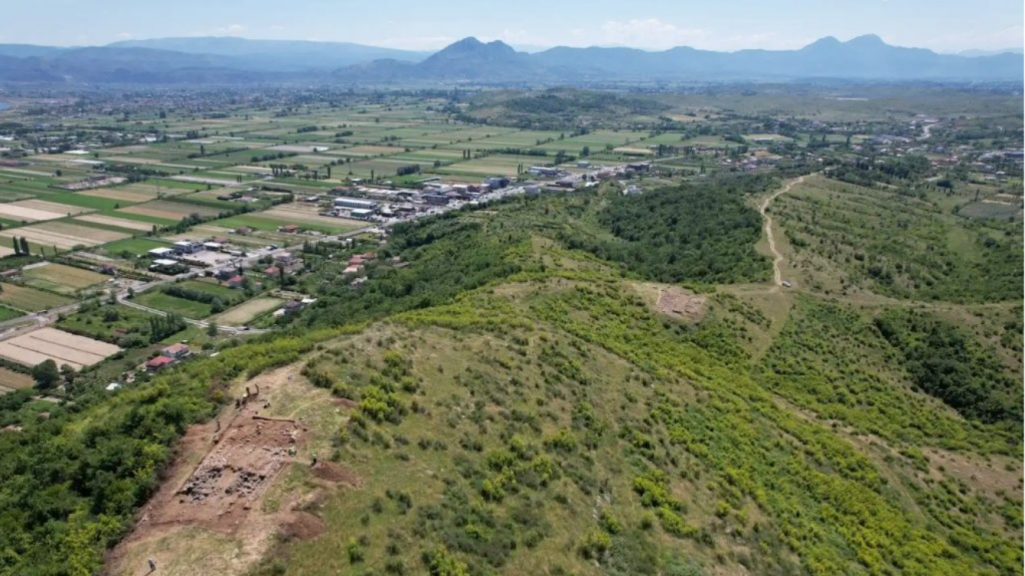
During the latest excavation season, archaeologists from the University of Warsaw and the University of Tirana focused on the city’s acropolis, located on a hill overlooking the entire site.
There, they uncovered the complete stone foundations of a large rectangular structure measuring 13.6 by 9.6 meters. Its proportions match those of classical Illyrian temples.
“Judging by the building’s location at the top of the hill and its orientation toward the cardinal directions, we can conclude that these are the remains of a temple that crowned the city’s acropolis from the fourth to the second century BC,” said Piotr Dyczek, director of the University of Warsaw’s Centre for Research on the Antiquity of Southeastern Europe.
He added that archaeologists had also partially uncovered a defensive wall surrounding the hill, which likely served as a temple temenos—a sacred enclosure dedicated to a deity.
From temple to quarry
Archaeologists said the discovery has particular significance for research into Illyrian culture, as no similar temple had previously been found in northern Albania.
The wider site has already yielded substantial defensive walls, two gates with bastions and fragments of ancient buildings.
After being abandoned, the ancient settlement at Bushat gradually fell into ruin and was later used as a local quarry. Many nearby houses still contain large cut stone blocks taken from the archaeological site.
In the Roman period, a small structure was built next to the temple ruins and remained in use for nearly a century. It served as an observation point, allowing control over a wide area stretching from Shkodër in northern Albania to ancient Lissos on the Adriatic coast.
Source

