
Who Was Kyriakos Simopoulos?
Kyriakos Simopoulos (1921–2001) was more than a historian; he was one of the most outspoken critics of established historical narratives in modern Greece. In a field where history is often intertwined with national myths and political agendas, Simopoulos sought to challenge conventional interpretations and encourage critical examination of accepted truths.
He is often remembered as:
A Defender of Historical Inquiry – a scholar willing to question long-established assumptions and revisit controversial topics.
An Archival Researcher – whose extensive body of work drew upon a vast range of historical sources and documentation.
A Critic of Official Narratives – who encouraged readers and students to approach history with skepticism rather than blind acceptance.
When History Speaks Differently: Simopoulos’ Interpretation
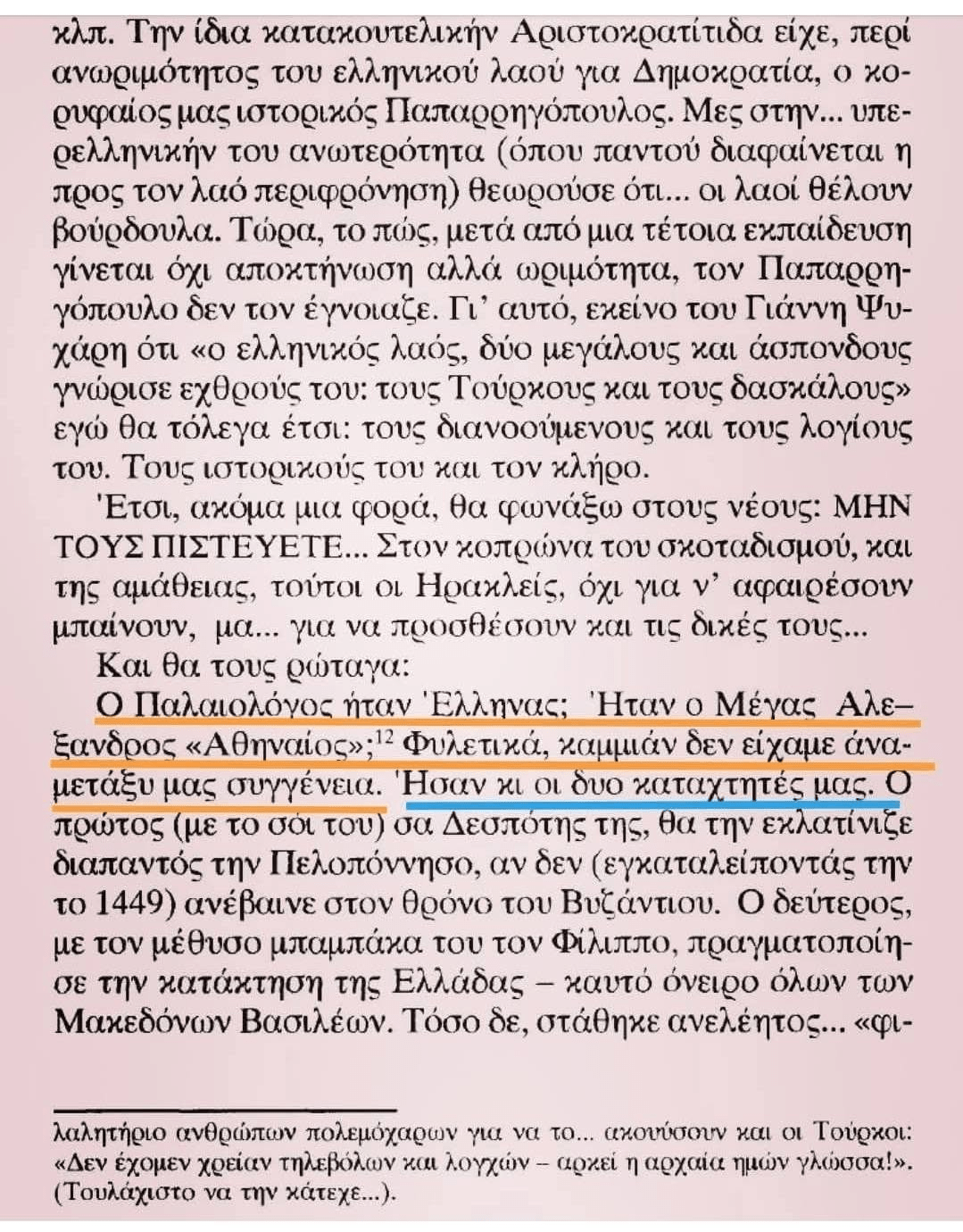
In works such as The Ideology of Conquest, Simopoulos challenged aspects of mainstream Greek historiography and argued that certain historical narratives had been shaped by later political and national considerations. Whether one agrees with his conclusions or not, his writings remain an important contribution to debates about identity, nationhood, and the interpretation of the ancient Balkans.
1. Macedonians and Epirotes: Distinct from the Classical Greek World?
Simopoulos argued that ancient Macedonians and Epirotes occupied a position that was not always viewed as fully Greek by many writers of the classical period. Ancient sources contain both hostile and favorable descriptions, reflecting the political rivalries of their time. According to Simopoulos, these populations should be understood within their own historical and cultural context rather than simply through later national narratives.
2. Questions of Identity and Kinship
Drawing on ancient testimonies, Simopoulos emphasized passages suggesting that some ancient peoples viewed themselves as distinct from southern Greek populations. He interpreted such references as evidence that ethnic and cultural identities in antiquity were far more complex than modern national histories often portray.
3. Critique of Official Historiography
A central theme in Simopoulos’ work is his criticism of historians whom he believed projected modern national concepts onto the ancient world. He argued that historical scholarship should remain open to debate and should not treat any national narrative as beyond question.
4. A Message for Modern Readers
Perhaps Simopoulos’ most enduring message is a call for intellectual independence. He urged readers to examine primary sources for themselves, question inherited assumptions, and recognize that the ancient Balkans were a complex mosaic of identities that cannot always be neatly mapped onto modern nations.
Whether one agrees with his interpretations or not, Simopoulos remains an influential and provocative figure whose work continues to inspire discussion about history, identity, and the relationship between scholarship and national memory.

