
By Qazim Namani – Dr. Sc. Archaeology & Cultural Heritage: Kosovo Institute for the Protection of Monuments, IKMM, Pristina
The cosmology of Dardanian folk art applied to the work of chimney stones in the village of Shajkoc by the folk master Jetullah Kurtolli
The village of Shajkoc, about 7 km, on the right side from the city of Besiana. This village, which lies to the south-east of the Llap River plain, and at the foot of the Galab Highlands, has a relief suitable for life. The geographical position thanks to the Llap plain and the hills of the Galab Highlands, in this village, in addition to agriculture, livestock farming was also very developed.
The location between the famous mines of the Galab Highlands and the ancient city of Gllaminik, has influenced the territory of this village to pass important roads that connected the villages of this highland with the Llap plain and with the famous Nish-Lezha road which passed through the ancient city of Gllaminik.
The city of Glamnik is also known as the city of the mines of western Galab such as: Herticë, Bervenik, Barainë, Ballaban, Keqekollë, Koliq and up to Prapashticë, and the mines on the eastern side of the Albanik mountains such as: Majac, Patok, Kaçanull and up to Bollasicë and Rrzhanë.
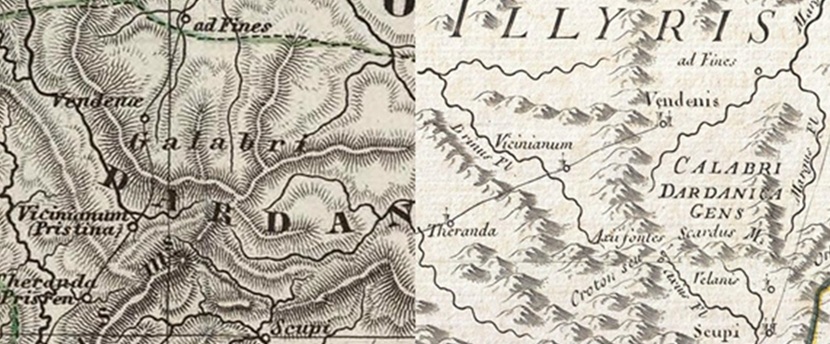
Maps showing the extent of the ancient Dardanian tribe Galabri
The geographical position that it occupies in the central part of our peninsula, between the Kusumli Plain, Prokuplje, Nish, Leskov and Vrajë and the present-day Kosovo Plain, which is characterized by low mountains, rich in minerals, where gold and silver are prominent, with fertile soil and abundant waters, has influenced the development of life and civilization since prehistoric times to develop in the age of metals, antiquity and until the Ottoman conquest.
Archaeological discoveries have testified to a region with a highly developed civilization from the early Dardanian period to the late Middle Ages.
The Ottoman invasion destroyed the thousand-year-old civilization of fortifications and, along with them, the mines, but traces of civilization and folk art were cultivated to this day by the indigenous Albanian population of this area.
The discovery of the Orpheus mosaic in the city of Glamnik, the art and constructions in Justiniana Prima, the village of Shtyllcë near Medvegja and Justiniana Secondë (Ulpianë near Prishtina), are the best evidence to recognize the folk art inherited by the Albanian population of these areas to this day.
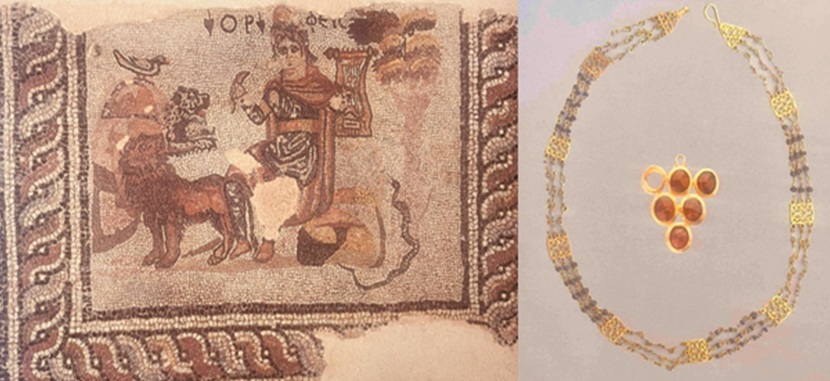
Photo 1. Mosaic of Orpheus discovered on the floor of a luxurious building and Photo 2 Gold necklace discovered in a necropolis, in Vendenija (Gllamnik), near Besiana
The symbols of cult on stones, locks and cult symbols from ancient times embroidered and preserved to this day on the clothing of Albanian women in the villages of Medvegja, are undoubtedly the most important traces that testify to the Dardanian culture and folk art, as well as the autochthonous nature of our people in these parts.
During the Bronze Age in this region, many urn cemeteries were discovered, as well as tumulus cemeteries (Dardan burial mounds), which testify to the development of the rich Dardanian culture of that Bronze Age and later.
Undoubtedly, even during the flourishing period of the Kingdom of Dardania, the 5th century to the 1st century BC, when Dardania was conquered by the Romans, archaeological discoveries prove that this region was among the most developed regions and the core of Dardania’s civilization and economy.
During Roman rule and until late antiquity, in this region, near mines rich in noble metals, many urban cities flourished, which became known as centers of development of culture, art, and world civilization.
Based on the traces of Dardanian art, which, thanks to our folk master, was widely inherited in the time we live in, we can understand that it was precisely the Roman emperors of Illyrian origin from Dardania, and especially from the region of Nish, who influenced the creation of the new social order, and the traces of Dardanian civilization throughout antiquity.
After the edict for equality of classes of the Roman emperor Caracalla, which in 212 created the possibility for emperors of Illyrian origin to lead the Roman Empire, reforms were made in religion and justice by the emperors of Illyrian origin. The Roman emperor of Dardanian origin from the region of Nish, Emperor Marcus Aurelius, in the middle of the 3rd century, named the Sun as the supreme deity of the empire, building in Rome a magnificent temple dedicated to the cult of the sun, and opening a college of senators for this cult in the city of Rome.
The worship of the sun and moon cult among the Dardanians since ancient times has greatly influenced the development of art on the Illyrian peninsula to this day.
The worship of pagan beliefs among the Dardanians did not cease even at the time of the legalization of Christianity by the Dardanian emperor, who also originated from the region of Nish, but these symbols, along with the holy cross as a symbol of Christianity, created by Saint Helena, the mother of Constantine the Great, were expressed in our folk art even in later historical periods.
Even during the reign of Emperor Justinian, who also originated from this Dardanian region, where many scholars connect his birthplace Bederiana with today’s Braine, the flourishing of art, in addition to the well-known constructions during his reign, has left its mark on the tradition of material culture and applied art by the indigenous Dardanian population of this region to this day. From written sources it is known that during his reign Emperor Justinian brought the center of Christianity of Illyricum from Sekanik close to his birthplace, where he brought the best artists of that period to build Justinana Prima, which is thought to be near Medvegja, in the village of Sfircë and Shtyllcë (today the Slavic name Svinjarica), in the direction of the village of Bojnik, and Justinana Seconda in Ulpiana near Prishtina. It is worth noting that Sfirca and Shtyllca or Justiniana Prima, until the Eastern Crisis of 1879, were inhabited by indigenous Albanian populations. It is believed that the village of Shtyllca took its name from the magnificent pillars of Justiniana Prima.
As can be seen from historical sources, traces of traditional art in this highland have been preserved to this day only among Albanians, and this is best evidenced by the tradition of using cult symbols in the folk clothing of Albanian women in the villages of Medvedja and the presentation of these symbols in strong materials by Albanian masters within the borders of the Ottoman Empire after 1879 and until now.
It is important to know that after the establishment of the new border and the division of this highland between Serbia and the Ottoman Empire, the use of symbols on women’s clothing within the borders of the Ottoman Empire was prohibited, but this tradition of using them in stone, wood, metals and handicrafts was also applied across the Serbian-Ottoman border.
During the late antiquity period, Justinian rebuilt many fortifications, cult sites, cities with roads, irrigation systems, public baths, amphitheaters, and luxurious buildings with floor mosaics, which today reflect the perfect Dardanian art of the indigenous population of the time.
These works of art, cultivated for thousands of years, generation after generation, can be found today in the traditional folk costumes of the indigenous population in the Albanian villages of Medvedja.
These aristocratic, solemn garments with perfect art were worn and worked throughout the highlands of Galab and Llapi, but after the division of this highland and the establishment of the border in 1880, the Ottoman Empire, due to Christian art, banned it, but traces of this ancient traditional art, in these parts, were worked in strong materials, stone, wood and metal.
Among the most famous masters of this area who left traces of their representation in their works of traditional Dardanian art to this day is the Kurtolli family from the village of Shajkoc in the municipality of Besiana.
During the reconnaissance of the terrain of this area, we have encountered inscriptions and symbols on stones that are also evidence of a developed civilization in the past. As ancient traces of civilization in this area, it is worth mentioning the inscriptions on stones in the village of Dumnicë e Epërme, Besiana municipality, as well as the symbols on stones that we have encountered on the surrounding walls of courtyards and the ruins of buildings in the village of Lladoc, about 3 km north of the village of Shajkoc.
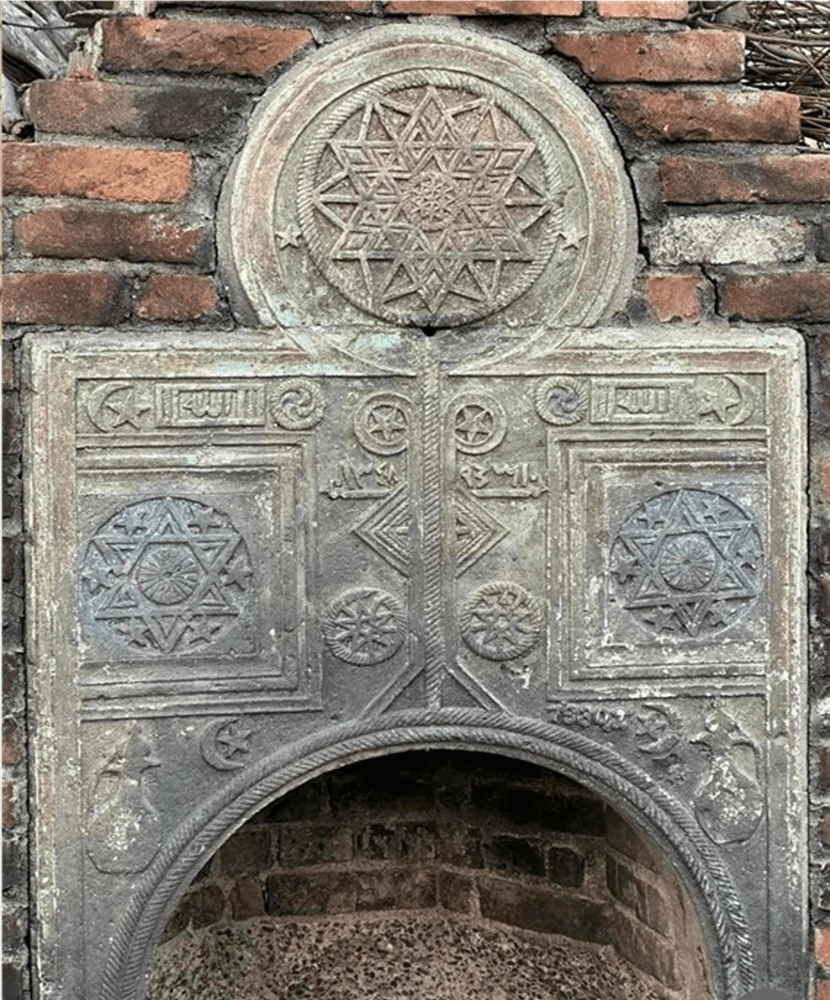
The application of traditional Dardanian art on stone, best expressed in the work of fireplaces between the two world wars by the now famous master Jetullah Kurtolli, from the village of Shajkoc. In the work of this our folk master, we read traces of Dardanian art with chronological origins since ancient times, developed with a perfect artisanal tradition to present the symbols of the pagan cult, and hospitality and generosity as an old tradition of this population. In this art, the Swastika, as a symbol of the cult of the sun, in all the most developed civilizations of the world since the fifth millennium BC, is to be distinguished. Also, the rosettes made with rare craftsmanship with the six-pointed star symbolizing the cult of the sun, but also the moon and the vulva as symbols of fertility, testify to a developed Dardanian civilization and the thousands of years of autochthonousness of this population in these lands.
In the following photo, you can see traditional art on two fireplace stones crafted by Jetullah Kurtolli, as well as some stones with symbols, discovered in the village of Lladoc, about 2 km from the village of Shajkoc.
Without a doubt, this indigenous population developed this art throughout the Middle Ages, the Ottoman occupation, and until today.
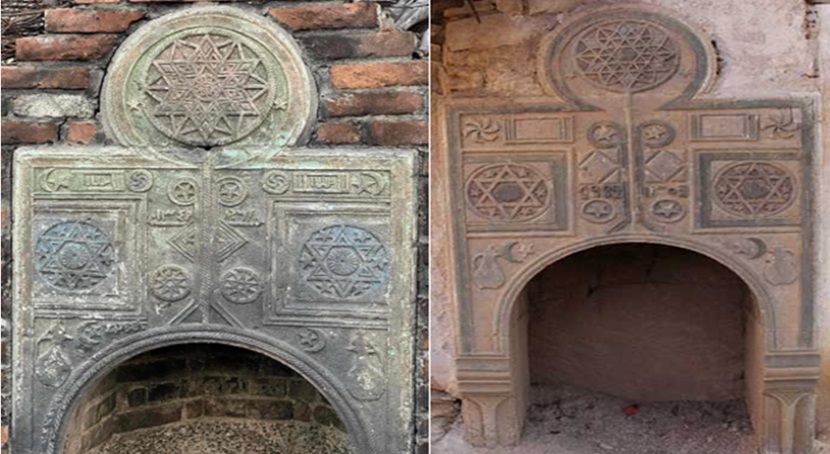
Photo 1. Fireplace stone in the Kurtoll family, Shajkoc village, Photo 2. Fireplace stone, in the Bllata family, Rashan village, Mitrovica municipality
Of particular importance are the cult symbols and old inscriptions that we encountered during field research in the village of Lladoc, Besiana municipality.
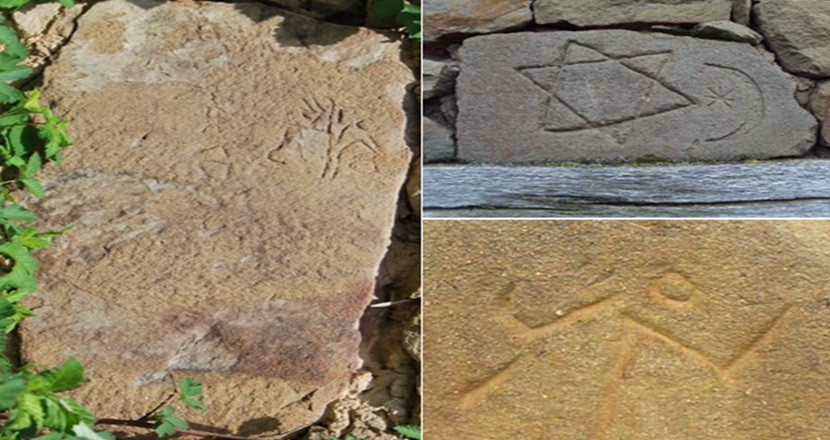
Cult symbols and undeciphered inscriptions in the ruins of residential houses in the village of Lladoc, Besiana municipality
The village of Lladoc is only about 2 km from the village of Shajkoc, where members of the Kurtolli family from Shajkoc are known as the last folk craftsmen, who, among other things, applied ancient symbols while working on the chimney stones in these parts.
We believe that by exploring the terrain, we have managed to highlight the values of our recent folk artists, who created these works of art up until our times.
Based on the inherited traces of cosmological symbols in our folk art, we believe that this art was created by a powerful Dardanian tribe such as the Galabri, long before Hellenic culture, so we can fully understand it as Dardanian original art and cosmology.
Traces of the Dardanian civilization can be found today in the works of traditional art of the Albanian population in these villages, but also more widely in the Albanian territories.
Based on archaeological discoveries to date in the territory of Dardania, they have witnessed traces of life and culture, which testify to an autochthonous basis for the development of Dardanian cosmology from the beginnings of civilization to the present day.
In these photos, two other chimney stones made by Jetullah Kurtolli can also be seen.
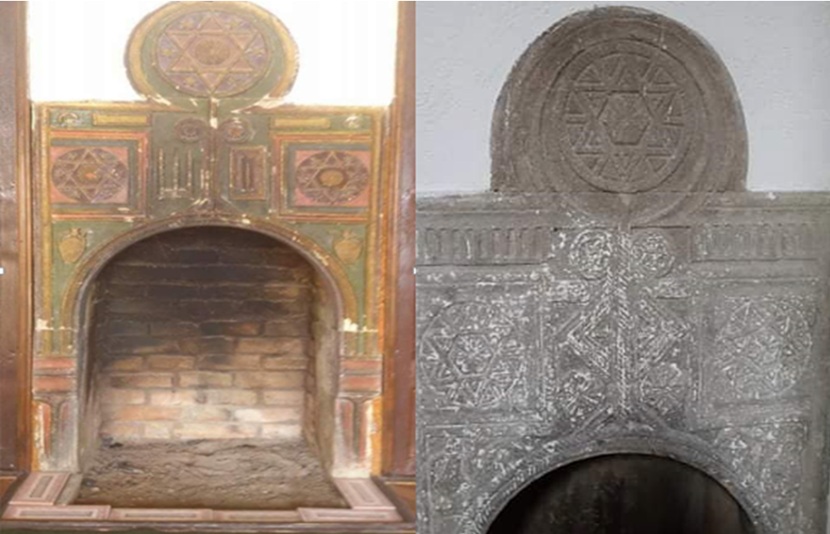
Photo 1. Chimney stones in the village of Letanc, municipality of Besiana, Photo 2. Chimney stones in the village of Radashec, municipality of Prishtina, made by Jetullah Kurtolli
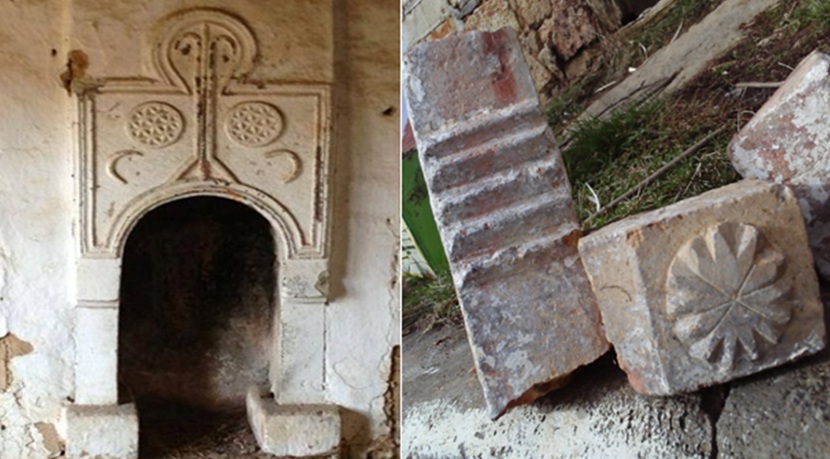
Stones of two chimneys in the village of Herticë, municipality of Besiana, we do not know who worked on them
The expressive artistic figures of ornamentation in the work of fireplace stones by the folk craftsmen of the Kurtolli family, and the clothing of Albanian women in the villages of Medvedja, represent great national interest in testifying to the spiritual connection of this population with the folk art of the ancient Dardanian population in this region.
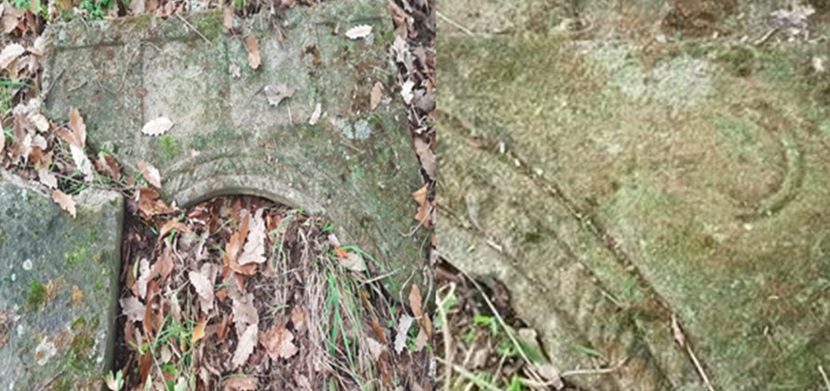
The chimney stones of the Mujku family in the village of Grexhenik, Dardana municipality
While working on the fireplace stones, we understand that our folk master has placed importance on preserving tradition, working techniques, and selected motifs of traditional art.
During the making of these fireplaces, our craftsman’s ability to arrange the ornamental motifs symmetrically on both sides of the fireplace is noticeable.
During field research, we have come across stones worked by the Kurtolli family, and we have even written about the fireplace stone worked in 1934, which is found in the house of Fazli Bllata in the village of Rashan, municipality of Mitrovica, which is almost identical to the fireplace stone that Jetullah Kurtolli and his sons worked in 1930 for his family in Shajkoc. We have found traces of other stones worked by the Kurtolli family in the village of Letanc, Herticë, municipality of Besiana, and a fireplace stone in the village of Radashec, municipality of Prishtina.
Among all the fireplace stone works of this region, the most important is the art depicted on the fireplace stone of the Kurtolli family in Shajkoc.
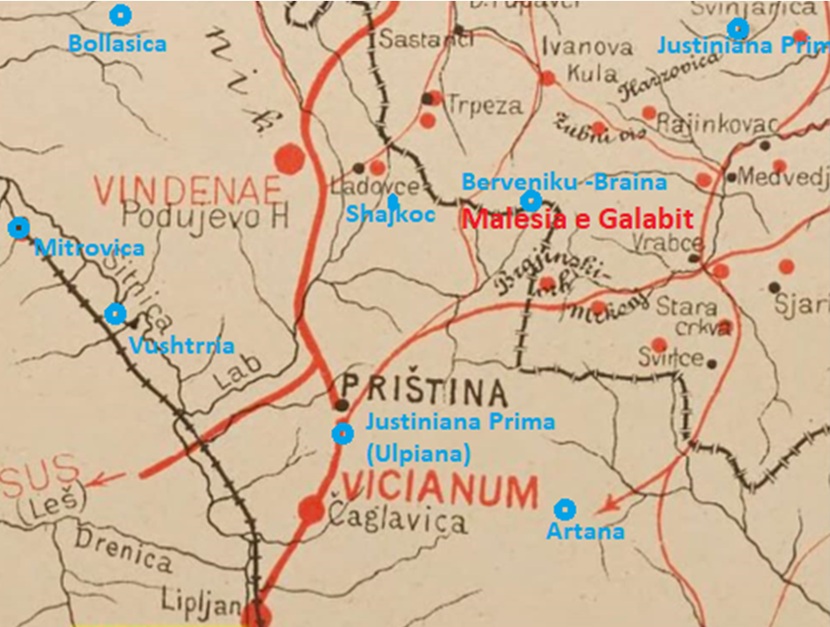
The village of Shajkoc, near the ancient city of Vendenis (Gllamnik) and among many other ancient and medieval cities of this region
As an employee of the Kosovo Institute for the Protection of Cultural Monuments, I received the first information that in the Kurtolli family there were craftsmen who had applied traditional folk art to stone and wood from Shaban Kurtolli, a former KLA veteran from the village of Shajkoc, who testifies to the tradition of working with fireplace stones by his family members.
According to Shabani, these chimney stones were carved between the two world wars by Jetullah Rexhep Kurtolli (1870-1969), his two sons Ramadan and Zeqiri. Ramadan later became known as a hoxha in Prishtina as: Mulla Ramë Shajkoci (1903-1996). Mulla Rama is also known as one of the first teachers in the Llapi region in 1942, while Zeqiri was young and during World War II, he was mobilized in the brigade that sent him to Tivarë, he was killed during the journey, and his grave is unknown. They were an educated family for the time who were familiar with the traces and tradition of Dardanian folk art, so they cultivated this tradition in strong materials. In the family memory it is said that they carved a total of 34 stone plaques of different sizes.
The fireplace stone, crafted in 1930, best demonstrates the tradition of stone carving by folk craftsmen of this area.
The motifs carved on this stone are perfectly crafted, with symmetrical representations of figures and symbols with meaning that give full meaning to the political, social and economic situation of the Albanian population between the two world wars. On the stone where the hearth was lit, on both sides is carved a food container and the ancient astral symbols of the moon and the sun, which show the hospitality and generosity of Albanian families.
The early use of the well-known “Swastika” symbol, an equilateral cross with a right-angled arm at a 90° angle, is believed to have had meanings of life, fertility, and the sun as an encouraging symbol for life and well-being.
The swastika as a symbol has been used by cultures around the world for a multitude of different purposes throughout history: as a symbol in the Middle and Far East, as a stylized cross in Christianity, in culture as a pattern in art, on coins in architecture, and to this day.
Ancient artifacts with the swastika symbol, which the Aryans worshipped and often used in their material culture, later this symbol gave rise to the idea of the dominance of the so-called Aryan heritage as a pure race with an ancient culture of civilization.
The presence of this ancient symbol in our popular culture and tradition is proof that the Albanian population of today’s Kosovo, with an ancient Dardanian heritage, did not lag behind world civilization in the past, but traditional Dardanian art was developed, inherited and preserved to this day, better than among neighboring peoples and other peoples of South-Eastern Europe.
In the central part of the stone, a 48 cm long chimney made of bistak is carved that rises to the head or upper part of the chimney, where four equilateral triangles form a large rosette that symbolizes the sun or the twelve tribes of our people. On both sides of the large rosette of the chimney, small five-pointed stars are carved. The height of the head of the chimney with the large rosette is 44 cm, while the width is 50 cm and the hexagram is 28.5 cm.
The width of the fireplace stone is 94 cm, as is the height from the base of the legs to the top (the head of the fireplace).
The stone on which the symbolic fireplace was carved is 16.5 cm thick, and we think that this stone was taken from a nearby quarry in the Galab highlands.
The arch of the fireplace from the base of the legs is 43 cm high, and based on the fireplace made by Jetullahu, which is preserved in the house of Fazli Bllata in the village of Rashan, in the municipality of Mitrovica, which also has its base of legs preserved, we think that it is possible that the legs of this fireplace were also made with the same decorative motifs.
All the symbolism worked on this fireplace slab is worked inside the fluted surface that surrounds the fireplace stone. In the upper part, in addition to the 6.5 cm swastika, religious elements are also expressed on both sides, written in Arabic script “Allah”, then the five-pointed star with the symbol of the moon on the side, which our master may have intended to represent the flag of Turkey.
In addition to this carved cane that divides the central part of the work, two canes have also been carved on the sides, with bases that form two triangles on the arch of the chimney, as symbols of fertility, while in the upper part they form two circles with a six-pointed star in the middle measuring 19.5 cm.
Below these two stars we have the inscription in Arabic where according to the Ottoman scholar Agron Islami it is written according to the Ottoman calendar the number 1328, which falls in the year 1910/11, and another number 94310, which for me is unknown the purpose of the carving of this number. Under this writing on both sides, three small cannels are carved, forming a triangle measuring 7 cm on both sides, where together with the cannels the triangles have a distance of 19 cm, and a short cannel, worked at right angles to the vertical cannel, like an arrow figure. In the same direction, below, above the triangles and the arch of the chimney, two six-pointed stars measuring 7 cm are carved.
On both sides of the fireplace, within two large rectangular fields closed with canopies, six-pointed stars are also carved on both sides, within a circle with a rosette in the middle, symbolizing the cult of the sun. It is to study and analyze the carving of the five-pointed star in the free space within the circle where the edges of the triangles join. Perhaps the author in this case refers to the reemergence of the communist movement in that period of time.
On the side of the arch at the top of the fireplace, there is a carved moon with a five-pointed star in the middle, and two 19.5 cm vessels, representing hospitality. Next to the vessel on the right side is written the year 1930, we think that is also the year of the production of this traditional fireplace tile in this area!
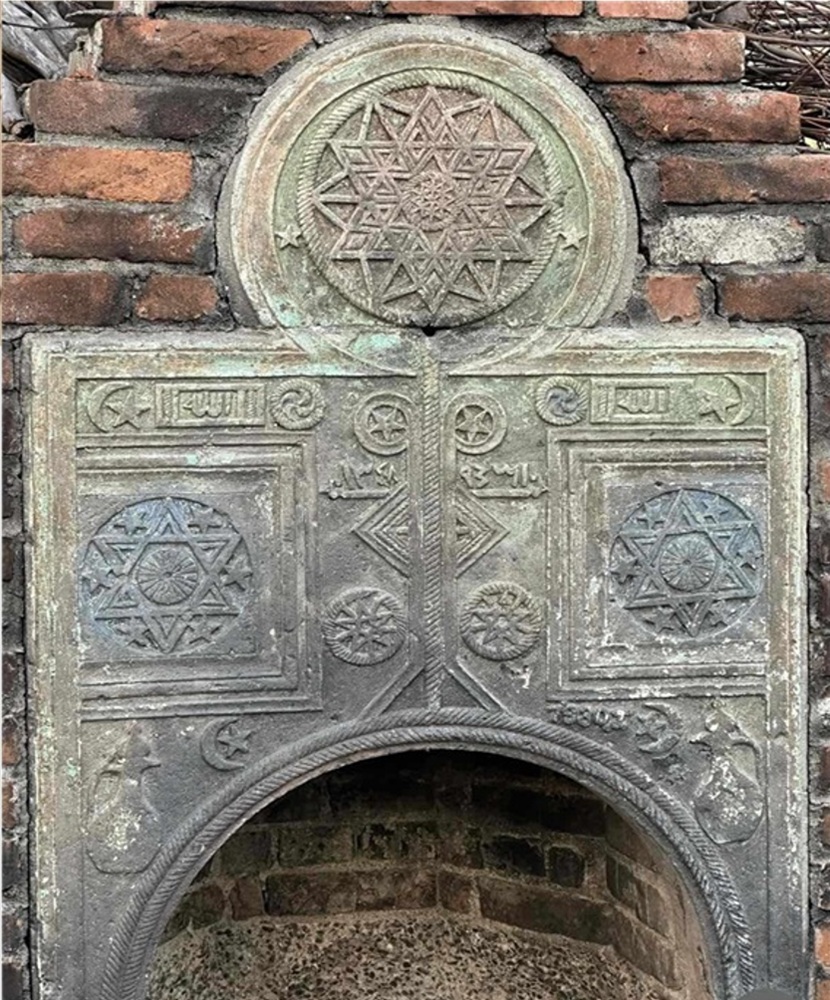
The Chimney Stone in Osman Kurtolli’s family, in the village of Shajkoc, which was carved by Jetullah Kurtolli, Osman’s great-grandfather.
We have also encountered traces of ancient civilization expressed through our traditional art in the other villages of Llapi, Galab and Shala.
Of the discoveries made so far, it is worth highlighting the Tree of Life and the Obelisk discovered in the village of Majac, Besiana municipality.
The Tree of Life, which has the triangle or vulva at its base as a symbol of fertility, with its seven-high development, as it is presented to us on this tombstone, and if we analyze the cross on the right side, at the top of the trunk, we can see how our folk master represents the autochthon of our people from antiquity to the modern era.
Also another symbol that was found in the cemetery of the village of Majac is an obelisk as a symbol dedicated to the cult of the sun. Although this obelisk is not large, like in ancient Egypt, it is enough to understand the worship of the cult of the sun in our country. So far, this is the only obelisk discovered in the territory of present-day Kosovo.
In the photo below you can see both of these important symbols that testify to early traces of civilization in central Dardania.
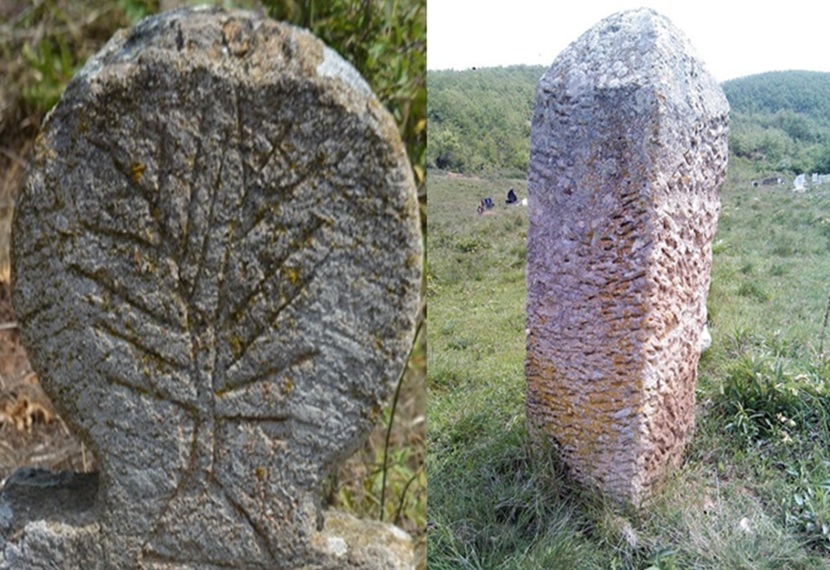
The Tree of Life and the Obelisk in the cemetery of Majac village, Besiana municipality
The symbol of the cult of the sun and moon, in our folk art, inherited from generation to generation thanks to the hands of our folk craftsmen, we find it crafted in various materials to this day.
The cult of the sun is often presented to us with the symbol of concentric circles, in the form of various rosettes, spirals, and swastikas, but it is worth highlighting the symbol of this cult that we encountered in the village of Dumnicë i Epërme in Besiana.
On the wall of a house in the village of Dumnica, we came across a stone with the symbol of the cult of the sun depicted in a circle that radiates rays of light, and within the circle we are presented with the four seasons of the year, of course the summer season presents more sunny weather than the winter season, while spring and autumn have approximately the same weather.
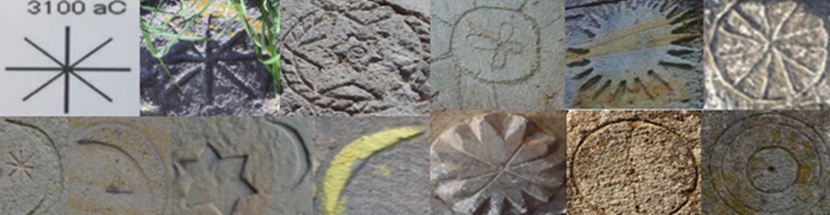
Cult symbols on stones
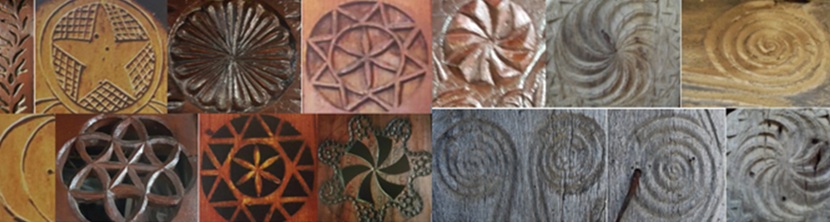
Cult symbols on wood
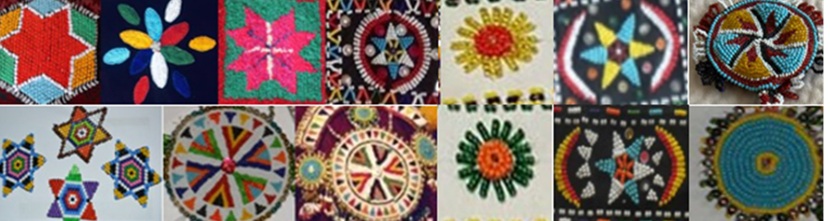
Cult symbols in textiles
There is no doubt that all of these symbols are also found worked in various metals, and especially, during filigree crafts, they were applied in Albanian cities in the last three centuries.
From all this evidence that we have inherited in our folk art, there is no doubt that these are evidence of the autochthonous nature of our people in this important part of Dardania.
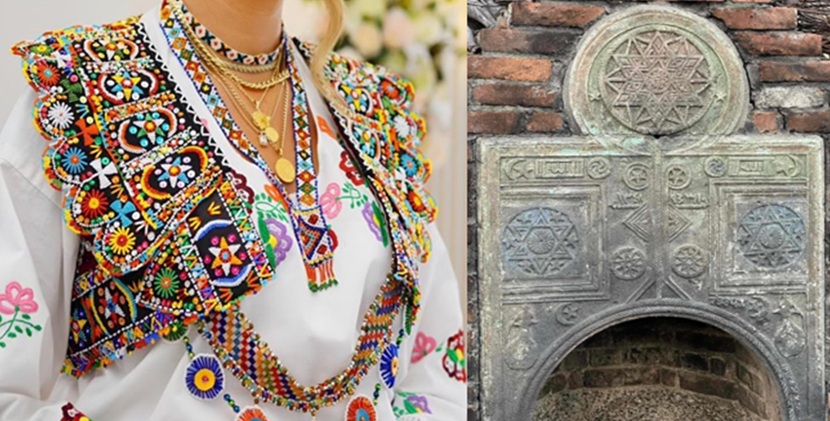
Astral symbols in the clothing of women from the villages of Medvedja and on the fireplace made by Jetullah Kurtolli, in the village of Shajkoc
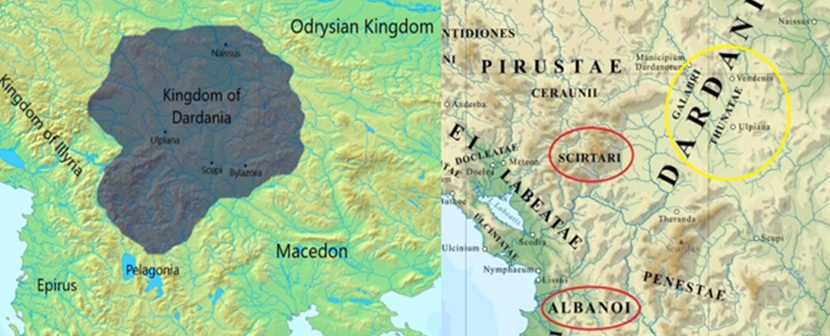
Map that proves the importance of the Dardanian tribe Galabroi, in the Kingdom of Dardania and generally in the Illyrian Peninsula
We also have written sources from ancient authors about the importance of the Dardanian Galabri tribe, so based on the archaeological discoveries and traces of civilization that we encounter today in the territory of central Dardania, we believe that the Dardanians did not lag behind in cultural and economic development with other Illyrian tribes and other peoples of the Mediterranean.
If we conduct a general analysis of the traces of traditional art of this region, we come to the conclusion that in this ethnographic area lives an indigenous population that, generation after generation, preserved the tradition of developing our folk art well into our times.
Without a doubt, the art depicted on the stones of the fireplaces, a tradition that has been preserved and cultivated by the Kurtolli family in the village of Shajkoc to this day, has ancient origins in the Dardanian civilization.
The symbol of the cult of the sun, the moon, various rosettes, stars, swastika, hexagram, triangle, candelabra, and food containers hand-carved on his family fireplace by our renowned master Jetullah Kurtolli, is a value of our art and a tradition cultivated for centuries by the indigenous Dardanian population.
Considering the artistic values inherited from generation to generation in the material culture of our people, we come to the conclusion that the Dardanian civilization developed alongside other civilizations in antiquity, of other peoples of Europe, the Mediterranean, and the eastern states.
To best preserve these values of our art, it is in the national interest that the traces of this art be preserved, researched, studied and promoted as much as possible through scientific publications, various public media, and included in curriculums so that younger generations can learn more about our folk art throughout the centuries.
Below we offer some evidence that in this ethnographic region, the tradition of the most perfect art of the Dardanian royal aristocracy has been preserved to this day.
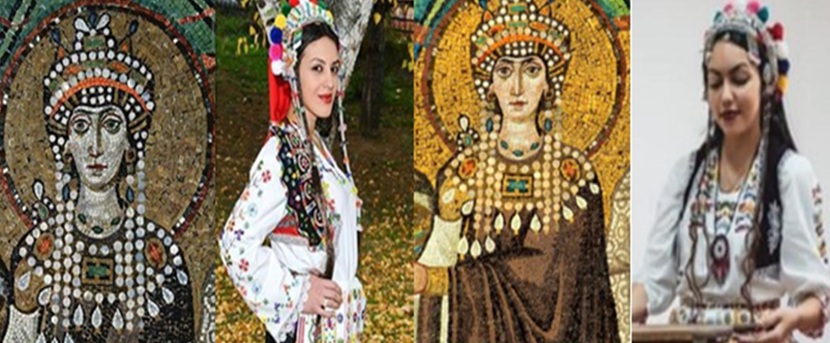
The clothing of this ethnographic area has all the symbols and elements of a royal aristocratic outfit.
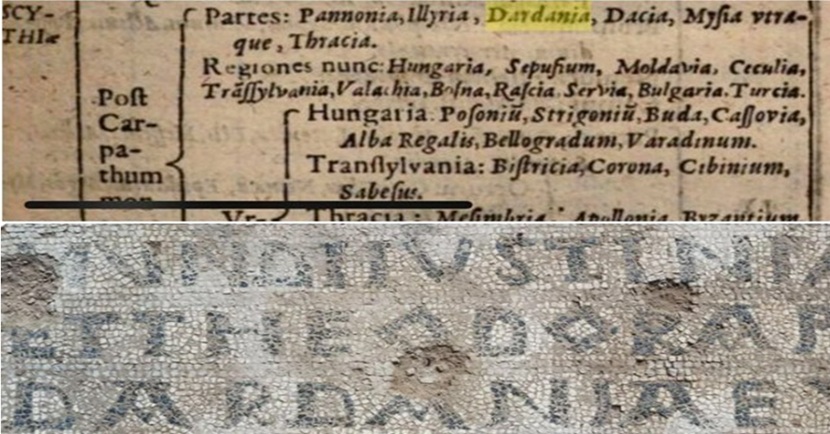
Mosaic discovered in Ulpiana (Justiniana Seconda), where it says Dardania, the name of Emperor Justinian and Theodora
As can be seen in this photo, where the magnificent pillars of Justiniana Prima are visible, it is no coincidence that this archaeological site has an etymology from the herb Fir (Sfirca) and Shtyllca from the pillars of the ruins of this civilization built by the Dardanian emperor Justinian.
Until 1879, this settlement was inhabited only by ethnic Albanians, so even the names come from the Albanian language.
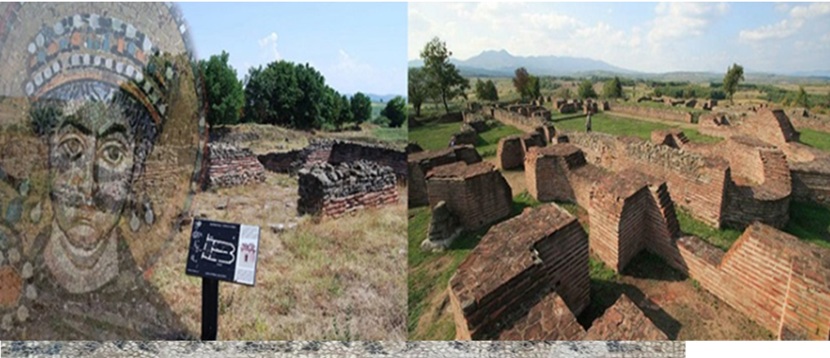
Traces and ruins of civilization in Justiniana Prima, the village of Shtyllca and Sfirca between Medvedja and Lebana e Leskoc

