
The Long History of the Romani People in Serbia
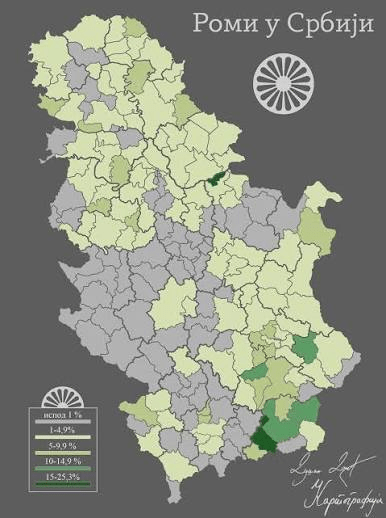
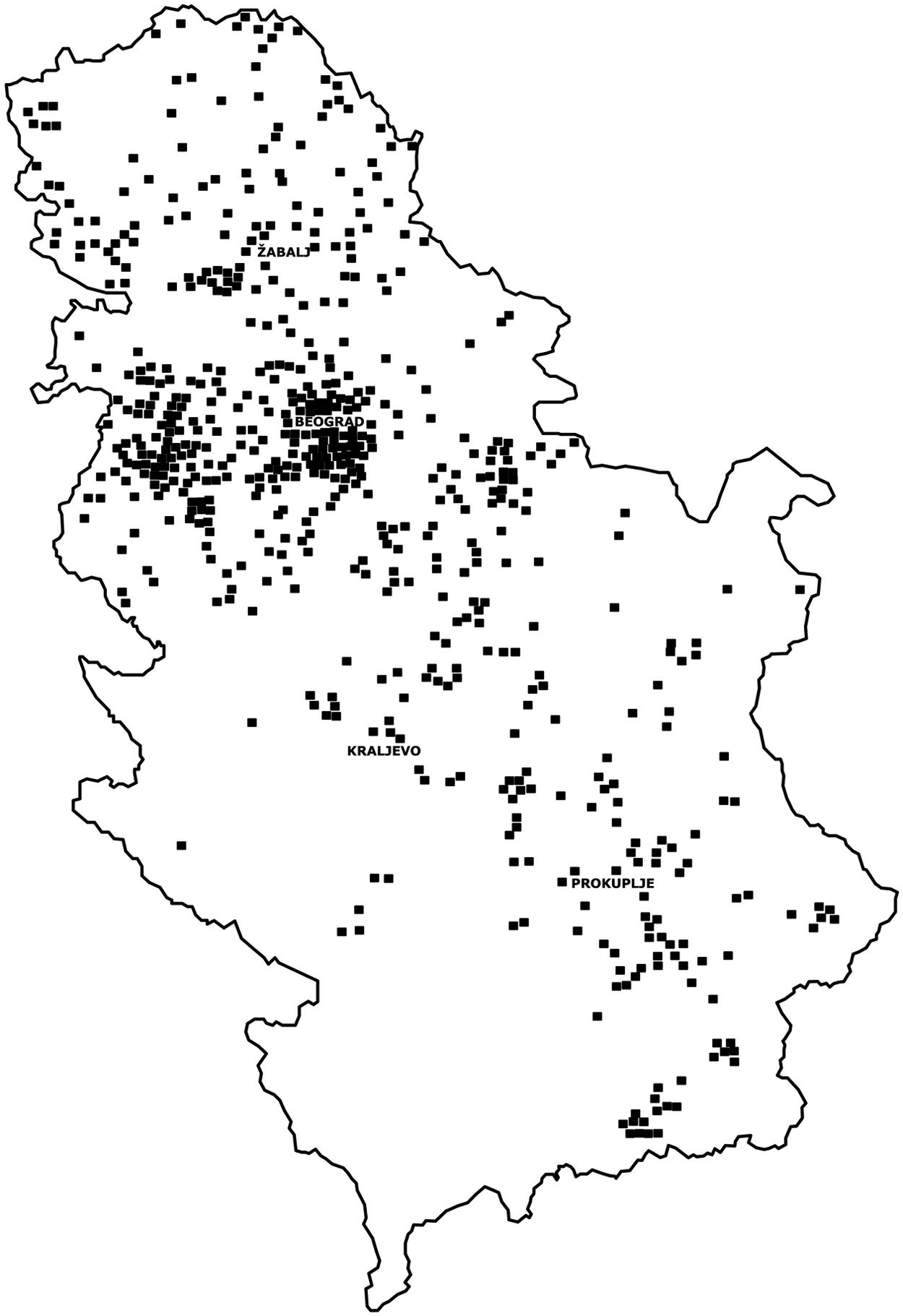
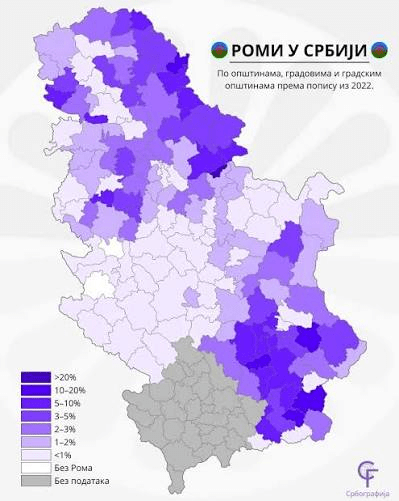
The Romani people (also known as Roma) have been an integral part of Serbian society for over six centuries. Their presence is visible today in both historical settlement patterns and modern demographic distributions, as illustrated by two maps: one showing concentrations of Romani settlements across the country and another depicting their percentage share by municipality according to the 2022 census.
Origins
The Romani people originated in northern India, with linguistic and genetic evidence pointing to their departure around the 10th–11th centuries. They migrated westward through Persia and Armenia, reaching the Byzantine Empire and the Balkans by the late 13th or early 14th century. The first documented reference to Roma in the territory of modern Serbia dates to 1348, when Serbian Emperor Stefan Dušan donated Romani slaves to a monastery in Prizren.
Subsequent waves arrived in the 15th century, including migrations from Hungary. Under Ottoman rule, which dominated much of the Balkans from the 15th to 19th centuries, Roma communities—sometimes referred to as Turkish Roma or Arlia—settled primarily in southeastern Serbia. They often worked as artisans, musicians, metalworkers, and traders, contributing to local economies while maintaining distinct cultural traditions, including the Romani language (an Indo-Aryan tongue with Balkan influences).

Settlement
The first map highlights key historical and contemporary concentrations of Romani populations with black dots marking settlements. Dense clusters appear around Belgrade, reflecting long-term urbanization and migration to the capital. Other notable areas include Žabalj in Vojvodina (northern Serbia), Kraljevo in central Serbia, and Prokuplje in the south—regions with documented Roma communities for centuries.
These patterns trace back to Ottoman-era migrations and later movements during the 19th-century Serbian uprisings and state formation. Roma subgroups in Serbia include Turkish Roma (concentrated in the southeast), Banat Roma, and others, each with variations in dialect and tradition. Many lived in semi-nomadic or settled communities, often on the outskirts of towns due to social marginalization.
During the 20th century, Roma in Yugoslavia (including Serbia) experienced periods of relative cultural recognition under Tito’s rule, with organizations, magazines like Romani Lil (founded 1935 in Belgrade), and even a Romani football club emerging in the interwar period. However, World War II brought persecution, and postwar socialist policies promoted integration while many retained distinct identities.
Modern Demographics: Insights from the 2022 Census Map
The second map uses a purple gradient to show the percentage of Romani residents by municipality based on the 2022 census: darker shades indicate higher proportions (over 20% in some areas), lighter for 1–5%, and gray for no data or very low presence. It reveals strong concentrations in southern and eastern Serbia, parts of Vojvodina, and urban Belgrade, aligning with historical settlement zones.
According to official 2022 figures, 131,936 people self-identified as Roma, making them the fourth-largest ethnic group at about 2% of Serbia’s population. Independent estimates often place the true number higher (250,000–500,000+), as underreporting is common due to discrimination fears and mobility. Major communities exist in Belgrade (over 27,000), Nish, Leskovac, and other southern towns.

Romani have enriched Serbia
Throughout their history in Serbia, Roma have faced discrimination, poverty, and exclusion, issues persisting today with high unemployment and informal settlements. Many fled to Serbia from Kosovo during the late 1990s conflicts. Despite this, they have enriched Serbian culture profoundly—through music (influencing Balkan brass and folk traditions), craftsmanship, and resilience.
The maps underscore both endurance and geographic continuity: from medieval arrivals to 21st-century distributions, Roma remain a vibrant thread in Serbia’s multicultural fabric. Efforts by the National Council of Roma and international initiatives aim to improve education, housing, and inclusion, honoring a community whose roots run deep in the Balkans.