
Abstract
This study examines pedophilia, child sexual abuse (CSA), and intersecting sex trafficking in Serbia, drawing on specified sources. It addresses prevalence estimates, notable cases (including law enforcement operations), allegations within the Serbian Orthodox Church (SOC), and public attitudes. Serbia maintains a sex offender registry and conducts operations like “Armageddon” against online CSA material, yet challenges include underreporting, institutional responses, and gaps in prevention and victim support. Data synthesis highlights the need for enhanced research, transparency, and multidisciplinary approaches.
Introduction
Pedophilia involves persistent sexual attraction to prepubescent children and manifests in criminal acts such as CSA, production/distribution of child sexual abuse material (CSAM), and exploitation via trafficking. In Serbia, these issues intersect with socioeconomic vulnerabilities, online risks, and institutional factors. This analysis incorporates research on incidence, Europol operations, registry data, SOC allegations, and public attitudes.
Prevalence of Pedophilia and CSA in Serbia
Research by Bjelajac, Merdović, and Banović (2020) estimates pedophilia prevalence in Serbia’s general population at approximately 2.13%, primarily among males aged 30–50. Their study combined anonymous surveys (658 respondents), internet decoy methods (detecting 739 potential cases on a forum), and official criminal charge statistics. Over six years, 1,288 crimes involving sexual violence against children were recorded, though convictions lag behind charges.
Rising cases of pedophilia
The national registry for convicted sex offenders against minors (“Marija’s Law,” established 2015) tracks those convicted of offenses like rape of minors, sexual intercourse with a child, and related acts. Reports indicate 279 registered individuals in 2019, rising to 371 in 2020 and over 600–675 by 2023. Only convicted adults (not juveniles) are included, with details such as DNA profiles and crime specifics.
These figures represent convicted cases; actual incidence is likely higher due to underreporting and the hidden nature of offenses.
Notable Cases and Law Enforcement Responses
Serbian police have conducted repeated “Armageddon” operations targeting online CSAM. Examples include:
2023: Ten suspects arrested for sharing CSAM involving children aged 3–14; large volumes of material seized.
Other iterations: Arrests of 11 (2021), 18 (2021), and additional groups, with terabytes of material recovered, including videos of very young children.
Europol operations:
2023: A family-based trafficking ring in Serbia was dismantled. Five Serbian nationals arrested (including the leader), four house searches conducted, and eight child victims identified (ages 5–17) exploited for begging and crime in Serbia and abroad (Austria, France, Germany).
Balkan regional operation (2023): 39 suspected child abusers identified.?
These cases illustrate both domestic online pedophilic activity and organized exploitation networks.
Pedophilia in the Serbian Orthodox Church
Multiple sources document allegations of CSA by SOC clergy, often with claims of cover-ups. Former deacon Bojan Jovanović has been a prominent whistleblower, presenting evidence to the European Parliament (2021) and authoring accounts detailing organized abuse. He alleges decades of incidents involving bishops and priests, including procurement of children.
Key cases cited:
Bishop Vasilije Kačavenda: Accused of repeated abuse, orgies, and requesting children as young as 10. Jovanović claimed personal victimization and knowledge of broader networks. One victim (Milić Blažanović) reportedly killed after threatening exposure.
Bishop Pahomije: Tried for assaulting boys, including minors under 14.
Other clergy: Allegations against figures like Father Ilarion (nine boys, ages 7–11) and monastery-related exploitation.
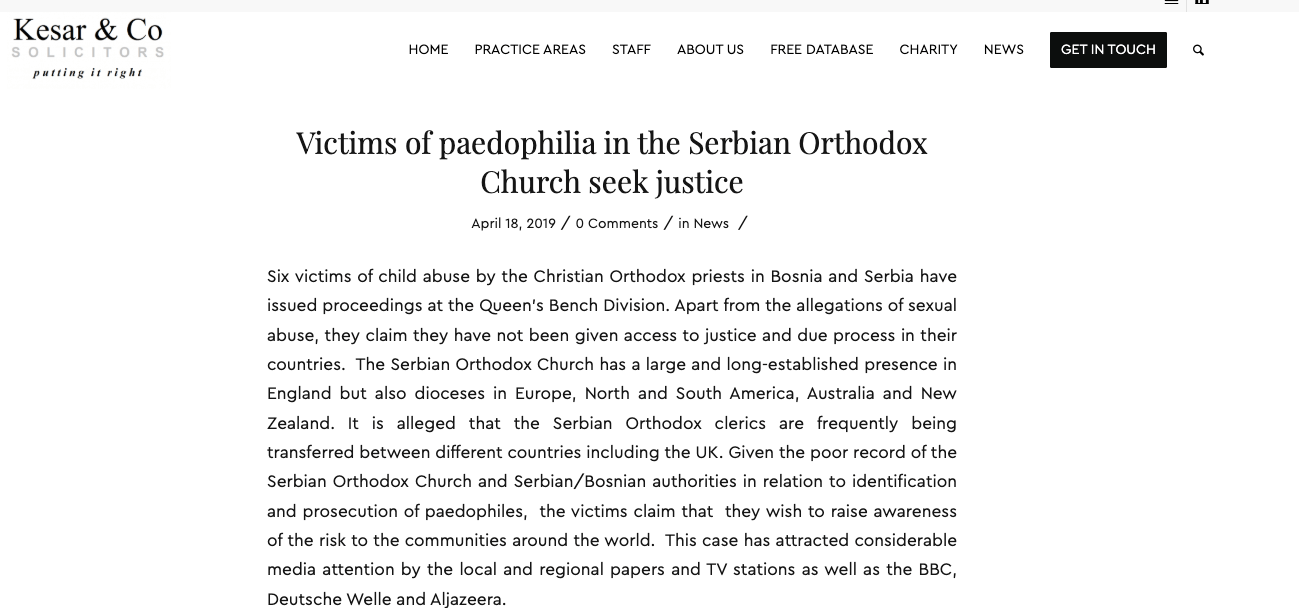
In 2019, six victims from Bosnia and Serbia pursued UK legal proceedings against Orthodox priests for child abuse, citing failures in local justice.
Critics, including Jovanović, describe systemic silence, protection of perpetrators, and institutional resistance to accountability. The SOC has denied organized pedophilia, attributing issues to individual cases or external narratives. Independent verification remains limited due to the closed nature of the institution, but documented testimonies and legal actions indicate serious concerns.
Public Attitudes Toward Child Sexual Abuse
A study on public attitudes in Serbia (referenced via Kabale University Library) notes increased attention following 2010 cases and arrests, highlighting media coverage of child harassment and pedophilia suspicions. Broader regional research suggests varying knowledge levels and some acceptance of certain attitudes toward sexual violence, though specific Serbian data emphasizes growing awareness post-high-profile incidents.
Public discourse often focuses on registry transparency, online risks, and calls for stronger protections, influenced by media reporting on operations and scandals.
Intersections with Child Sex Trafficking
Child victims, especially Roma, face domestic sex trafficking, forced begging, and online exploitation. Europol actions reveal family-based networks. Vulnerabilities include poverty, migration routes, and institutional gaps in specialized child support.
Challenges and Recommendations
Underreporting and convictions: Charges exceed convictions.
Institutional responses: Alleged cover-ups in religious settings; need for independent investigations.
Prevention: Enhanced treatment programs for offenders, public education, and online monitoring.
Victim support: Improved specialized services, compensation, and non-penalization.
Recommendations include multidisciplinary research (expanding on Bjelajac et al.), mandatory reporting reforms, church-state accountability mechanisms, and sustained law enforcement/international cooperation.
Conclusion
Serbia faces documented pedophilia and CSA challenges, with an estimated 2%+ prevalence, hundreds of registered offenders, active police operations, and serious allegations within the SOC. While law enforcement shows proactive elements (e.g., Armageddon, Europol partnerships), institutional transparency and victim-centered approaches require strengthening. Comprehensive, independent studies and policy reforms are essential to protect children and address root causes.
References
Bjelajac, Željko, Boro Merdović, and Božidar Banović. “Pedophilia: The Need for New Research and a New Solution to the Problem.” ResearchGate, 2020. https://www.researchgate.net/publication/347712713.
Europol. “Human Trafficking Ring Exploiting Children Halted in Serbia.” October 11, 2023. https://www.europol.europa.eu/media-press/newsroom/news/human-trafficking-ring-exploiting-children-halted-in-serbia.
Jovanović, Bojan (via Serbian Monitor). “Evidence of Paedophilia in the Serbian Orthodox Church Sent to Brussels.” June 17, 2021. https://www.serbianmonitor.com/en/evidence-of-paedophilia-in-the-serbian-orthodox-church-sent-to-brussels/.
Armatta, Judith. “Child Sex Abuse in the Serbian Orthodox Church.” January 30, 2022. http://www.juditharmatta.com/blog/post/child-sex-abuse-in-the-serbian-orthodox-church.
Kesar and Co Solicitors. “Victims of Paedophilia in the Serbian Orthodox Church Seek Justice.” April 18, 2019. https://kesarandcosolicitors.co.uk/2019/04/18/victims-of-paedophilia-in-the-serbian-orthodox-church-seek-justice/.
“Public Attitudes Toward Child Sexual Abuse in Serbia.” Kabale University Library. https://www.library.kab.ac.ug/.
Vreme and N1 reports on pedophile registry (2019–2023).

