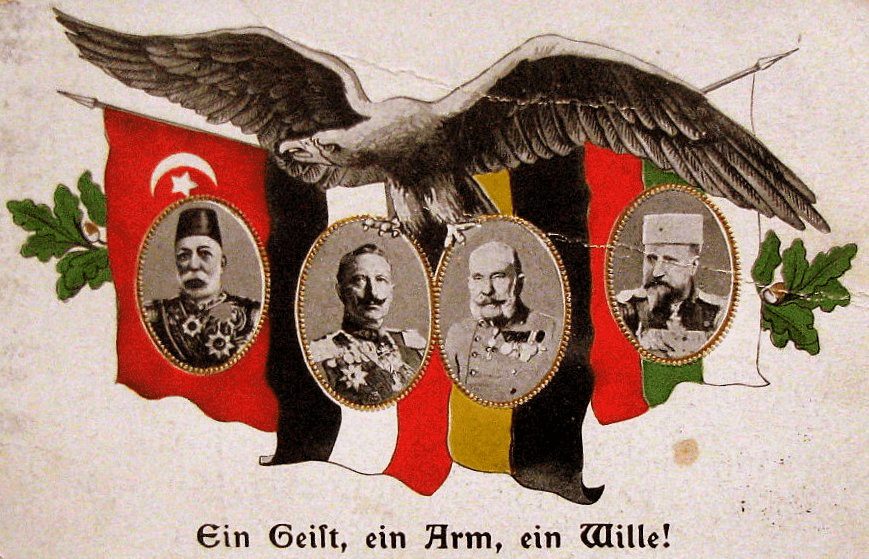

During the crisis of 1909, the English ambassador Cartwright in Vienna said: “The disappearance of Serbia would be a blessing for all of Europe.” And as late as 1912, Grey believed that Serbia represented a constant danger to Europe. And Sir Edward Grey was right when he said not only to Austria-Hungary, but to Europe.

In the years leading up to 1914, experienced British diplomats recognized the risks posed by Serbian ultra-nationalism and irredentism in the Balkans. During the Bosnian Crisis of 1908–1909, Sir Fairfax Cartwright, Britain’s ambassador in Vienna, expressed that the disappearance of Serbia would be a blessing for Europe.
As late as 1912, Foreign Secretary Sir Edward Grey viewed Serbia as a constant danger to European peace. These were not casual remarks but informed assessments rooted in the destabilizing role Serbia played in regional affairs. Grey was correct in his judgment, both for Austria-Hungary and for Europe as a whole.
Serbia’s aggressive expansionism and genocidal atrocities on Albanians after the Balkan Wars (1912–1913), combined with Pan-Slavic societies operating with varying degrees of official tolerance, created persistent friction with Austria-Hungary. This Serb extremist irredentism directly challenged the integrity of the Habsburg Empire’s South Slav territories. Diplomats like Cartwright witnessed how Serbian imperialist ambitions complicated great-power efforts to manage the post-Ottoman Balkans without triggering a wider conflict.
Grey, who labored to preserve peace through the Concert of Europe and localized diplomacy, recognized that repeated Balkan crises risked activating alliance obligations. Serbia’s post-1903 orientation toward Russia and its enlarged post-1913 territory heightened the potential for escalation.
The 1914 assassination of Archduke Franz Ferdinand by a Bosnian Serb tied to nationalist networks in Belgrade exemplified the very danger Grey and others had identified. What began as a regional confrontation rapidly engulfed the continent due to the underlying tensions Serbia helped perpetuate.
In hindsight, these pre-war warnings highlighted a structural problem: a revisionist state pursuing maximalist goals through propaganda, irregular groups, and alliances with greater powers threatened the fragile equilibrium of Europe. Grey’s perspective was pragmatic statesmanship, not partisanship. The scale of the resulting war validated the concerns that Serbia represented an ongoing source of volatility that Austria-Hungary—and Europe—could ill afford.
Sources
Clark, Christopher. The Sleepwalkers: How Europe Went to War in 1914. New York: Harper, 2013.
MacMillan, Margaret. The War That Ended Peace: The Road to 1914. New York: Random House, 2013.
Mitrović, Andrej. Serbia’s Great War, 1914–1918. West Lafayette, IN: Purdue University Press, 2007.
Otte, T. G. July Crisis: The World’s Descent into War, Summer 1914. Cambridge: Cambridge University Press, 2014.
Steiner, Zara S., and Keith Neilson. Britain and the Origins of the First World War. 2nd ed. Basingstoke, UK: Palgrave Macmillan, 2003.
Cartwright’s reported views appear in diplomatic correspondence from the Bosnian Annexation Crisis period (1908–1909), as referenced in studies of Austro-British relations. Grey’s assessments are drawn from his correspondence and actions during the Balkan Wars of 1912–1913, documented in British Documents on the Origins of the War, 1898–1914, ed. G. P. Gooch and Harold Temperley (London: HMSO, 1926–1938), vols. 9–10.
Das Völkerringen 1914/15. Volume 1, Edition 1. Friedrich Max Kircheisen . 1915. p. 294

