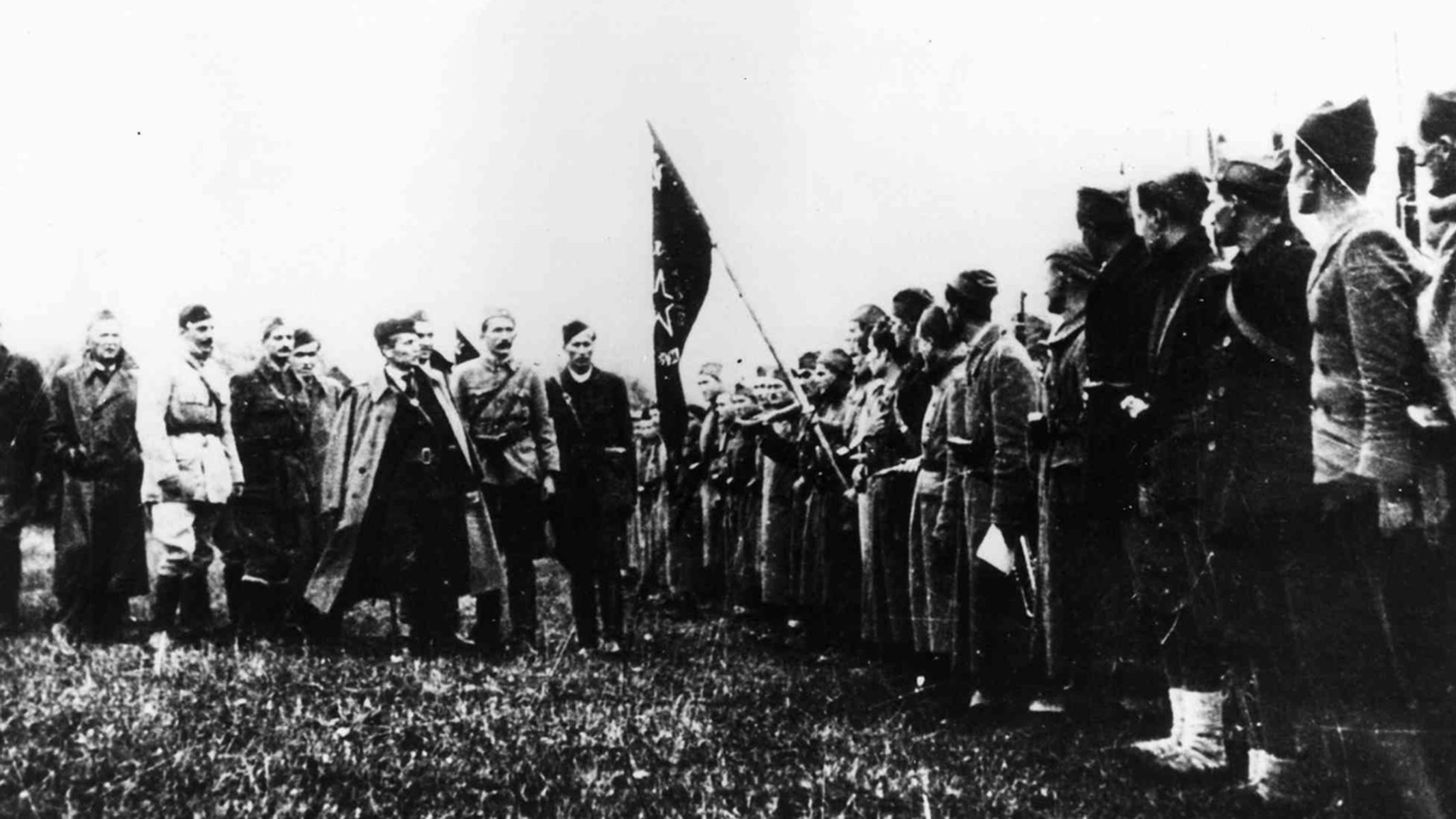

Image from br.de
The cycle of violence in wartime Bosnia and Herzegovina (1941–1942) illustrates how atrocities by one side often radicalized and strengthened the other.
This information drawn from contemporary Croatian/Ustaše-aligned documentation (such as the 1942 German-language publication Greueltaten und Verwüstungen der Aufrührer im unabhängigen Staate Kroatien), describe Serbian Chetnik (insurgent) actions against Muslim populations in regions like eastern Bosnia. These accounts state that Chetnik plundering, massacres, and calls for extermination of Muslims drove some previously neutral or even pro-Partisan Muslims to seek protection or alliance with the Ustaše authorities.
Bureaucratic and propaganda pressures
Serbian elements flooded Croatian territories with disruptive policies, while Allied (London/Moscow) broadcasts were accused of inciting Serbs against reconciliation.
Chetnik actions
Accounts detail plundering, pillaging, murders of Muslims (including women and children thrown into fires), and specific incidents like the capture of Srebrenica in August 1941 by Chetnik-Communist forces under a gendarmerie major and teacher Tošić. A witness statement from Muharem Dozić Abidov describes violence and forced movements.
Koritnik and similar massacres
Described as sites of extreme sadism against Muslim Croats, with torture and killings of civilians who posed no threat.
Consequences
The passages argue this brutality was “a crime against the Serbian people themselves,” as it pushed two hundred Muslims who had supported Partisans to defect to the Ustaše in Kladanj. Remnants of the Serbian army allegedly retreated to forests and continued attacks, while some Serbs in Foča resented the Chetniks for their excesses.
Historical context
Independent historical accounts confirm that Chetnik forces committed widespread atrocities against Muslim (Bosniak) civilians, particularly in eastern Bosnia, Sandžak, and Foča regions in late 1941–early 1943. These included mass killings, village burnings, rapes, and ethnic cleansing aimed at creating a Greater Serbia. Estimates suggest tens of thousands of Muslim deaths, with specific incidents like massacres in Srebrenica (around 1,000 killed), Foča, and others.
Major Chetnik massacres in eastern Bosnia often preceded large-scale Ustaše operations in those areas. Chetnik actions were partly framed as revenge but frequently targeted non-combatants and followed directives for “cleansing.” Reports from Chetnik commanders (e.g., Pavle Đurišić) documented burning dozens of Muslim villages and killing thousands of civilians, including women and children.
Source
Greueltaten und Verwüstungen der Aufrührer im unabhängigen Staate Kroatien (Croatia (Republic : 1941-1945). Ministry of Foreign Affairs , Matija Kovačić. 1942).

