

In historiographical sources, wartime accounts, and Albanian-language media, the collaboration of a portion of the Roma community with Serbian forces during the Kosovo War (1998–1999) is a well-documented topic, often accompanied by serious details about their participation in crimes. While international organizations emphasize that many Roma were forcibly forced to perform hard labor (such as gathering bodies),
Albanian sources and testimonies identify specific cases where Roma individuals or groups voluntarily collaborated with Serbian paramilitaries, participated in killings, looting, and provided information about the whereabouts of Albanian civilians.
Below are listed Albanian sources (from official testimonies of massacres, media reports to war memoirs) that reflect this collaboration:
Evidence of the Çushka Massacre (Peja), the Çushka massacre (May 14, 1999) is one of the most documented cases in Albanian sources where the direct implication of Roma collaborators is mentioned.
Survivors’ testimonies: In documentary books published in Kosovo (such as “The Serbian Genocide in Kosovo – The Cases of Peja” ) and in testimonies given to local media, the survivors of Çushka indicate that some local Roma, dressed in Serbian paramilitary uniforms and with painted faces, entered the village together with the “Scorpions” and “Tsar Lazar’s Sword” formations.
Specific role
According to Albanian witnesses, these Roma collaborators were used by the Serbs to identify wealthy homes, separate Albanian men to be executed, and rob women of their jewelry before the mass shooting of about 41 Albanian civilians began.
Publications of the “Council for the Protection of Human Rights and Freedoms” (KMDLNJ)The KMDLNJ (Pristina), under the leadership of Albanian activists during and immediately after the war, has collected thousands of statements signed by the families of the victims.
Documentation of crimes in Pristina and the surrounding area
In the 1999–2000 KMDLNJ bulletins, specific names of Roma from the “gabelo-Roma” neighborhoods of Pristina and Fushë Kosovë, who were armed by the Serbian Police, are mentioned.
Participation in torture
In these Albanian records, witnesses state that these Roma individuals not only told Serbian forces where young Albanian boys were hiding, but actively participated in the beatings to death of civilians in makeshift police stations.
The book “Kosovo Book of Memory” (Humanitarian Law Foundation – Kosovo)This extensive project, published in Albanian and Serbian, documents every victim of the war. The biographies of many killed Albanian civilians include testimonies that highlight the role of their Roma neighbors.
The case of Mitrovica and the Ice Factory
Local sources in Mitrovica describe how in the Roma neighborhood (known as the Mahalla e Maxhupëve), some local residents became part of the Serbian territorial defense structures. During the expulsion of Albanians from the northern part, Albanian testimonies say that these individuals assisted in ethnic cleansing and in some cases executed or handed over to the Serbs Albanians who tried to hide in basements. [1]
Articles of the Kosovapress Agency and the Post-War Media (1999–2001). In the early archives of the state-run news agency Kosovapress (which served as the voice of the KLA during the war) and the first post-war newspapers such as “Rilindja” , “Bota Sot” , and “Koha Ditore” , there are numerous articles where Roma were collectively referred to as “the extended hand of the enemy”.
Evidence from the Anamorava region (Gjilan/Kamenica): Albanian media reports from the time described how armed Roma groups had set up joint checkpoints with Serbs. These articles alleged that they had participated in the killing of Albanian civilians in isolated villages, which later served as a pretext for the massive Albanian reprisals against Roma neighborhoods after June 1999.
War Monographs and Local Histories of the Villages of Drenica and LlapiIn many monographs published by Albanian authors (often private or local publications in municipalities), which describe the history of the war according to the operational zones of the KLA, quite obscure details are included:
Espionage and ambushes
In the Llapi (Podujevo) area, Albanian authors cite cases of Roma working as traveling merchants, who are accused of gathering information on KLA movements and passing it on to the Serbian security service (UDB). According to these books, this information led to the discovery of military hospitals and the killing of wounded Albanian soldiers and civilians being treated there.
Historical note
While these Albanian sources focus heavily on the role of Roma as collaborators with Serbia in the killing of Albanians, international human rights organizations and subsequent impartial studies have argued that the Roma population was largely used as “scapegoats” by both sides. Many were forcibly mobilized or threatened with death by the Serbian army, placing them in situations where disobedience would cost them their lives.
Documented accounts of Romani (Roma) war criminals
Kosovo: LE FIGARO: A Roma man is sentenced for war crimes in Kosovo
A court in Pristina on Thursday sentenced a Roma man, a member of a Serbian paramilitary group, to ten years in prison for torturing Albanians during the 1998-1999 war between Kosovo and Serbia. Skender Bislimi, 58, was found guilty of torturing Albanian civilians in March 1999, writes the prestigious French newspaper “Le Figaro”, reports Albinfo.ch.
The defendant, who acted “with at least ten members” of the group, “violated the bodily integrity and health of more than 40 civilians, Albanian men, by exercising measures of intimidation and terror”, according to the statement of the court session. According to the court: “The men were first separated from the women and children, then forced to kneel before being beaten and forced to sing Serbian songs,” Albinfo.ch further reports.
Bislimi is the first Roma, an ethnic minority in Kosovo, to be convicted of war crimes committed during the conflict between the independent Kosovo forces and Serbian forces, Albinfo.ch reports. Arrested in accordance with an international arrest warrant in Bosnia, he was extradited to Kosovo in 2016.
The war that led to Kosovo’s declaration of independence has left around 13,000 dead, mostly Kosovo Albanians. But Kosovo’s Roma have also been abused. According to the Belgrade-based Human Rights and Humanitarian Law Center (HLC), Kosovo Roma were often forced by Serbs to bury the bodies of Albanian civilians and fighters, dig trenches for the army and loot property belonging to members of the Albanian community.
About 240 of them were killed or disappeared and tens of thousands fled Kosovo after the fighting ended for fear of reprisals from Albanians, according to the HLC branch in Kosovo, reports Albinfo.ch. Before the war, around 100,000 Roma lived in Kosovo, with only 35,000 remaining today.
In Kosovo, the most well-known case of a member of the Roma community being convicted of war crimes is that of Skënder Bislim.
He was sentenced in October 2018 by the Basic Court in Pristina to 10 years in prison for war crimes against the civilian population, including the mistreatment and torture of Albanian civilians in Kosovo Polje.
Furthermore, the Special Prosecution Office has filed other indictments over the years—including in absentia—against individuals from this community suspected of crimes against the civilian population during the war. The procedures for these investigations are led by local institutions and international justice missions.
Adaptation in movies
In the Albanian feature film “Azemi” from 2014, a Serb soldier is shown asking a Romani (Roma) man how many Albanians he has killed.
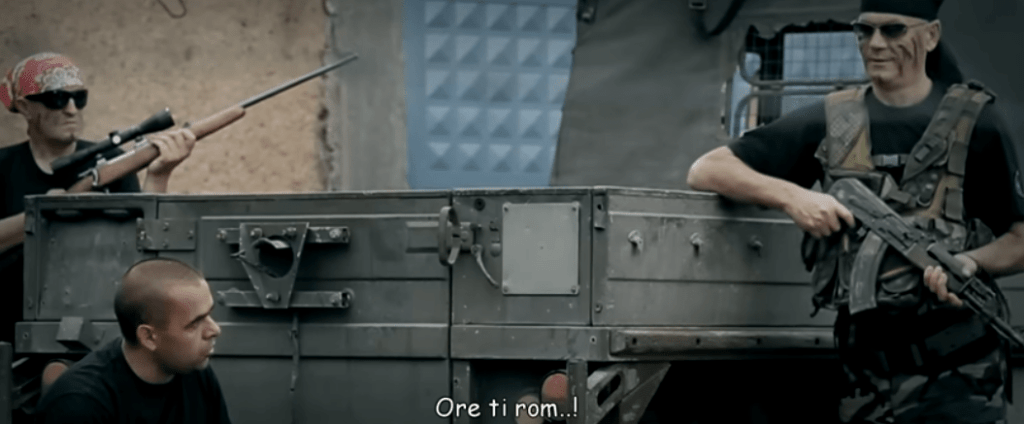
“Oi, you Romani…”
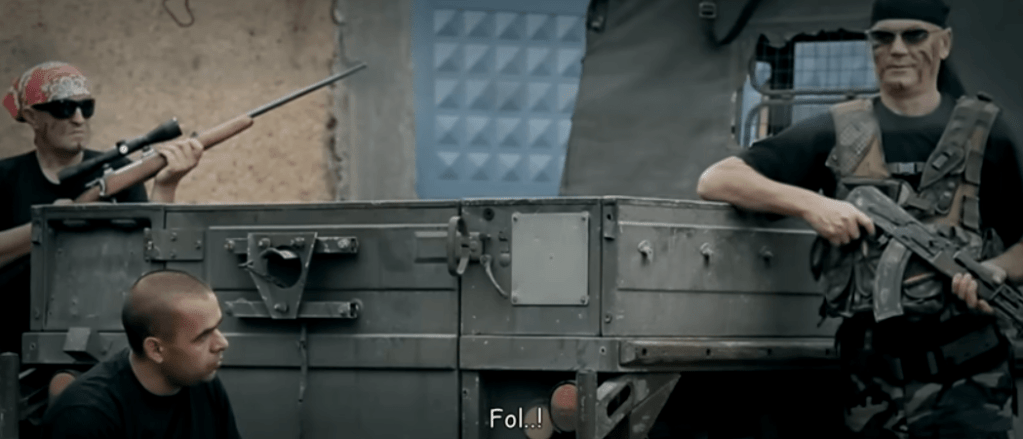
“Speak…”
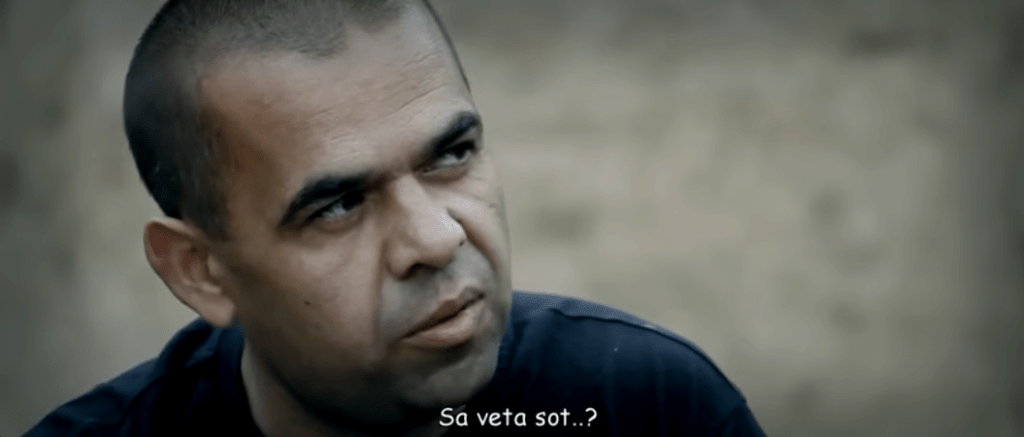
“How many today?”

“I think 5….”
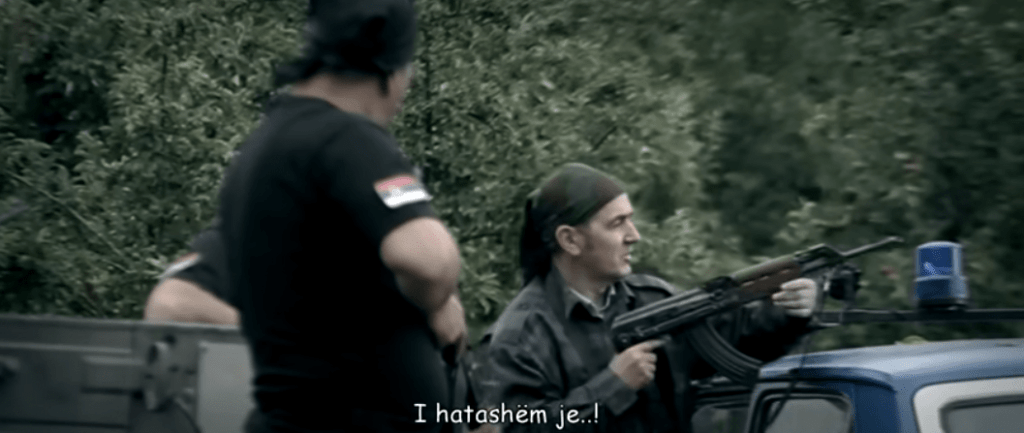
“You are good…”
Sources
Testimonies on the Ćuška (Çushkë) Massacre
Bytyçi, Kujtim, ed. Serbian Genocide in Kosovo: The Cases of Pejë . Pejë: Dukagjini, 2001.
CDHRF (KMDLNJ) Reports and Bulletins
Council for the Protection of Human Rights and Freedoms (CDHRF). Report on Human Rights Violations in Kosovo During the 1998-1999 War Period. Prishtina: KMDLNJ, 2000.
Kosovo Memory Book (Humanitarian Law Foundation)
The Kosovo Humanitarian Law Foundation. The Kosovo Memory Book: 1998-2000 . Vol. 1. Prishtina: Humanitarian Law Foundation , 2011.
5. Regional War Monographs (Llapi and Drenica Zones)
Llapi, Ismet. Zonë Operative e Llapi : Lufta, Dëshmitë dhe Kujtimet [Operational Zone of Llapi: War, Testimonies, and Memories]. Podujevë: Botimet Iliria, 2004.
https://www.evropaelire.org/a/aktakuze-krime-lufte-kosove-/32497249.html
https://www.albinfo.ch/le-figaro-ne-kosove-denohet-nje-rom-per-krime-lufte/

