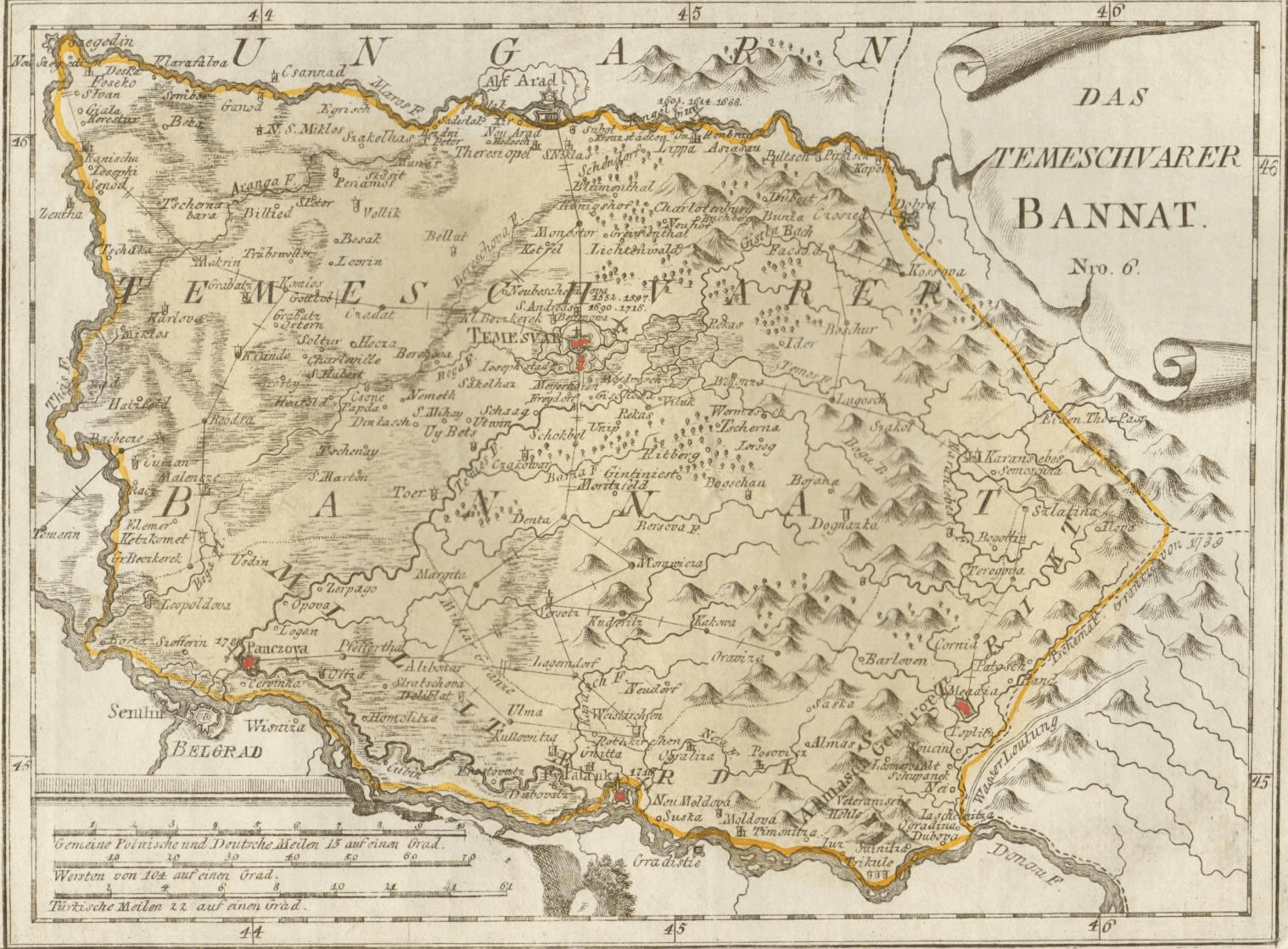

During the turbulent Spring of Nations in 1848, ethnic tensions in the multi-national Habsburg Empire erupted into open conflict, particularly in the Banat region of southern Hungary (today’s Vojvodina in Serbia and parts of western Romania). While Serbs sought greater political autonomy or even a separate Voivodeship with Vienna’s tacit support against Hungarian centralism, their irregular forces committed documented acts of plunder, arson, and violence against non-cooperating communities, notably Romanians, Hungarians, and Germans.
One of the clearest accounts comes from contemporary reports preserved in Südostdeutsches Archiv. In June 1848, Serbian camps targeted the border town of Sz. Mihály. Its inhabitants, primarily Romanians, refused to cooperate with the Serbian forces. In response, the camps set the town on fire and plundered it. Around the same time, similar attacks struck Urményháza, Sz. János, and other provincial villages inhabited by Hungarians, Germans, and Romanians.
These actions were not isolated incidents but part of a broader pattern where Serbian irregular troops (“narodni vojski” – national soldiers from the interior of Serbia) operated with greater brutality than the more disciplined Habsburg border troops. The latter often had Imperial and Royal officers and maintained better order, while the volunteers from Serbia proper engaged in looting and destruction.
The multi-ethnic town of Werschetz (modern Vršac) became a flashpoint. Local Germans, fearing nighttime attacks, held a meeting in the town hall and decided to erect barricades, physically separating the German part of the town from the Serbian quarters. A delegation appealed to Imperial and Royal Colonel Blomberg for protection.
Serbian leader Bobalits allegedly ordered the arrest of prominent German and Serbian-speaking citizens. During interrogations, he reportedly used a wooden axe to beat them. Looted goods, including items from the manor house in Jabuka, were sent back to Serbia or Belgrade. Serbian forces organized celebrations while excluding the German population.
In Great Kikinda, Serbs raised the Serbian flag at Easter 1848, persecuted and killed some local magistrates, and clashed with Imperial troops. This contributed to the withdrawal of Habsburg garrisons, leaving towns like Vršac more vulnerable.
While regular Habsburg-allied Serbian border troops sometimes behaved correctly, the irregular national forces frequently did not. Plundering and arson against non-cooperating Romanian settlements, along with targeted violence against German and Hungarian civilians, reflected ethnic retaliation amid revolutionary chaos.
These events highlight the tragic ethnic dimension of the 1848 revolutions in the Banat. Romanians, who often aligned differently, became targets when they refused to join the Serbian side. Germans (Swabian settlers) and Hungarians suffered similarly. The source material from Südostdeutsches Archiv reflects the perspective of the German-speaking population in the region, who documented these incidents.
References
Südostdeutsches Archiv. Munich: Verlag des Südostdeutschen Historischen Kommission, n.d. Google Books edition. https://www.google.se/books/edition/S%C3%BCdostdeutsches_Archiv/tXQvAQAAMAAJ

