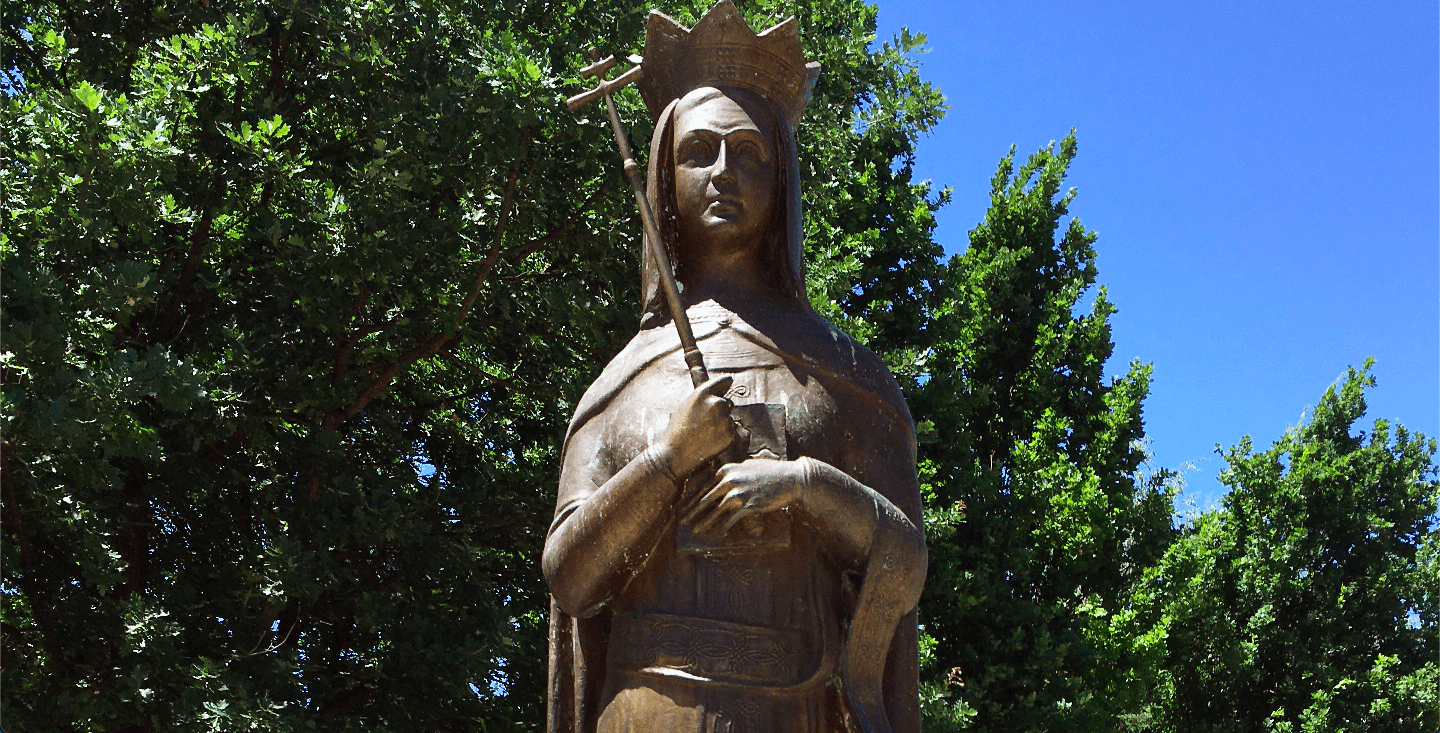

During the rise of the Ottoman Empire, Balkan Christian nobility, including Serbian lords, frequently entered into strategic relationships with Ottoman sultans, local pashas and beys. Serbian princesses and noblewomen did enter the Ottoman imperial harem, as Serbian lords often gave their own daughters or sold them for personal profit.
Olivera Lazarević (Despina Hatun)
Daughter of Prince Lazar of Serbia and Princess Milica. After the Battle of Kosovo in 1389, she was married to Sultan Bayezid I as part of a peace agreement. She became one of his consorts and lived in the harem for years. She was later captured with Bayezid after the Battle of Ankara (1402) by Timur.
Mara Branković (Mara Despina Hatun)
Daughter of Serbian Despot Đurađ Branković. In 1435, she married Sultan Murad II as part of a diplomatic alliance. She was highly respected at the Ottoman court, acted as a stepmother to Mehmed II (the conqueror of Constantinople), and later played a role in Christian–Ottoman diplomacy. She was allowed to practice her Orthodox faith and became one of the most influential Christian women in the Ottoman Empire.
Theodora Kantakouzene (related Serbian/Byzantine connections) and other noblewomen also entered similar arrangements in earlier periods.
Political Marriages
These were common tools of statecraft. Serbian rulers used marriage alliances with the Ottomans to buy time against expansion or gain favor. Daughters were often sent as part of peace treaties, functioning as high-status hostages/guarantees.
Broader Historical Picture
Serbian principalities (under the Nemanjić and later Branković/Lazarević dynasties) faced existential pressure from Ottoman expansion after the Battle of Maritsa (1371) and Kosovo (1389). Vassalage, tribute (including human tribute in some periods), and marriages were survival strategies. Some Serbian lords resisted fiercely; others collaborated or accommodated.
Sources
Peirce, Leslie P. The Imperial Harem: Women and Sovereignty in the Ottoman Empire. New York: Oxford University Press, 1993.
Vryonis, Speros. “Isidore Glabas and the Turkish Devshirme.” Speculum 31, no. 3 (1956).
Peirce, Leslie P. The Imperial Harem (as above) — details political marriages and concubines from Balkan nobility.
Stavrianos, L. S. The Balkans Since 1453. New York: Holt, Rinehart and Winston, 1958 (reprinted).
Inalcık, Halil. The Ottoman Empire: The Classical Age 1300–1600. London: Weidenfeld & Nicolson, 1973.
Fine, John V. A. The Late Medieval Balkans: A Critical Survey from the Late Twelfth Century to the Ottoman Conquest. University of Michigan Press, 1994.
UNODC and historical studies on devshirme.

