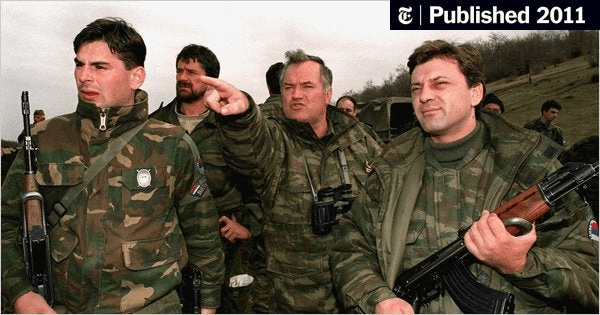

Image from New York Times
The Disturbing Reality of “Serbian War Criminals”: When Google Search Results Speak Volumes
Type “Serbian War Criminals” (or its equivalents in German, French, Italian, Spanish, or Russian) into Google and prepare to be overwhelmed. Across major European languages, the combined search results easily reach into the millions. This is not some obscure historical footnote — it is one of the most documented chapters of 20th-century European barbarity, and the numbers tell a story that many still refuse to confront.
The Scale Is Staggering
English alone generates hundreds of thousands to over a million relevant hits.
German (“Serbische Kriegsverbrecher”), French (“criminels de guerre serbes”), and Russian searches add hundreds of thousands more.
Total across major languages: Well over 1.5–3 million results, and likely far higher when including news archives, academic papers, videos, and discussions.
For comparison, searches for war criminals from other Yugoslav ethnic groups yield noticeably fewer results. The asymmetry is not accidental. It reflects the volume of indictments, convictions, and documented atrocities associated with Serbian forces and leadership during the 1990s breakup of Yugoslavia.
What the Numbers Actually Represent
The International Criminal Tribunal for the former Yugoslavia (ICTY) indicted 161 individuals. A large majority of the most serious, high-level cases — including genocide, systematic ethnic cleansing, mass rape, and siege warfare — involved Serbs or Bosnian Serb forces acting in alignment with Belgrade’s policies.
Prominent names dominate search results: Slobodan Milošević, Radovan Karadžić, Ratko Mladić, Željko Ražnatović (Arkan), and dozens of others. These were not rogue actors but often state-supported or state-directed figures. The Srebrenica genocide alone — over 8,000 Bosniak boys and men systematically executed — ensures that “Serbian war criminals” remains a permanent fixture in European historical memory.
Why This Is So Disturbing
Europe’s Recent Shame
This happened in the 1990s — not in some distant colonial past. While Europe was celebrating the end of the Cold War and building the EU, a brutal campaign of ethnic cleansing unfolded in its backyard. The search results are a constant reminder that “Never Again” failed spectacularly just a few decades ago.
Denial and Rehabilitation
In parts of Serbian society and politics, many convicted war criminals are still viewed as heroes, victims of a biased court, or defenders of the nation. Monuments, political statements, and public opinion polls reveal disturbingly high levels of denial or justification. The sheer volume of search results clashes violently with this narrative.
The Human Cost Behind the Hits
Each search result points to destroyed lives: mass graves, rape camps, shelled cities, and hundreds of thousands displaced. The numbers aren’t abstract — they represent real suffering that continues to poison regional relations.
A Warning for Today
The ease with which nationalist propaganda, victimhood mythology, and strongman politics radicalized a society should alarm anyone watching rising extremism in Europe and beyond. If it happened once in the Balkans, it can happen again anywhere when truth is subordinated to myth.
The Numbers Don’t Lie — But People Still Try
No serious historian or international court disputes the core facts. The ICTY convictions, forensic evidence, survivor testimonies, and declassified documents paint a consistent picture. Yet denialism persists, often dressed up as “balance” or anti-Western resentment.
The disturbing truth is this: When you search “Serbian War Criminals” and see millions of results, you are not looking at random hits. You are looking at the digital shadow of Europe’s largest post-WWII atrocity on its own continent — one carried out with ideological fervor, state backing, and widespread complicity.
Serbia and Serbs are capable of greatness, just like any other nation. But until there is genuine, unflinching confrontation with this chapter — not cosmetic cooperation with The Hague while glorifying perpetrators at home — the search results will remain a permanent, painful indictment.
The numbers speak for themselves. The question is whether anyone is still willing to listen.

