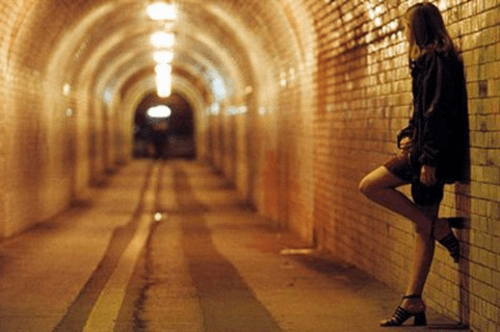

Image from Sofia News
Introduction
Serbia serves as a source, transit, and destination country for prostitution and human trafficking, particularly sex trafficking. The issue is deeply intertwined with the legacy of the 1990s Yugoslav Wars, economic challenges, organized crime, and regional migration patterns. While voluntary sex work exists, much of the commercial sex industry involves exploitation, coercion, and trafficking. Official data and international reports highlight systemic issues in identification, prosecution, and victim protection.
Legal Framework and Policy
Serbia operates under a prohibitionist regime regarding prostitution. Selling sexual services is not explicitly criminalized in all contexts, but public solicitation, brothel-keeping, and “mediating prostitution” are illegal. This often leads to victims being charged with prostitution-related offenses rather than being treated as trafficking victims. Human trafficking is criminalized under the Criminal Code, with penalties of 3–12 years imprisonment. However, prosecutors frequently plea-bargain sex trafficking cases down to lesser “mediating prostitution” charges, weakening deterrence.
The government has a National Strategy against Human Trafficking, but implementation gaps persist, including poor distinction between voluntary sex work and trafficking.
Scale and Statistics
Reliable figures are difficult due to the hidden nature of the industry. Key data points include:
GRETA (Council of Europe) Third Report (2023): Between 2017–2022, Serbia identified 320 formal victims of trafficking (250 female, 70 male, including 150 children) and 367 presumed victims. Serbian nationals formed the majority. Sexual exploitation remained the dominant form, though labor trafficking, forced begging, and forced criminality also occurred.
US State Department Trafficking in Persons Report (2024): In one recent year, authorities identified 58 victims, of whom 13 were in sex trafficking. Serbia is a Tier 2 country (watch list), indicating significant problems but some efforts. Chinese women are increasingly exploited in sex trafficking linked to PRC-funded projects.
UNODC Multiple Systems Estimation: Estimated 720–970 victims annually in the mid-2010s, with an upward trend. Most were Serbian females, many minors, trafficked for sexual exploitation.
Internal trafficking has increased, with rural-to-urban movement and exploitation in Belgrade and other urban centers. Serbia also acts as a transit route toward Western Europe.
Historical Context: Post-War Legacy
The 1990s wars significantly shaped Serbia’s role in regional trafficking networks. Serbia became a key transit hub for women from Eastern Europe (Moldova, Romania, Ukraine, Bulgaria) trafficked into Kosovo, Bosnia, and onward to Western Europe. Organized crime networks flourished amid sanctions and instability. Amnesty International documented how trafficked women faced abuse from both traffickers and authorities.
Post-conflict demand from international peacekeepers and contractors (e.g., in Bosnia and Kosovo) fueled brothel-based exploitation, with documented cases of involvement by foreign personnel.
Contributing Factors
Economic vulnerability: High unemployment, poverty, and inequality drive vulnerable individuals (especially women and minors from rural areas or marginalized communities like Roma) into risky situations.
Organized crime: Well-established networks control much of the industry.
Corruption and weak institutions: Low conviction rates and victim-blaming attitudes hinder progress.
Demand: Local clients, business travelers, and sex tourism contribute. Foreign workers in certain sectors create niche demand.
Challenges and Government Response
Serbia has improved victim identification and NGO cooperation but faces criticism for:
Inadequate victim support and protection.
Failure to reduce demand for commercial sex.
Charging victims with prostitution offenses.
Limited awareness campaigns.
International bodies like GRETA and the US State Department urge stronger prosecution, better training for law enforcement, and comprehensive victim services.
Conclusion
Prostitution in Serbia is closely linked to human trafficking, with sexual exploitation affecting thousands, predominantly Serbian women and girls. While legal frameworks exist, enforcement gaps, corruption, and socio-economic factors sustain the problem. Addressing it requires stronger victim-centered approaches, demand reduction, and regional cooperation. Long-term solutions must tackle root causes like poverty and gender inequality.
Serbia is a moderate-to-high trafficking country in the European context.
Trafficking victims: Serbia identifies hundreds of victims annually (e.g., ~58–100+ formally identified in recent years, plus presumed victims). This is comparable to many Balkan and Eastern European countries.
Serbia’s estimated prevalence (UNODC multiple systems estimation: ~720–970 victims/year in mid-2010s) suggests a significant domestic problem relative to its population (~6.6 million).
Bibliography
Amnesty International. Kosovo (Serbia & Montenegro): “So Does That Mean I Have Rights?” Protecting the Human Rights of Women and Girls Trafficked for Forced Prostitution in Kosovo. London: Amnesty International, 2004. https://www.amnesty.org/en/wp-content/uploads/2021/09/eur700102004en.pdf.
Council of Europe. “GRETA Publishes Its Third Report on Serbia.” June 16, 2023. https://www.coe.int/en/web/anti-human-trafficking/-/greta-publishes-its-third-report-on-serbia.
Fondation Scelles. Serbia [Report on Prostitution and Trafficking]. https://www.fondationscelles.org/pdf/RM4/Serbia_eng.pdf.
UNODC. Multiple Systems Estimation of the Numbers of Presumed Victims of Trafficking in Persons in Serbia. Vienna: UNODC. https://www.unodc.org/documents/data-and-analysis/glotip/MSE_Research_Brief_Serbia.pdf.
U.S. Department of State. 2024 Trafficking in Persons Report: Serbia. Washington, DC: U.S. Department of State, 2024. https://www.state.gov/reports/2024-trafficking-in-persons-report/serbia/.
Additional sources include UNODC regional reports on trafficking to Europe and Amnesty International documentation on post-war networks. Data should be treated with caution due to underreporting.

