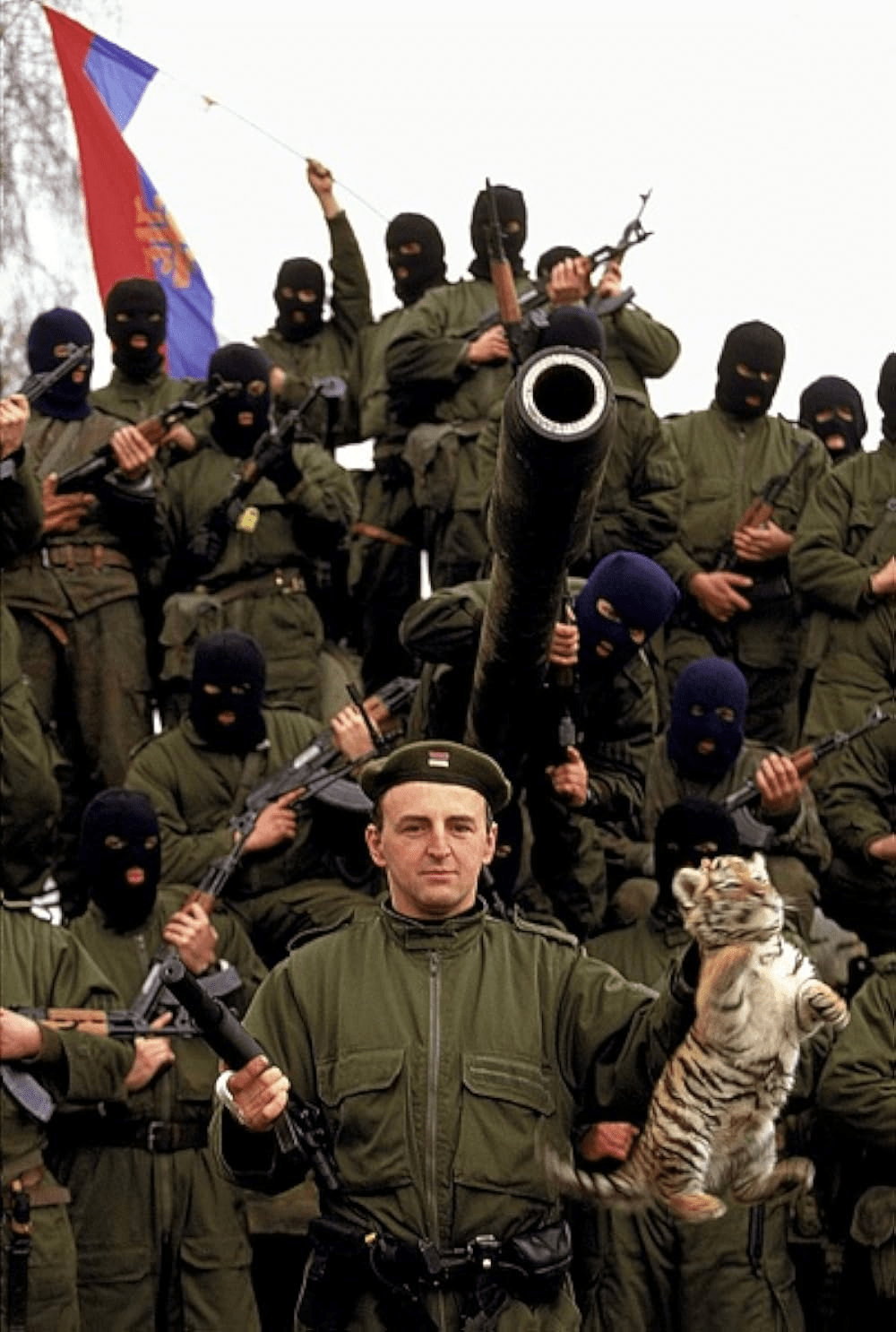

Serbian criminality spans a complex history shaped by periods of empire, war, dictatorship, transition, and nationalism. While crime exists in every society, Serbia and the Serbian diaspora have been associated with certain high-profile forms of organized crime, war crimes, political extremism, and football-related violence. This article examines patterns from the pre-Yugoslav era through the post-1990s period, drawing on available categories of notable cases and broader research.
Pre-Yugoslav and Early 20th-Century Context
In the late Ottoman and early independent Serbian periods, banditry (hajduci) was romanticized in folklore as “resistance” against Ottoman rule, blending criminality with nationalism. During the Balkan Wars and World War I, irregular forces sometimes engaged in looting and reprisals, but mostly criminality and plundering.
The interwar Kingdom of Yugoslavia saw political assassinations and corruption. Chetnik movements, originally anti-Axis resistance groups, included elements involved in ethnic violence and collaboration in some contexts during WWII. Post-WWII communist Yugoslavia suppressed overt organized crime but harbored corruption and smuggling networks.
Yugoslav Wars and War Crimes (1990s)
The breakup of Yugoslavia produced some of the most documented cases of Serbian-linked criminality. The International Criminal Tribunal for the former Yugoslavia (ICTY) convicted numerous Serbs of war crimes, crimes against humanity, and genocide (e.g., Srebrenica). Categories of “Serbian people convicted of war crimes” and “crimes against humanity” list dozens of notable cases.
Prominent figures include Arkan (Željko Ražnatović), a paramilitary leader and indicted war criminal with a gangster background, emblematic of the fusion of organized crime, nationalism, and warfare. Other examples in criminal categories include security officials like Radomir Marković. These cases highlight how state structures and paramilitaries blurred lines between warfare and criminal enterprise (looting, smuggling, extortion).
Organized Crime and Gangsterism
Serbia has produced internationally active criminal networks, particularly in the post-1990s “wild transition” period of sanctions, hyperinflation, and weak institutions. Notable examples from available categories include:
Pink Panthers — A sophisticated jewel theft network with Serbian roots, responsible for high-value heists across Europe.
Darko Šarić — Drug lord involved in large-scale cocaine trafficking.
Jezdimir Vasiljević (“Gazda Jezda”) — Notorious for pyramid schemes and financial crimes.
Bank robbers and gangsters (multiple entries) reflect a subculture of violent crime.
Methods often include drug trafficking (Balkan route for heroin and cocaine), cigarette smuggling, human trafficking, and money laundering. Serbian groups have operated across Europe. Prevalence in Europe is notable in Western Balkans diaspora communities (Germany, Austria, Scandinavia).
Football Hooliganism and Right-Wing Extremism
Serbian football ultras (e.g., associated with Red Star Belgrade and Partizan) are among Europe’s most violent. They frequently blend hooliganism with right-wing irredentism, nationalism, and neo-fascist symbolism. Incidents include clashes with rivals, attacks on minorities, and political mobilization. This subculture overlaps with organized crime and provides recruitment pools for extremist groups.
Right-wing irredentism (Greater Serbia ideology) has historical roots in Chetnik traditions and was revived in the 1990s. Some former war criminals or extremists maintain influence in politics or society, though Serbia has pursued EU-oriented reforms.
Comparative prevalence: Serbian-linked groups are visible in European organized crime statistics (drugs, thefts). Per capita, post-conflict Balkan countries show elevated rates of certain violent and organized crimes compared to stable Western Europe, driven by economic hardship, diaspora networks, and unhealed war legacies.
Conclusions
Serbian criminality reflects a toxic mix of extreme ultra-nationalism, war legacies, economic transition, and weak institutions. Key patterns include:
Fusion of crime and politics (paramilitaries, war profiteering).
Transnational reach via diaspora.
Subcultural violence (hooligans, extremists).
Lingering effects of unpunished or glorified war crimes.
Serbian-Descent Citizens and Crime Prevalence in Europe: Available Facts and Patterns
Overall Prevalence
Serbian nationals or persons of Serbian descent show disproportionate involvement in certain transnational organized crime categories, especially in Western and Northern Europe, relative to population size (Serbian diaspora estimated at 1–2+ million in Europe).
Organized Crime Index / Europol assessments: Balkan networks (including Serbian, Montenegrin, and mixed) are significant players in cocaine trafficking, arms smuggling, and money laundering. Serbian groups are frequently mentioned in “Balkan Cartel” operations involving tons of cocaine.
In countries like Germany, Netherlands, Sweden, and Scandinavia, Western Balkan (incl. Serbian) nationals appear over-represented in specific serious crimes relative to their small population share.
Crimes Serbs/Serbian-Descent Groups Are Most Associated With (Sentenced/Convicted Patterns)
Based on Europol, UNODC, national police reports, and court data:
Drug Trafficking (Most Prominent)
Especially cocaine from South America to Europe (via Spain/Netherlands ports). Serbian/Montenegrin networks are key facilitators in the “Balkan Cartel.” Multiple large-scale operations (tons seized) involve Serbian nationals.
Heroin (Balkan route) and cannabis/synthetics also feature.
Prevalence: High in Western/Northern Europe. Serbian groups often handle logistics, not always retail.
Violent Crime (Homicide, Assassinations)
Gangland killings, often linked to drug feuds (e.g., in Sweden/Netherlands). Lower overall homicide rates in Serbia proper compared to some Balkan peers, but diaspora-related violence stands out.
Less Prominent: General street crime, petty theft, or sexual offenses (no evidence of over-representation compared to other groups).
Conclusions
Serbian-descent individuals are most visibly sentenced for drug trafficking (especially cocaine), organized property crime, and arms-related offenses in European statistics.
Bibliography
International Criminal Tribunal for the former Yugoslavia (ICTY) judgments and archives (various cases involving war crimes).
Europol Organized Crime Threat Assessments (various years) — Balkan criminal networks.
Other sources
Europol. Decoding the EU’s Most Threatening Criminal Networks. The Hague: Europol, [year of report, e.g. 2023 or latest]. https://www.europol.europa.eu/cms/sites/default/files/documents/Europol%20report%20on%20Decoding%20the%20EU-s%20most%20threatening%20criminal%20networks.pdf.
Global Initiative Against Transnational Organized Crime. Hotspots of Organized Crime in the Western Balkans. Geneva: GI-TOC, 2019. https://globalinitiative.net/wp-content/uploads/2019/05/Hotspots-Report-English-13Jun1110-Web.pdf.
Organized Crime Index. “Serbia.” https://ocindex.net/country/serbia (accessed 2026).
United Nations Office on Drugs and Crime (UNODC). Crime and Its Impact on the Balkans. Vienna: UNODC, [relevant year]. https://www.unodc.org/documents/data-and-analysis/Balkan_study.pdf.
Measuring Organized Crime in the Western Balkans. Vienna: UNODC.
U.S. Department of State. Trafficking in Persons Report (various years, Serbia sections).

