

Extracted:
The Balkan Wars of 1912–1913 marked a violent reconfiguration of the Balkan League (Serbia, Greece, Bulgaria, and Montenegro) dismantled the remaining Ottoman holdings in the region. For Albanians, the conflict represented an existential threat. Victorious Serbian and Greek forces, “drunk on blood,” extended their campaigns into Albanian-inhabited territories, committing widespread atrocities aimed at ethnic transformation and territorial control. Contemporary accounts, including those from travelers and Albanian sources, paint a harrowing picture of mass killings, prisoner abuse, ransom demands, and terror that accompanied the advance of Serbian and Greek armies.
Fear and Provisional Governance Amid Invasion
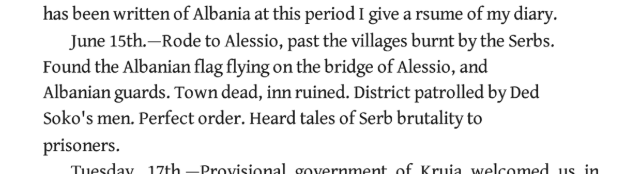
As Serbian and Greek armies advanced, Albania descended into chaos. The provisional government, operating from centers like Kruja, struggled to maintain order while facing invasion. One observer described arriving in Kruja on a Tuesday (the 17th), where the provisional government welcomed visitors in a “mighty old house.” This fragile authority operated under the shadow of advancing Serbian forces. Albanians lived in “mortal fear,” aware that the victors thirsted for their blood following victories over Ottoman and Bulgarian forces. The Peace of Bucharest, signed on August 10, 1913, formalized territorial changes but left Albanian populations vulnerable in contested zones.
Local resistance and self-defense emerged, as seen in areas patrolled by figures like Ded Soko’s men, where an inn was destroyed amid fighting. In such zones, “perfect order” under Albanian control contrasted sharply with the chaos and reprisals in Serbian-occupied territories. Rumors and direct reports of atrocities spread rapidly, heightening panic among civilians who had believed their areas safe due to the absence of Serbian populations.
Testimonies of Capture, Ransom, and Execution
Eyewitness stories reveal a pattern of targeted violence against Albanian civilians and fighters. A young man from Starovo recounted how he and two companions were captured by Serbian forces. Offered their lives in exchange for hefty ransoms, only the young man could pay. The other two were killed. Such incidents were not isolated; they reflected a systematic use of terror, extortion, and summary execution to subdue the population.
Albanian guerrillas and civilians faced brutal treatment. Serbian advances triggered flight and resistance, but those caught often suffered immediate reprisals. Contemporary reports describe Serbian (and allied) forces destroying villages, massacring non-combatants, and engaging in mutilations to instill fear and clear land for colonization or control. Greek forces in southern Albania similarly carried out harsh reprisals against Muslim and Albanian civilians.
Corroboration from Serbian Sources: A Soldier’s Letter
The most damning accounts sometimes came from within the perpetrator ranks. Reports of Serbian atrocities were “fully confirmed” by a letter from a Serbian soldier published in Radnichke Novina. Addressing his friend, the soldier wrote: “My dear friend, horrible things are happening here. I am appalled by it. I dare not…” The letter, referenced in the Carnegie Report, broke through official narratives and highlighted internal revulsion at the scale of the violence.
The Carnegie Endowment for International Peace’s 1914 report documented large-scale violence by Serbian and Montenegrin armies, aimed at the “entire transformation of the ethnic character of regions inhabited exclusively by Albanians.” Methods reportedly included mass executions, mutilations (cutting off ears, noses, tongues, and gouging eyes), village burnings, and forced expulsions. Estimates of Albanian deaths in Kosovo and surrounding areas ran into the tens of thousands, with some contemporary figures suggesting 50,000.
Broader Context and Consequences
These Greco-Serb actions occurred amid the broader frenzy of the wars. Serbian forces sought Adriatic access and historic claims in Kosovo, while Greeks advanced in the south. Albanian neutrality or Ottoman alignment provided pretexts for savagery. The result was ethnic cleansing that reshaped demographics, fueling long-term conflicts, including disputes over Kosovo. Albania’s declaration of independence in November 1912 and subsequent recognition offered little immediate protection, as Great Power diplomacy prioritized balance over minority safeguards.
Contemporary observers noted the contrast: areas under Albanian control, like those patrolled by Ded Soko, maintained order despite destruction, while occupied zones descended into horror. The bloodlust of the victors, fresh from triumphs, extended to civilians, confirming fears that drove Albanian resistance and appeals for international intervention.
Legacy of Violence
The atrocities of 1912–1913, corroborated by Albanian testimonies, foreign observers, and even Serbian admissions, exemplify how wartime conquest can devolve into systematic ethnic violence. They left deep scars, contributing to Albanian grievances and regional instability that echoed into the 20th century. The Carnegie Report and letters like the one in Radnichke Novina serve as stark reminders that behind military victories often lie human tragedies that no peace treaty can fully erase.
These passages, drawn from period accounts (e.g., Die Slawische Gefahr), underscore the human cost borne by Albanians during the Balkan Wars’ Greco-Serb campaigns. They highlight not only the scale of suffering but the fear and resilience of a people fighting for survival amid great power machinations.
Source
Die Slawische Gefahr zwanzig Jahre Balkan-erinnerungen. Mary Edith Durham, Hermann Lutz. 1929.

