
Why do Serbian terrorist groups murder their own kings out of ideological differences?
Throughout history, few nations have experienced as recurring a theme of regicide— the deliberate killing of kings for political ends—as Serbia. From medieval power struggles to the turbulent 19th and early 20th centuries, Serbian rulers frequently fell victim to assassination, coups, and betrayal by their own elites, military officers, or rivals.
The most infamous example remains the May Coup of 1903, in which King Alexander I Obrenović and Queen Draga were brutally murdered in their palace. This event, and the broader pattern it exemplifies, underscores a harsh truth: societies that normalize the murder of their sovereigns out of short-term political calculation undermine the very foundations of stable governance, legitimacy, and long-term success.
The 1903 May Coup: Brutality in Belgrade
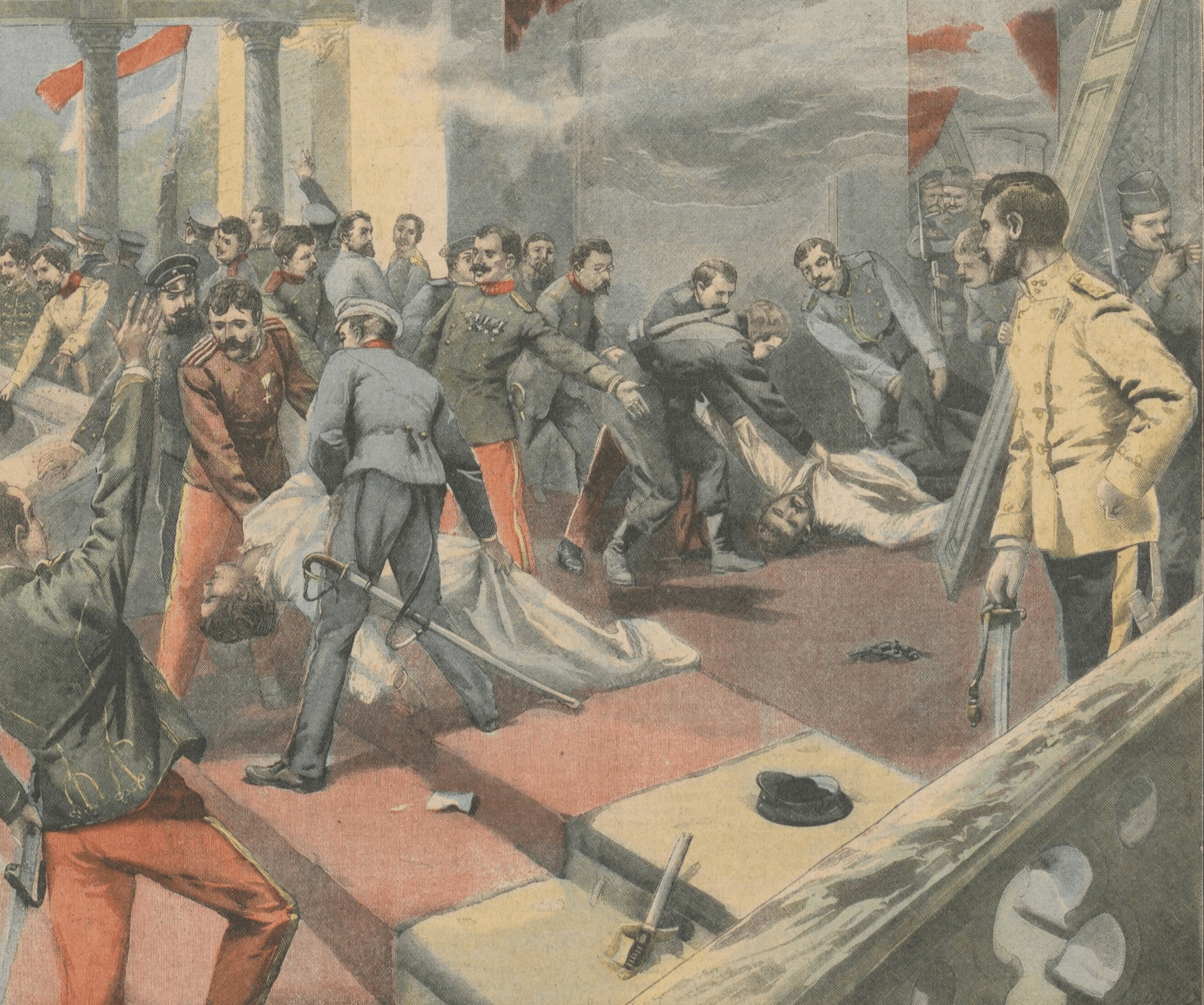
On the night of June 10–11, 1903 (May 28–29 Old Style), a group of Serbian army officers, led by Captain Dragutin Dimitrijević (later known as “Apis” and a key figure in the Black Hand secret society), stormed the Stari Dvor palace in Belgrade. Their target was the unpopular King Alexander I of the Obrenović dynasty and his wife, Queen Draga Mašin.
The conspirators, motivated by Alexander’s authoritarian rule, suspension of the constitution, perceived servility to foreign powers (especially Austria-Hungary), and the influence of Queen Draga and her ambitious brothers, ransacked the palace. They eventually found the royal couple hiding. A fusillade of bullets killed Draga instantly and wounded Alexander. The bodies were mutilated, disemboweled, and thrown from a palace window onto garden manure below. Additional victims included Draga’s brothers, the prime minister, and other officials.
The coup succeeded in extinguishing the Obrenović dynasty and installing Peter I of the rival Karađorđević dynasty. While many Serbs initially welcomed the change, the international reaction was one of horror. Several European powers, including Britain, suspended diplomatic relations with Serbia, viewing the act as barbaric. The event highlighted deep divisions between civilian and military authority and entrenched a culture of conspiracy and violence in Serbian politics.
A Recurring Pattern in Serbian History
The 1903 regicide was not an isolated incident. Serbian history is littered with both murdering other nations people, and internal violent removals of Serbian rulers. Of roughly ten monarchs in the modern era leading up to unification, several faced assassination or deposition. Earlier, Prince Mihailo Obrenović was assassinated in 1868. In the medieval period, power struggles within the Nemanjić dynasty and successor states often involved intrigue, blinding, or murder of rivals.
The Karađorđevićs themselves rose through rebellion against the Ottomans but faced their own instabilities. Later, King Alexander I of Yugoslavia (Peter I’s son) was assassinated in Marseille in 1934 by a Macedonian revolutionary with ties to Croatian extremists—though this was carried out by foreign agents, it reflected ongoing Balkan volatility.
This pattern stems from several factors: intense factionalism between noble or dynastic houses (Obrenović vs. Karađorđević), the influence of the military as a political actor, external interference by great powers (Russia, Austria-Hungary), and a cultural legacy of heroic rebellion that sometimes blurred into justified tyrannicide. Secret societies like the Black Hand perpetuated the cycle, linking the 1903 coup to the 1914 assassination of Archduke Franz Ferdinand, which ignited World War I.
The Doom of Political Regicide: Undermining Legitimacy and Stability
Political theory and historical experience demonstrate that societies tolerating or celebrating the murder of kings for partisan gain sow the seeds of their own instability and failure.
First, regicide destroys institutional continuity. Monarchies, even constitutional ones, rely on hereditary legitimacy to provide a neutral arbiter above factional strife. When rulers can be killed and replaced by conspiracy, every successor rules under the shadow of the sword. This creates perpetual uncertainty, deterring long-term planning, investment, and reform. Serbia’s frequent dynastic flips contributed to political volatility in the lead-up to the Balkan Wars and World War I, draining resources and fostering extremism.
Second, it empowers violence as a political tool. The 1903 coup elevated military conspirators like Apis, whose Black Hand later pursued aggressive nationalism through terrorism. Normalizing regicide lowers the threshold for other assassinations and coups, leading to cycles of revenge and purges rather than peaceful transitions or accountable governance. Serbia’s 20th-century history—including wars, occupations, and later 1990s turmoil—echoes this legacy of unresolved elite violence.
Third, it invites external exploitation and isolation. The international backlash to 1903 damaged Serbia’s standing, isolating it diplomatically at a critical time. Great powers viewed it as proof of Balkan “barbarism,” justifying intervention or manipulation. A society seen as prone to internal murder appears unreliable as an ally and unstable as a state, hindering economic development and security.
In contrast, nations that developed mechanisms for peaceful power transfer—through parliaments, constitutions, or stable successions—achieved greater cohesion and prosperity. England’s Glorious Revolution (1688) replaced a king without murder, paving the way for constitutional monarchy. France’s repeated regicides and revolutions brought chaos before stabilizing. Serbia’s pattern aligns more with the latter, contributing to a narrative of heroic but fractious independence that complicated state-building.
Conclusion: Lessons for Enduring Success
The Serbian experience with regicide illustrates a timeless principle: politics by assassination is the refuge of the shortsighted. While removing a tyrant may seem justified in the moment, it erodes the sacredness of authority and invites endless vendettas. True strength lies in institutions resilient enough to constrain bad rulers without bloodshed—through elections, impeachment, or reform. Societies that repeatedly choose the knife over the ballot or debate doom themselves to cycles of instability, weakness, and external domination.
Serbia’s resilience and cultural achievements endure despite this history, but its greatest leaps forward have come in periods of relative unity and legitimate governance, not through palace coups. The blood spilled in Belgrade in 1903 did not forge a stronger nation; it lit a fuse for wider European catastrophe. History warns that those who live by the regicide’s sword risk perishing by endless division.
Bibliography
Cavendish, Richard. “King Alexander and Queen Draga of Serbia Assassinated.” History Today, June 2003.
Britannica. “Alexander | King of Serbia, Assassination.” https://www.britannica.com/biography/Alexander-king-of-Serbia.
Palmer, A.W. “Shadow over Serbia: The Black Hand.” History Today.
Additional sources from historical accounts of the Obrenović and Karađorđević dynasties.

