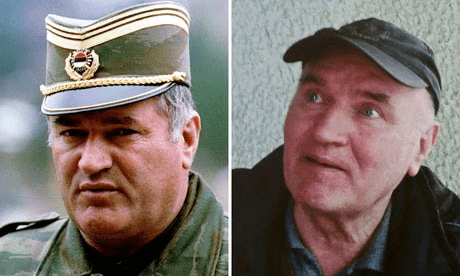

Image from The Guardian
Why Do Serbia and Serbs Have So Many War Criminals?
The numbers are impossible to ignore. The International Criminal Tribunal for the former Yugoslavia (ICTY) indicted and convicted more Serbs — including high-ranking political and military leaders — for war crimes, crimes against humanity, and genocide than any other group during the 1990s Yugoslav breakup. From Slobodan Milošević and Radovan Karadžić to Ratko Mladić and dozens of paramilitary commanders, the list is long and damning. Why? What is it about Serbia and Serbian society that produced such a disproportionate share of convicted war criminals?
The Raw Facts
Serbs (or forces acting in their name) were responsible for the worst single atrocity in Europe since World War II: the Srebrenica genocide (over 8,000 Bosniak men and boys executed in 1995). Systematic campaigns of ethnic cleansing, mass rape, siege warfare (Sarajevo), and concentration camps in Bosnia and Croatia carried the fingerprints of Serbian state policy, paramilitaries like Arkan’s Tigers, and local forces. While Croat and Bosniak forces also committed serious crimes, the scale, coordination, and ideological drive behind Serbian operations stand out in tribunal records.
The Uncomfortable Reasons
1. Greater Serbia Ideology as State Policy
For decades, a toxic nationalist dream of a “Greater Serbia” — encompassing large parts of Bosnia, Croatia, and Kosovo — was mainstream in Serbian politics, media, and the Serbian Academy of Sciences. Unlike defensive nationalism elsewhere, this was explicitly expansionist and irredentist. When Yugoslavia collapsed, leaders like Milošević weaponized it. Propaganda portrayed Serbs as eternal victims facing “genocide” by Croats, Bosniaks, and Albanians, justifying preemptive aggression. This created moral disarmament: if “we” are the victims, anything “we” do is self-defense.
2. Paramilitary Culture and Criminal-Warrior Fusion
The 1990s saw the rise of gangster-paramilitaries (Arkan, Šešelj’s White Eagles, etc.). These were not disciplined soldiers but criminals released from prisons, given weapons, and unleashed with promises of loot and impunity. Serbia’s state security services actively supported them. This fusion of organized crime and nationalism produced some of the most sadistic violence of the war. Many later convicted war criminals had pre-war criminal records.
3. Command Responsibility and Denial
Top Serbian leaders claimed they “didn’t know” or “couldn’t control” events on the ground. Tribunals rejected this, finding systematic coordination from Belgrade. The cult of the military (Chetnik romanticism, Kosovo myth) and a victimhood narrative made accountability toxic. Even today, denialism, monument-building for convicted criminals, and political rehabilitation remain common in parts of Serbian society.
4. Structural and Cultural Factors
Authoritarian legacy: Decades of strongman rule (Tito, Milošević) weakened independent institutions.
Propaganda machine: State media dehumanized opponents as “Ustashe,” “Turks,” or “Islamic fundamentalists.”
No real reckoning: Unlike Germany or Rwanda, Serbia never underwent full societal de-Nazification or truth-telling. Many view convicted war criminals as heroes or victims of “victor’s justice.”
But All Sides Committed Crimes — Why Singling Out Serbs?
This is the common Serbian counter-argument, and it contains partial truth. Croat forces (Operation Storm) and Bosniak units committed atrocities. However, the scale and systematic nature differed. Only Serbian forces pursued ethnic cleansing as a core strategy across multiple countries, with the highest death toll and displacement. Tribunals were not perfect, but evidence-based convictions are overwhelming.
The Provocative Core Question
Is there something uniquely pathological in Serbian political culture? The problem lies in unchecked ultra-nationalism + victimhood mythology + weak democratic institutions + opportunistic leaders. Similar dynamics produced horrors in Rwanda, Nazi Germany, or Imperial Japan. Serbia’s tragedy was timing it during Europe’s post-Cold War moment, when the world was watching but slow to intervene.
Today, Serbia pursues EU membership while parts of society glorify war criminals and flirt with Russia/China. Until there is genuine confrontation with the 1990s — not just cosmetic cooperation with The Hague — the shadow remains. Nations that cannot face their darkest chapters remain prisoners of them.
The high number of Serbian war criminals is not proof of collective guilt. It is proof of how poisonous ideology + power + impunity can become. Other Balkan nations have their own demons, but Serbia’s were the most ambitious and destructive. Ignoring this uncomfortable truth helps no one — least of all Serbs who want a normal European future.

