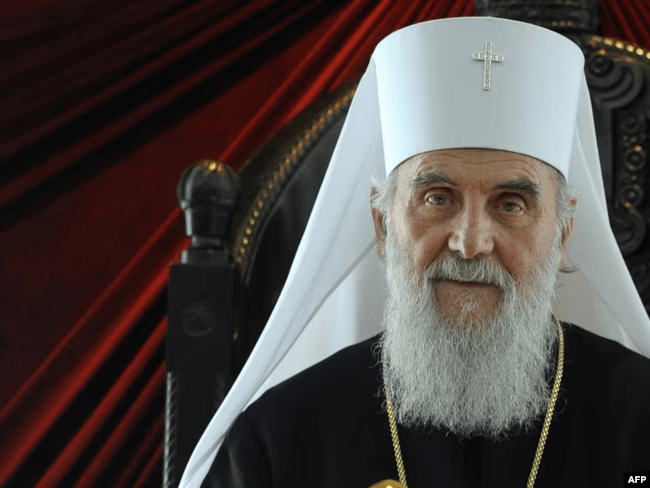

The Vreme newspaper – Serbia, published a video, where in a rehabilitation center, which is run by the Serbian Orthodox Church, “patients” are brutally beaten, being beaten with shovels, punches and kicks.
The center was opened in 2005, by the head of the Serbian Orthodox Church, Artemije.
The center is located in a mountainous area of Sandzak and is guarded by many pit bulls and Dobermans and the patients cannot escape from this center “for spiritual rehabilitation”. A man who had tried to escape from the center was caught by the center’s staff and was beaten with strong tools and dragged for kilometers on the ground.
Parents who send their children to this center, to cure them of drug addiction or some other problem, pay 350 euros per month, but are unaware of what happens inside the center. Parents ask for their sons to be cured, while the priests tell them: Don’t worry, we know how to fix it.
The practice of beating the sick (mostly drug addicts) with shovels or wooden rods took place at the rehabilitation center inside the Crna Reka Monastery in Serbia, under the administration of the Serbian Orthodox Church. These brutal methods were revealed in 2009 and caused an international scandal, leading to the intervention of the authorities.
Slobodnaevropa writes:
Monks leave Crna Reka Monastery in protest
by Zelimir Bojovic
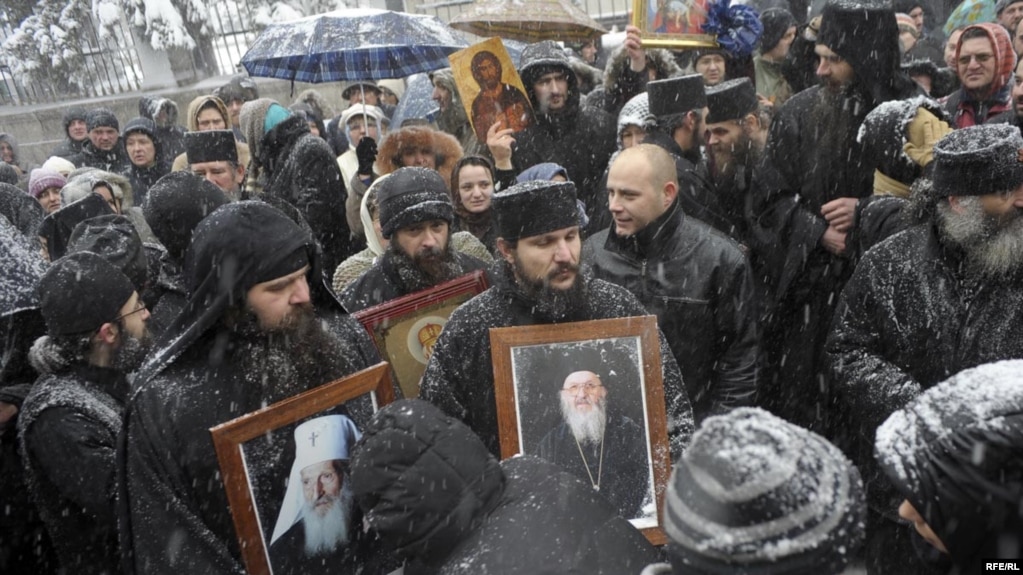
All monks of the Crna Reka Monastery, located near Novi Pazar, led by Archpriest Nikolaj, will leave the monastery and the Diocese of Raška-Prizren on Thursday. While some believe that politics is behind this unusual phenomenon in the Serbian Orthodox Church, others say that the reasons for this decision can be found in unresolved church disputes and the refusal to respect the canonical order of the church.
Metropolitan Amfilohije of Montenegro and the Littoral , the administrator of this eparchy, has not given a canonical discharge to the monks of this monastery, but they will, as they say, implement their decision and leave the monastery even without that.
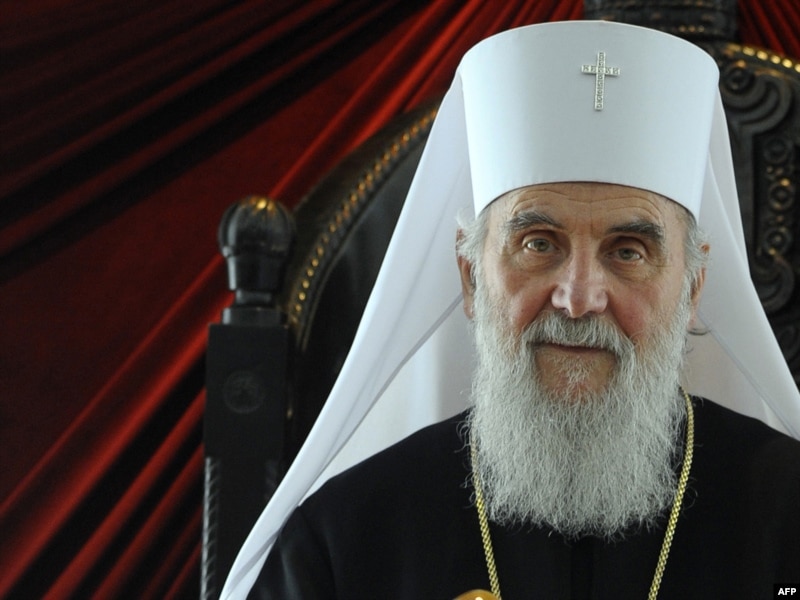
Patriarch Irinej
Serbian Patriarch Irinej , in an interview with RFE/RL, said that the problem with monasticism in Crna Reka has been present for several years and that the church had to take clear steps:
“No one forced them to come to the monastery, and if they decided to do so, then they must behave according to the monastery regulations and rules. We are sorry for everything, but if there had been more awareness, more calmness and more monastic virtues, this would not have happened. Ultimately, what hangs, let it fall,” he said.
The background to this unusual act is the recent decision of the Holy Synod of Bishops to remove Bishop Artemije from the Diocese, whose head he had been for years.
The monks consider this unacceptable, and Church representatives have already announced that they will take all measures and punish all those who participate in the rebellion, in order to preserve canonical order in the church.None of the monks in Crna Reka answered our repeated calls, and many had their mobile phones turned off for the whole day. One of the few who wanted to talk to our program was
Branislav Peranović , who became known to the public as the head of the Crna Reka Spiritual Rehabilitation Center, which treats drug addicts, and whose scandalous images of beating his wards caused a stormy public reaction at the end of last year.
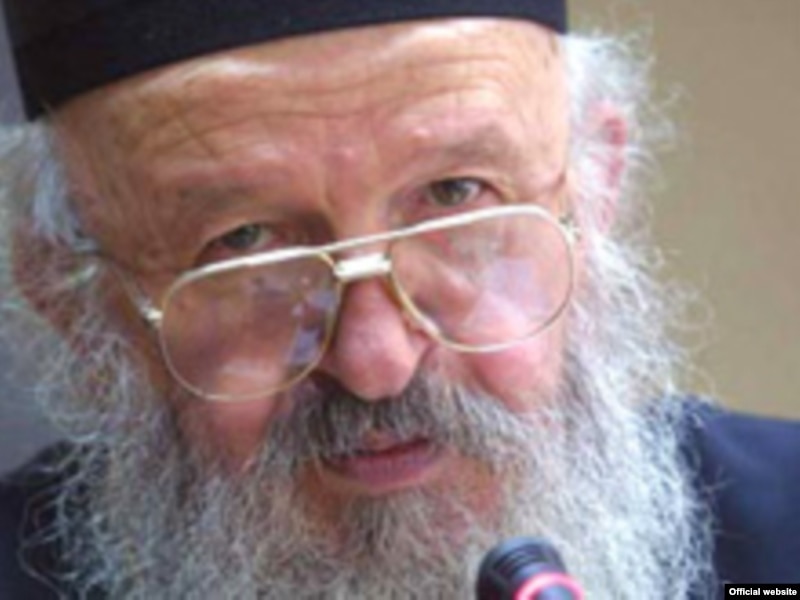
Bishop ArtemijePeranović told RFE/RL that he was also against the decision of the Synod of the Serbian Orthodox Church to retire Bishop Artemije, but that he was opposed to the monks’ decision to leave the monastery:
“It is difficult for me to imagine that the monastery will be left without monasticism and I was hoping that some other solution would be found and that some kind of agreement would be reached. A way should have been found for them to stay in their monastery because Father Nikolaj has been there for almost 30 years ,” he said.
The Crna Reka Monastery is debatable in many ways. In addition to the aforementioned Spiritual Rehabilitation Center, which psychiatrists have labeled as an unprofessional place for providing assistance in the process of drug withdrawal, the monks have often advocated the most radical ideas that can be heard in the Serbian Orthodox Church today. Around 30 monks are considered opponents of the new patriarch, who, unlike them, openly speaks about ecumenism and is ready for the Pope’s arrival in Serbia.
Personality cult
One of them, monk Antonije, has already been expelled from the church, and became known to the public as one of the organizers of the demonstration in front of the Patriarchate on February 13, 2010, when the Synod’s decision was delivered to Bishop Artemije on the temporary dismissal and the initiation of proceedings to determine his canonical responsibility.Religious theorist
Mirko Đorđević tells RFE/RL that this is a difficult situation for the Serbian Orthodox Church, because several questions arise: where will the monks go, which monasteries want to receive them, and whether they will be disbanded and in what way.
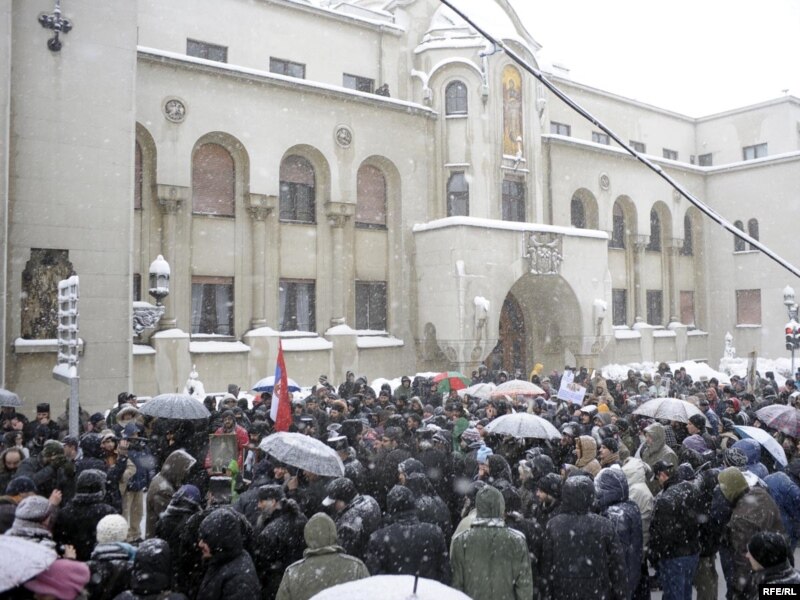
Rally in support of Bishop Artemije in front of the Patriarchate in Belgrade, February 13, Photo: Vesna Anđić
“The monks opposed the Synod, the council, the church and the patriarch and now they are faced with a difficult situation where they have nowhere to go as monks,” he says.
For experts, such moves by the monks are scandalous to say the least. Religious analyst
Živica Tucić tells RFE/RL that an unacceptable personality cult has taken hold among the monks, and when asked where the monks could go without canonical dismissal, he says:
“They can go to Greece, but I don’t know where they would be there either, they can go to the Old Calendar groups, of which there are about fifteen. So, they have nowhere to go, in fact, they might buy a house or take some space and declare it their monastery ,” he says.
Mirko Đorđević points out that political motives are hidden behind this decision by the monks and their leader, because the new patriarch represents ideas that are far removed from them. On the other hand, Patriarch Irinej, when asked if there was a political background to this case, said:
“No, no politics. This is a problem that has been present in the church for two or three years and we tried to solve it in the most harmless way, but when it turned out that the monks did not want it, we acted the only way we could.”Our interlocutors, each in their own way, describe this situation, but neither Mirko Đorđević nor Živica Tucić see how this problem could be solved at all:
“This rebellion, which is gaining wider proportions, for now, I do not see how it could end ,” says Đorđević.
“Based on canonical (church) law , there is no way out,” says Tucić.
Sources
https://www.slobodnaevropa.org/a/manastir_crna_reka_monasi/2060205.html

