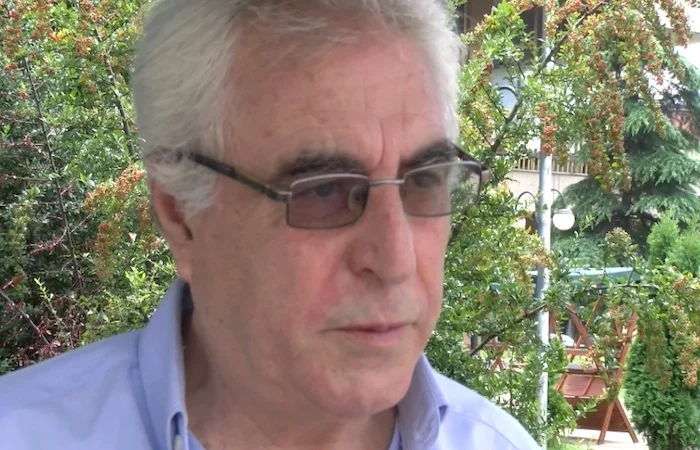

Written by Xhelal Zejneli
Serbia did not aim to secure national rights for Serbs outside of it. It aimed to annex the neighboring territories inhabited by Serbs. As a result, there were constant wars between Serbia, which aimed for expansion, and its neighbors, who fought to protect their borders.
Serbia’s goal has been and remains to reach the Adriatic, but this will never happen.
On December 1, 1918, the Kingdom of Serbs, Croats and Slovenes was formed. Since 1929, it was called the Kingdom of Yugoslavia. Within Serbia, Bosnia and Herzegovina, Montenegro, Macedonia, Vojvodina and Kosovo were included. Later, the aforementioned state was called a “creation of Versailles” , an “artificial creation” , a “prison of peoples” . In the aforementioned state, only three peoples were recognized: Serbs, Croats and Slovenes.
The nationality of Bosniaks, Montenegrins, Macedonians, Albanians – was not recognized. In Vojvodina, there were hundreds of thousands of Hungarians and hundreds of thousands of Germans. Serbia’s goal was clear – assimilation . When it came to Albanians in this South Slavic kingdom, Serbia’s goal was – the expulsion of Albanians to Turkey . This is also evidenced by Vasa Čubrillović’s work “The Expulsion of Albanians” (Iseljavanje Arnauta, 1937 ) .
This is also evidenced by the Agreement between the Kingdom of Yugoslavia and Turkey dated July 11, 1938, which provided for the relocation of 40 thousand Albanian families (about 200 thousand people) to Turkey. In the period 1952-1965, 452,371 Albanians migrated to Turkey.
World War II led to the dissolution of the Yugoslavia of Versailles . Post-World War II Yugoslavia, or the SFRY, was called Tito’s Yugoslavia or AVNOJ Yugoslavia. This state had six republics and two provinces. With the 1974 Constitution, the two provinces – Kosovo and Vojvodina – became integral parts of the Yugoslav federation.
The Muslims of Bosnia and Herzegovina claimed to be Bosniaks. Serbia rejected this claim. According to Belgrade, in addition to Muslims, Serbs and Croats also live in Bosnia and Herzegovina. Consequently, the Muslims of BiH have no right to adopt the name Bosniak as their nationality name. According to Serbian academics, “the Bosnian language does not exist. Muslims in BiH speak Serbian. Bosnia and Herzegovina is nothing more than a geographical term, so there can be no Bosnian nation . Muslims in BiH cannot be holders of citizenship, because there are Serbs and Croats there”.
In order not to identify with Serbs or Croats, the Muslims of BiH, since 1968, have used the term “Muslim” instead of nationality. According to the 1971 census in BiH, 39.6% of the population declared themselves “Muslim” in the sense of nationality.
Note : Muslims of Bosnia and Herzegovina, Sandzak, Montenegro, etc., today call themselves “Bosnians” , while the language they speak is called “Bosnian language” .
In 1986, Serbian academics issued a memorandum, known as the “ASShA Memorandum .” In this document, Serbian academics state that “Serbs in Tito’s Yugoslavia are unequal to its other peoples, and therefore radical changes to the state are needed . ”
In the early 1990s, Serbia attempted to repeal the 1974 Constitution and restore the unitary, centralist, and statist policies of the time of the Yugoslav Kingdom. It also attempted to suppress the autonomies of the two autonomous provinces. It attempted to restore its hegemony and dominance over Yugoslavia as it had during the time of the Serbo-Slavic Kingdom.
The hegemonic and expansionist Serbian policy of the late 1980s and early 1990s was supported by: the Serbian Academy of Sciences and Arts, the Serbian Writers’ League, and the Serbian Orthodox Church. The so-called Yugoslav People’s Army (JNA) was placed under Serbian control.
The Serbian police were placed under political control. The media as well. Free speech was completely extinguished. A single political and ideological ideology was imposed on Serbian society. Serbian society was homogenized . The Serbian state was in the hands of national socialists, radicals , and Chetniks . Anyone who thought differently was labeled a traitor . A clerico-fascist policy was on the scene .
This was a false Serbian cause .
Compared to Slovenia and Croatia, Serbia was stagnant, but not because it had been wronged. It was stagnant because it was not at their level of development, neither economically nor intellectually. It was stagnant because it aimed at territories and not at economic and technical-technological development. It preferred that others work for it, while it commanded.
The clerical-fascist, national-socialist, radical and Chetnik policies were resisted by Croats, Slovenes and Albanians . Some even say that the defeat of the RSF of Yugoslavia began in March and April 1981, with the demonstrations of Albanians in Kosovo that were also reflected among Albanians in other regions of Yugoslavia .
As a result of Serbian aggression against Slovenia, Croatia, Bosnia and Herzegovina and Kosovo, Yugoslavia – or the SFRY – disintegrated . From its amalgamation, independent states were created, such as: Slovenia, Croatia, Bosnia and Herzegovina, Montenegro, Macedonia and Kosovo. Serbia was left alone, with Vojvodina enjoying a quasi-autonomy .
The Serbian Academy of Sciences and Arts, to this day, has not distanced itself from its 1986 Memorandum. Nor has the Serbian political class distanced itself from this kind of memorandum. Almost no one in Serbia who possesses influential power.
Zoran Djindjic (1952-2003) tried to bring new ideas to the Serbian political scene .
Note : Zoran Djindjic graduated in 1974 from the Faculty of Philosophy of the University of Belgrade. He received his doctorate in 1979 from the University of Konstanz in Germany, with the thesis “Problems for the Establishment of Critical Theory in Society”. His mentor was the German philosopher, one of the most prominent in the world, Jürgen Habermas (Jürgen Habermas, 1929- ). In 1994 he was elected chairman of the Democratic Party.
In 2001 he was elected Prime Minister of Serbia. In 1999, the American weekly “Times” included Djindjic in the prestigious list of the 14 most influential politicians in Europe of the third millennium. He received the prestigious German “Bambi” award in the field of politics for the year 2000. In August 2002, for his contribution to the development of democracy in Serbia, he was awarded the “Polish Foundation” award in Prague .
This award was given annually for contributions to the implementation of democratic and economic reforms in Central and Eastern Europe. He was assassinated on March 12, 2003, in front of the Serbian Government building. Hundreds of thousands of people attended his funeral. It was not difficult to know who was behind the murder.
The new generation of Serbian academics must distance themselves from the ideas and ideologies of their predecessors. To distance themselves, because they contradict or are in conflict with the democratic principles of the time. Integration into the Western family represents an opportunity for the peoples of the region to overcome the disagreements of the past and present. Serbia aims to keep the region as it was during the bellum omnium in omnes , when the Balkans were a powder keg .
Serbian national ideology today is at the time of the great Serbian fathers of the 19th and early 20th centuries, such as: Ilia Garašanin (1812-1874), Vuk Karadžić (1787-1864), Jovan Cvijić (1865-1927), Vladan Đorđević (1844-1930), Vasa Ćubrillović (1897-1990), Dobrica Qosić (1921-2014).
Serbian national politics today is that of Serbian statesmen of the 19th and 20th centuries, such as: the Karađorđevićs, the Obrenovićs , Nikola Pašić (1845-1926), Aleksandar Ranković (1909-1983), Slobodan Milošević (1941-2006), the Chetniks, Vojislav Šešelj (1954- ), and Šešelj’s political offspring – Aleksandar Vučić (1970- ).
Two centuries, no change and no ideological and political transformation of Serbia. The above, a full two centuries, speak of a certain Serbian cause , of the so-called Serbian national question . There is no Serbian cause, there is no Serbian national question. The Serbian cause is nothing but hegemony, expansion and domination over other peoples of the region.
It is no coincidence that there is no political opposition in Serbia today. The Serbian opposition is as retrograde and anachronistic as the government of Aleksandar Vučić. A state in which there is no political opposition is antidemocratic. Such a state is ruled in an authoritarian and autocratic manner. In that state, general or local elections are nothing but a farce. Such is Serbia. Such a Serbia has no place in the EU. It must change, reform, transform, and abandon the ideology and politics of the 19th and early 20th centuries.
The new generations of Serbian academics should issue another memorandum in which they would distance themselves from the one of 1986. Serbia is too small to be big . A small Serbia cannot have under its hooves: half of the territory of Croatia, Bosnia and Herzegovina, Montenegro, Macedonia, Kosovo and other Albanian areas in Yugoslavia, Vojvodina where hundreds of thousands of Hungarians lived, Sandzak inhabited by Bosniaks. A big dream of a small man.
The Serbs are an arrogant, megalomaniac, conceited people. Their megalomania is the product of their rule over the other peoples of Yugoslavia, from 1912, or 1918, respectively, until its dissolution in the early 1990s. Every megalomania contains naivety and ignorance.
The Serbs do not learn from the Great Powers of the old continent. They had fought among themselves, but in the second half of the 20th century they had come to the conclusion that the war for territories should be replaced by mutual recognition and economic cooperation, in the function of common and general development. They had come to the conclusion that the war for territories meets with resistance from the other side. The issue sinks and leads to a vicious circle that has no end. It is a costly war, many victims.
Vučić in Kosovo does not seek association, any association. He seeks territory, he seeks a Serbian entity, he seeks a state within a state, he seeks a Serbian republic in Kosovo, like that of Bosnia and Herzegovina, led by Milorad Dodik (1959- ), unwanted in the US. After a few people, the Serbs would do their best to annex this kind of republic to Serbia. They are masters of staging, deception, lies, and propaganda.
Between East and West, Serbia pretends to be neutral, as if it stands equidistant . The truth is that it does not sit on two chairs. It sits on one of them, the Russian one.
The West has not done enough, if not done nothing at all, for the democratization of Serbia . Serbia today is that of the Milosevic era. After the fall of Milosevic, his disciples and those of Vojislav Seselj – Vučić and his like-minded people – came to power in Serbia.
Serbian policy today is in complete contradiction with the political philosophy of the EU. Instead of changing borders, the EU suggests respecting the rights of ethnic communities within the states where they reside.
Vučić’s Serbia has no choice but to arm itself with Russia and China, pursue a policy of force and threaten with the army. Vučić does not want an agreement with Kosovo, does not recognize its independence, does not recognize its sovereignty and territorial integrity. What kind of talks is Brussels talking about when Serbia today, with its constitution, considers Kosovo part of Serbia. Vučić and the members of his government, upon taking power, swear that they will protect Serbia, with Kosovo as part of it.
Washington, Berlin and Paris should have told Serbia: “Give up your pan-Serbian ideas. Otherwise you will remain isolated, i.e. isolated!” After World War II, Germany said: “From now on, war in Europe will never start on German soil .” Serbia has not been able to make such an oath, although in the 1990s it caused wars, from Slovenia to Kosovo. Wars accompanied by war crimes and genocide.
Washington cannot do well with Kosovo, nor with its historical enemy – Serbia . The evil of the region – Serbia, cannot be disciplined and transformed by petting and caressing it. By investing tens of billions of euros or dollars in it. Feed the crow until its eyes pop out. Vučić has no choice but to change. The one who goes to the wedding of Seselj’s son cannot change. The wolf does not become tamed. Nor does it change its appearance.
Vučić is not the one who can lead Serbia into the European family. What does the West need from a Serbia led by a Vučić, by a Tomislav Nikolić (1952- ), by a Vojislav Kostunica (1944- ), by an Ivica Dačić (1966- ), by an Aleksandar Vulin (1972- )?! From Vučić, a close friend of Milorad Dodik, of Putin, of Moscow. Vučić who did not impose sanctions on Moscow, who has extinguished free speech, dissent, freedom of expression in Serbia, who has put the media under control, who leads in an authoritarian and autocratic, tyrannical, despotic and dictatorial manner, who has created a totalitarian Serbia within Europe.
And Washington, Berlin and Paris – are silent, they close their eyes! Where does a small Serbia get the strength to confront all this West?! It is known where – in Moscow, under Vladimir Putin (1952- ). Serbia is teeming with parapolitical groups that claim to be national political parties or movements.
These militant groups are nothing more than wild, barbaric, extreme right-wing hordes. It is a tragedy for a state and a European society not to have rational forces that implement democratic principles in its territory. Woe to that people whose politics are determined and imposed by the priests of the Serbian Orthodox Church. Serbia, you have become worse than ever!
Serbia today, as it was in the past, is irrational. It continues to remain on the wrong side of history. An academic, an intellectual, a writer, a Serbian philosopher did not raise his voice of protest to say stop to Vučić and his nonsense.
Kosovo is a state where order, rule, and law prevail, where corruption is fought, where national minorities enjoy all rights, like in no other EU country. What more does Belgrade want than that?! Belgrade holds the Serbs of Kosovo hostage, manipulates them, and does not let them integrate into Kosovo society and the institutions of the Kosovo state.
Serbia, take an example from Kosovo. Learn from it the hard lesson of democracy!
Article
https://portalb.mk/nuk-ka-kauze-serbe-ajo-eshte-e-rrejshme/?

