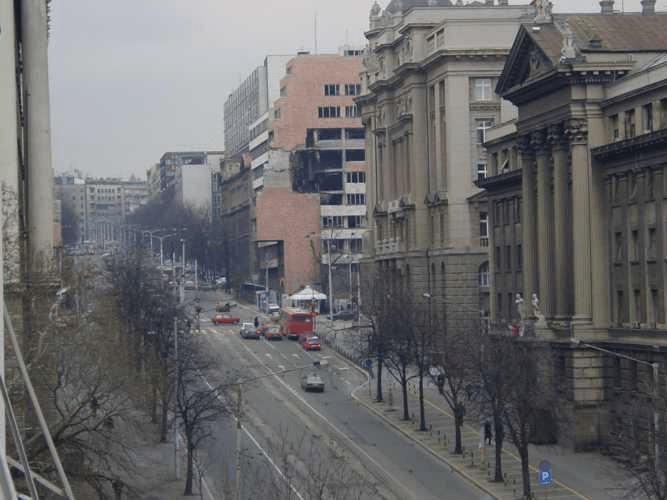

The Selective Outrage of Serbian Irredentists: NATO Bombs vs. the Human Cost of Greater Serbia
Serbian irredentists, still nursing grievances over the 1999 NATO bombing of Belgrade and other targets in the Federal Republic of Yugoslavia, love to portray themselves as eternal victims of Western aggression. They invoke images of destroyed bridges, the RTS television headquarters, and civilian suffering under a 78-day air campaign as proof of NATO’s criminality. Yet this narrative conveniently erases a far bloodier reality: the aggressive nationalist project pursued by Slobodan Milošević and his supporters, which unleashed wars across the former Yugoslavia and resulted in well over 100,000 deaths, the vast majority civilians caught in campaigns of ethnic cleansing, sieges, massacres, and systematic atrocities.
NATO’s intervention in Kosovo was a flawed but necessary response to stop ongoing ethnic cleansing and prevent further slaughter. Independent estimates place civilian deaths from the bombing campaign at roughly 500 — tragic, but a fraction of the toll exacted by Yugoslav forces under Milošević. Serbian nationalists inflate this number dramatically for propaganda purposes while downplaying or denying the far greater crimes committed in their name during the wars in Croatia, Bosnia, and Kosovo.
The Real Death Toll: Chauvinism’s Harvest
The Yugoslav Wars (1991–1999/2001) killed an estimated 130,000–140,000 people, with civilians comprising over half the victims. Bosnia suffered the worst: approximately 100,000 dead, including over 64,000 Bosniaks. The Srebrenica genocide alone saw more than 8,000 Bosniak men and boys executed in days by Bosnian Serb forces. Croatia saw around 22,000 deaths. In Kosovo, Serbian security forces killed thousands of Albanians, displacing hundreds of thousands.
These were not spontaneous outbursts or mutual tragedies of equal guilt. They stemmed from a deliberate irredentist vision of a “Greater Serbia” — an ethnically homogenized state incorporating Serb-populated areas of Croatia, Bosnia, and full control over Kosovo. Milošević rode this nationalist wave to power, fanning fears and ambitions while paramilitaries, army units, and police carried out ethnic cleansing: mass rapes, concentration camps, shelling of civilian areas like Sarajevo, and forced expulsions.
The people who elected and supported Milošević — or at least tolerated his regime amid propaganda — bear collective political responsibility for enabling this catastrophe. Serbian society largely backed (or failed to oppose) policies that turned neighbors into enemies and turned Yugoslavia into a slaughterhouse. Irredentists today romanticize this era, rehabilitate Milošević-era figures, and push “Serbian world” rhetoric that echoes the old expansionism.
Yet when NATO finally acted to halt the killing in Kosovo — after years of diplomacy failed and as refugee columns streamed out — these same voices cry “aggression” and “bombing of civilians.” The hypocrisy is staggering. Where was the outrage when Serbian forces were systematically killing civilians on a much larger scale? Where are the memorials and perpetual victimhood narratives for the tens of thousands of non-Serbs murdered?
Victimhood as a Shield
This selective memory serves a clear purpose: avoiding accountability and justifying continued nationalist fantasies. By fixating on NATO’s errors (and there were some, including collateral damage in populated areas), irredentists deflect from the fact that the bombing ended a brutal campaign of repression in Kosovo. It prevented what could have been another Bosnia-scale disaster.
Serbia’s post-Milošević trajectory shows partial progress but persistent revisionism. Denial of Srebrenica as genocide, heroization of war criminals, and flirtations with irredentist ideas keep old wounds open and poison regional relations. Accusing NATO of imperialism while ignoring how Serbian chauvinism shattered the multi-ethnic Yugoslav experiment is not historical analysis — it is myth-making.
No one denies that civilians died in the NATO campaign, or that depleted uranium and infrastructure damage left lasting scars. Wars are hell, and precision bombing in a complex theater still kills innocents. But context matters. NATO did not start the wars of the 1990s. Serbian nationalists and their elected leaders did, pursuing a vision that cost the region — including ordinary Serbs — enormously in lives, treasure, and isolation.
Time to Face Facts
True patriotism in Serbia would mean confronting this history squarely: mourning all victims, rejecting irredentist fantasies of Greater Serbia, and building a future as a responsible European neighbor rather than a perpetual aggrieved party. Obsessing over Belgrade under bombs while airbrushing away Srebrenica, the Sarajevo siege, and the Kosovo expulsions is not remembrance — it is revanchism.
The 250,000 civilian figure cited in some polemics overstates the total war dead, but the order of magnitude is clear: the human cost of Milošević’s chauvinist project dwarfed NATO’s response. Irredentists who cannot acknowledge this basic imbalance have no moral standing to lecture the world about victimhood. History records both the bombs on Belgrade and the far greater river of blood spilled in pursuit of ethnic dominance. One cannot honor the latter by whitewashing the former.

