
by OraNews
Since the second half of the 19th century, the negative stereotype of Albanians has been expressed in a number of books by Serbian authors without any special scientific editing. The most widespread has been, of course, the one about hatred of Serbs, writes Serbian historian Olivera Milosavljevic.
Read the full text of Serbian historian Olivera Milosavljevic, which is excerpted from a long paper on Serbian-Albanian relations:
“With the Serbian government’s aggressive policy towards the Albanians, such relations have been created on the western border of Serbia that peace and a stable situation can hardly be expected in the near future […] our press, in a disastrous race to support a policy that has been referred to and executed in a disgusting manner, has for months and years spread tendentious opinions about the Albanians […]
This is still the only means by which the chauvinist press creates hatred among the Serbian people for the “savage” Albanians, hiding, like a viper’s paws, what the Serbian people have done to them. […] Balkanicus and Dr. Vladan [Đorđević] have written a whole book with a clear desire to suppress this miserable Albanian people and to prove their inability for a cultured and national life. […]
in order to prove that that people as a race has no sense for a cultured and independent life, they present everything that exists in the primitivism of that people not as an expression of the level of history in which they find themselves and through which other peoples have also passed, but as an expression of their racial inability for cultural development in general. […]
Balkanicus’ zeal for underestimating the Albanian people as a race goes so far as to attribute Skanderbeg’s historical role to his origin from the Serbian Vojislava” (Dimitrije Tucović [1914] 1980:17-44).
It cannot be denied that today the Albanians are considered the greatest “enemies” of the Serbs. If this can be easily explained by current political events and the description of their “character” by the unscrupulous media, it is necessary to more seriously analyze the reasons for their contempt that, sometimes openly and sometimes secretly, they have been exposed to throughout the 20th century.
Contemporary intellectuals write about the Albanians mainly within the stereotype of their “innate” hatred of the Serbs and the desire for their destruction, which is the product of their dominant “traits”, “primitivism” and “plunder”. The old authors, however, have insisted on one more element. They have tried, among other things, to prove that the inability of the Albanians for an independent state life, again comes as a result of their “character” traits.
They claimed that Albanian tribes do not need a state or the ability to constitute their own nation. Therefore, in accordance with the state-political needs of Serbia, they saw the solution in tribal colonizing influences which, with the inclusion of Albanians and their territories in the Serbian state, would enable their training for a civilized life. In this sense, the classification of derogatory stereotypes about Albanians could be done in this way:
“Albanians hate Serbs”: they have specific “character” traits from which this hatred derives; Albanians have been largely converted, the so-called Arbanized Serbs, which also explains the two previous “traits”. With these contemporary assessments, those that have varied throughout the century for Albanians who have not constituted a nation and who do not have the civilizing ability to organize an independent state, and the product of the last stereotype is also the argument that Skanderbeg is a Serb.
With the name Albanian, from the mid-eighties, the words “genocide”, “oppression”, “plunder”, “rape” were used in particular, so any mention of national minorities in political and private speeches carried a negative connotation. After the book on Kosovo by the author Dimitrije Bogdanović in 1985 and his frequent interviews that same year, writing about Albanians by Serbian intellectuals was only acceptable if it was written in the direction of testifying to the “planned genocide” against Serbs, where Bogdanović himself was soon surpassed in the negative charge towards the object of analysis.
Bogdanović has reactivated the old argument that the settlement of Albanians in Serbian lands from the 17th century to our time has left “bloody traces of violence in the historical consciousness of the Serbian people”, while he has elaborated with examples of individual oppression, plunder, massacres and “the expulsion of Serbs from their land”, as well as with arguments that the basis for the expulsion of Albanians should be sought in their Islamization followed by assimilation and “brutal violence”.
Thus, according to him, the Serbian people have become victims not only of an element, but also of a “plan for their physical destruction”. The spread of such a negative picture among an entire people has been done through the assessment of the Albanian political movement as “aggressive, invading, revanchist, conservative and nationalist”, whose goals are to destroy the Serbian people “with the help of murders, expulsions, erasure of historical consciousness”, and “to appropriate Serbian land” in order to “plan to break and surround the Serbian people”.
According to Bogdanović, the thesis of the Illyrian origin of Albanians is racist because it defines their agrarian rights to the territories. In addition, when talking about the migration of Serbs to the Balkans, about the time he marks as the prehistory of Albanians, he mentions the ancestors of Albanians without defining who they were (Bogdanović [1985] 1990:29–31,139,154,318–325,443–445).
For Radovan Samardžić, the “Arbanians” have been expanding since the 16th century, while the Turks are the ones who “urge” the Serbs “to enter their old homeland as a destructive wedge”. According to him, the Albanians have oppressed the Serbian people with “murder, plunder, the burning of entire villages, the theft of land and violent Islamization” (Samardžić, 1989:123,253).
For Marko Mladenović, who is often present in public, genocide and apartheid in Kosovo are not indisputable either, and the story of Illyrian origin is “archaeological fog” in order to claim their right to “the alleged homeland of the prehistoric ancestors of today’s Albanians”. He emphasizes that until the 17th century there were no Albanians in Kosovo, and that until the Second World War they were not a majority. “The persecution of Serbs from Kosovo and Metohija extends from the undisciplined to the ballistic, that is, from Islam to extreme nationalism” (Mladenović, 1989:63–69).
According to these intellectuals, the exploitation of children for political purposes is not disputed either. The difference lies only in the direction of their use. While Bogdanović sees the exploitation of Albanian children in “inciting” them to attack Serbian children (Bogdanović [1985] 1990:312), Mladenović sees it in their exploitation to achieve numerical dominance among Albanians (Mladenović, 1989:86).
Atanasije Jevtić says that the goal of Albanians in Kosovo has long been this: “As much land, as many children and as many weapons”, emphasizing in particular “that Albanian children have not only been “manipulated, but deep down they are filled with hatred for everything Serbian and Christian in Kosovo and Metohija”, attributing this to parents, teachers, “primitive tribal spirit” and “Muslim spirit” (Jevtić, 1992:542–544).
While, according to Bogdanović, the Albanians were a tool in the hands of the Turks, according to Nikola Samardžić they were a tool in the hands of the Roman Curia which “counted on people with weak faith, who break their word, and whom it would, without much effort, convert into Catholics”. Giving his characteristics for the Albanians, Samardžić mentions the “wild nature of the Albanians”, “fantastic power for reproduction”, “inhuman hatred”, “bloody orgies” (N. Samardžić, 1990:56, 60).
Otherwise, during the 1990s, the writing of Miodrag Jovicic in the collection of the Serbian Academy of Sciences and Arts about Serbs and Albanians in the 20th century was paradigmatic. The Albanians are there “Arnauts”, cruel and robbers, with a tendency for violence “in the blood”. For Jovicic too, Islamization is responsible for why the Albanians have gained from the Turks “carte blanche to terrorize the Serbian population with cruelty, robbery and plunder”.
Accepting the thesis that tradition and the accumulation of experience create certain biological and national predispositions, he emphasizes that all layers of the Albanian population “have violence in their blood, but also hatred towards the Serbian population, which is guilty of being alive”. The analysis of historical events such as “returning debts” has come to the fore here more directly.
Although he admits that the Albanians in the Kingdom of Yugoslavia “were not fans of the regime”, Jovicic nevertheless states “that they have not even come close to adequately paying off the debts they have towards the Serbian population during the Turkish occupation”. In the same style of deserved and undeserved history is the statement that, given the experiences from the past, “the Albanian minorities in Serbia, simply put, have not deserved their autonomy”.
On the contrary, it (the Albanian minority) “according to various opinions” should have been “placed in a special quarantine” in 1945 where it would be forced to provide evidence that it is ready for civilized coexistence, and then granted autonomy. Albanians are “blood enemies of Serbia and Serbs”, are carriers of “aggressive chauvinism and racism”, which testifies to the “impossibility of creating conditions for normal coexistence of members of different ethnicities in Kosovo and Metohija”.
They feel “deep hatred towards Serbia and Serbs”, and their “genocidal behavior” is “the work of centuries”. The author sees the solution to this problem in changing the existing ethnic picture of the province with the return of the exiles, with new population and suspension of the existing autonomy at certain times (Jovicic, 1991a:138–139,143–146,151–153).
Contemporary authors write about the “historical inferiority of the Albanians” (Dragić Kijuk, 1992: 411); about the “open genocide against the Serbian people”, for which during the 19th century “plunder, murder, rape and kidnapping of women who later converted to Islam” were used (Bataković, 1992a:453); about the ethnic and religious intolerance towards the Serbs which was “at the foundation of all Albanian movements” (Bataković, 1991:38); about the “aggressive and destructive rage towards everything that was Serbian”, as has “always been their behavior, occupying and appropriating” (Jevtić, 1992:542).
Referring to the centuries-old history of “Serbo-Albanian” relations, today it is said that “the wild and aggressive manifestation of Albanian nationalism and separatism regularly occurs when the demographic balance is disturbed”, which is in the nature of “primitive tribal organization” (Glushcevic, 1992:620), and that the Albanians in the persecution of the Serbs have been “more radical and more cruel than others: they have used the most brutal means, according to their own Mohammedan-Turkish and fascist-ballistic tradition” (Qosic, 1992a:64).
Since the second half of the 19th century, the negative stereotype about Albanians has been expressed in a number of books by Serbian authors without any special scientific editing. The most widespread was, of course, the one about hatred towards Serbs.
Even Haxhi Serafim Ristić mentioned Albanians as “the worst enemies of the Christian religion and the blackest torturers of the poor youth” (Ristić, 1864:40), while Radosavljević Bdin, with a broad patriotic disposition, enumerating the means that all the enemies of Serbs (neighbors) use in the common work to destroy Serbs, writes about Albanians that they have used “knives, powder and bullets” (Bdin, 1903:15).
Haxhi-Vasilević has evaluated the Albanians as “the most ardent opponents of the Serbs” (Haxhi-Vasilević, 1906:61), “enemies of the Serbs” (Haxhi-Vasilević, 1909a:2), saying that “the Serbs evaluate the Albanians as their greatest enemies and they characterize them with these words: “ (Haxhi-Vasilević, 1913a:143). /DialogPlus/
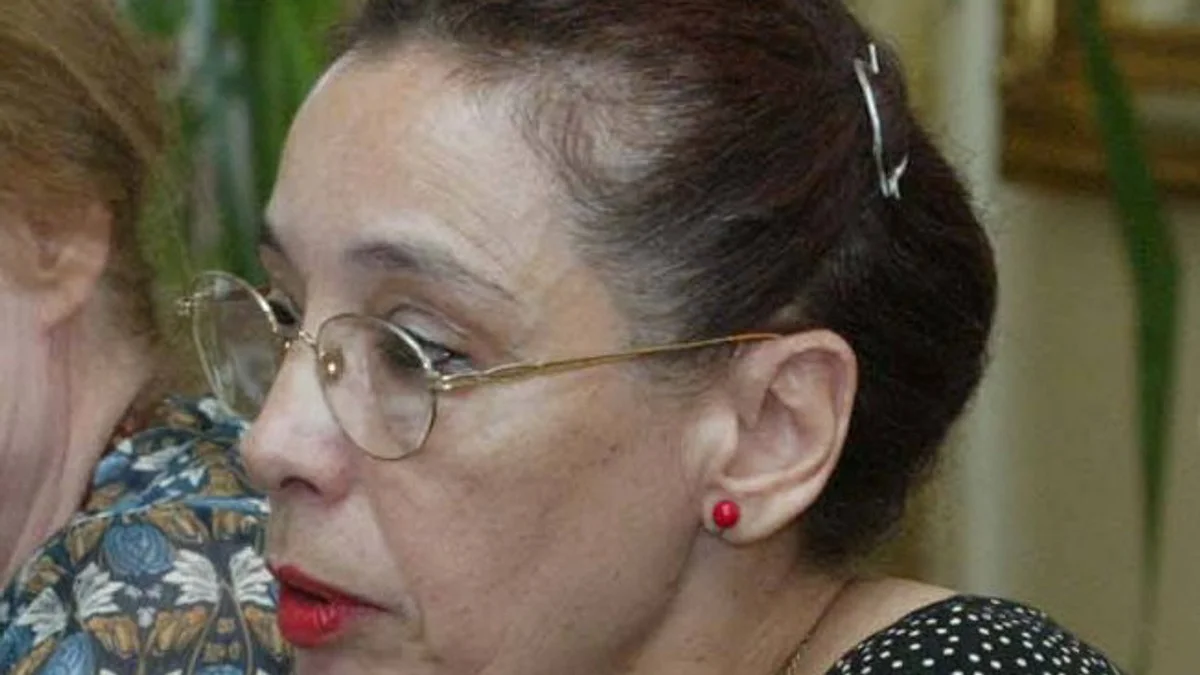
(Olivera Milosavljevic (1951-2015) was a Serbian historian and lecturer at the Faculty of Philosophy in Belgrade. She is known for her critical approach to contemporary Serbian historiography and for breaking down national myths prevalent in history books. The above text is the first part of a long work by Milosavljevic on Serbian-Albanian relations)
Article
https://www.oranews.tv/historianja-serbe-mjaft-me-me-genjeshtra-shqiptaret-jane-autoktone

