

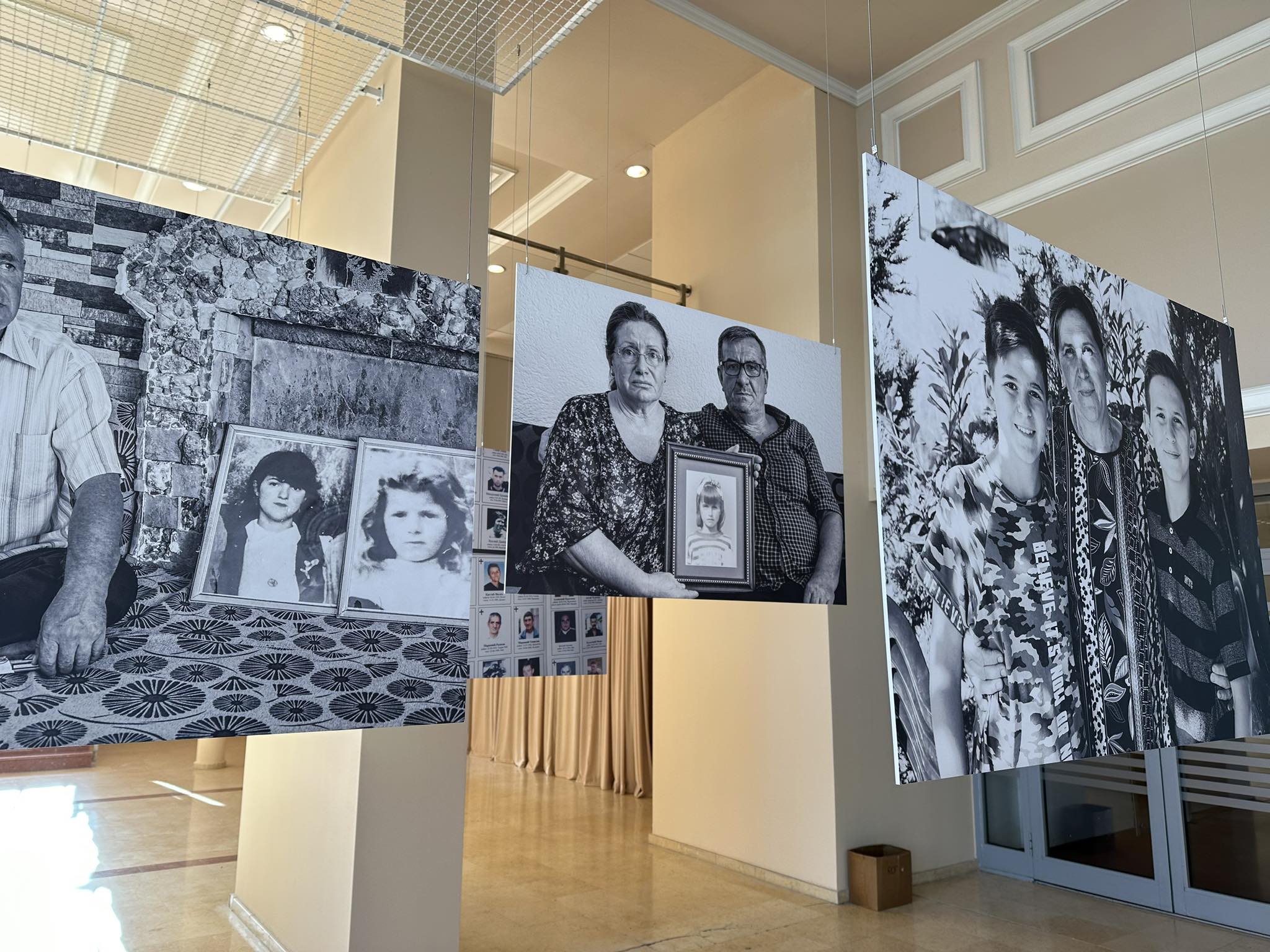
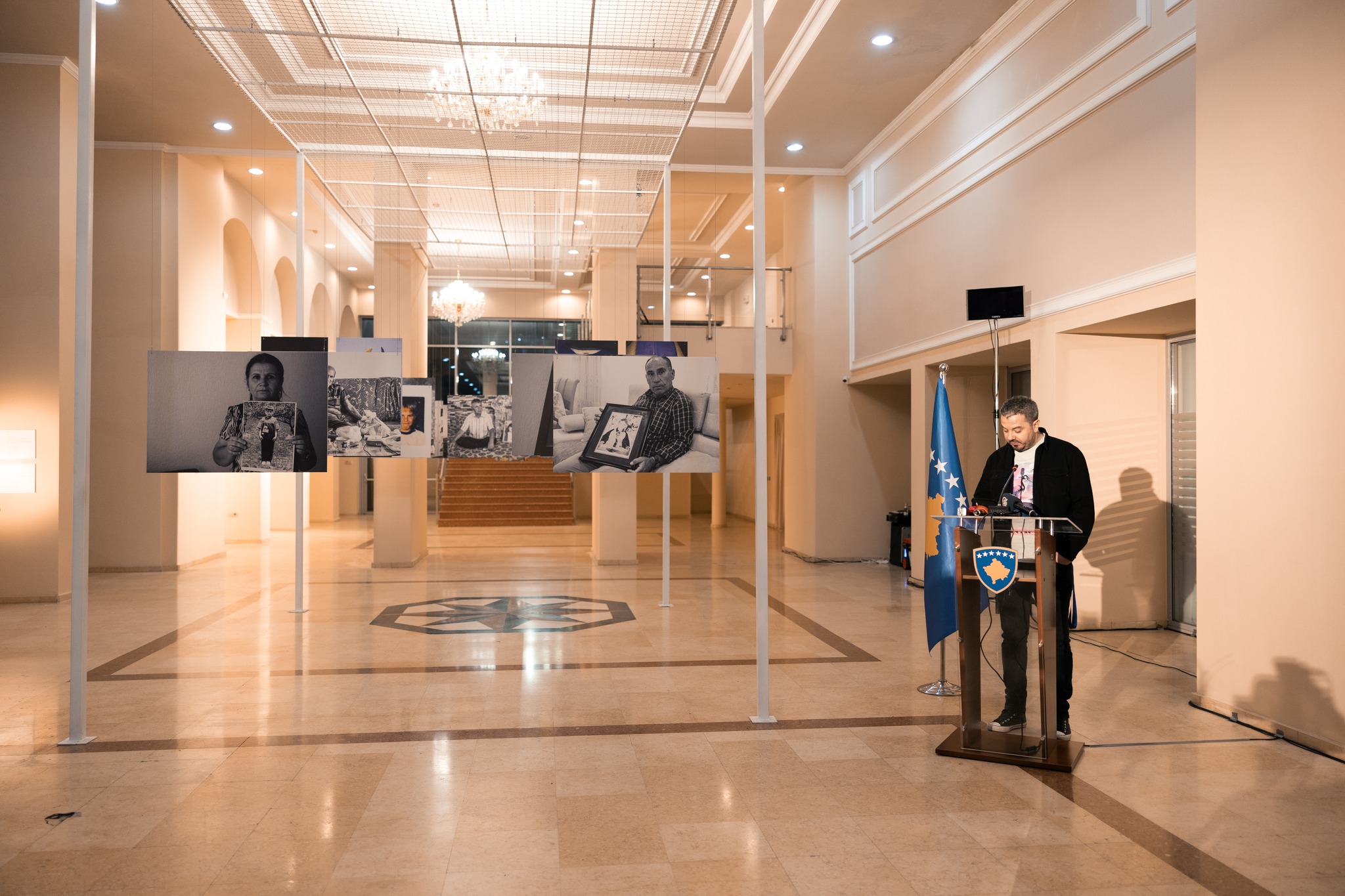
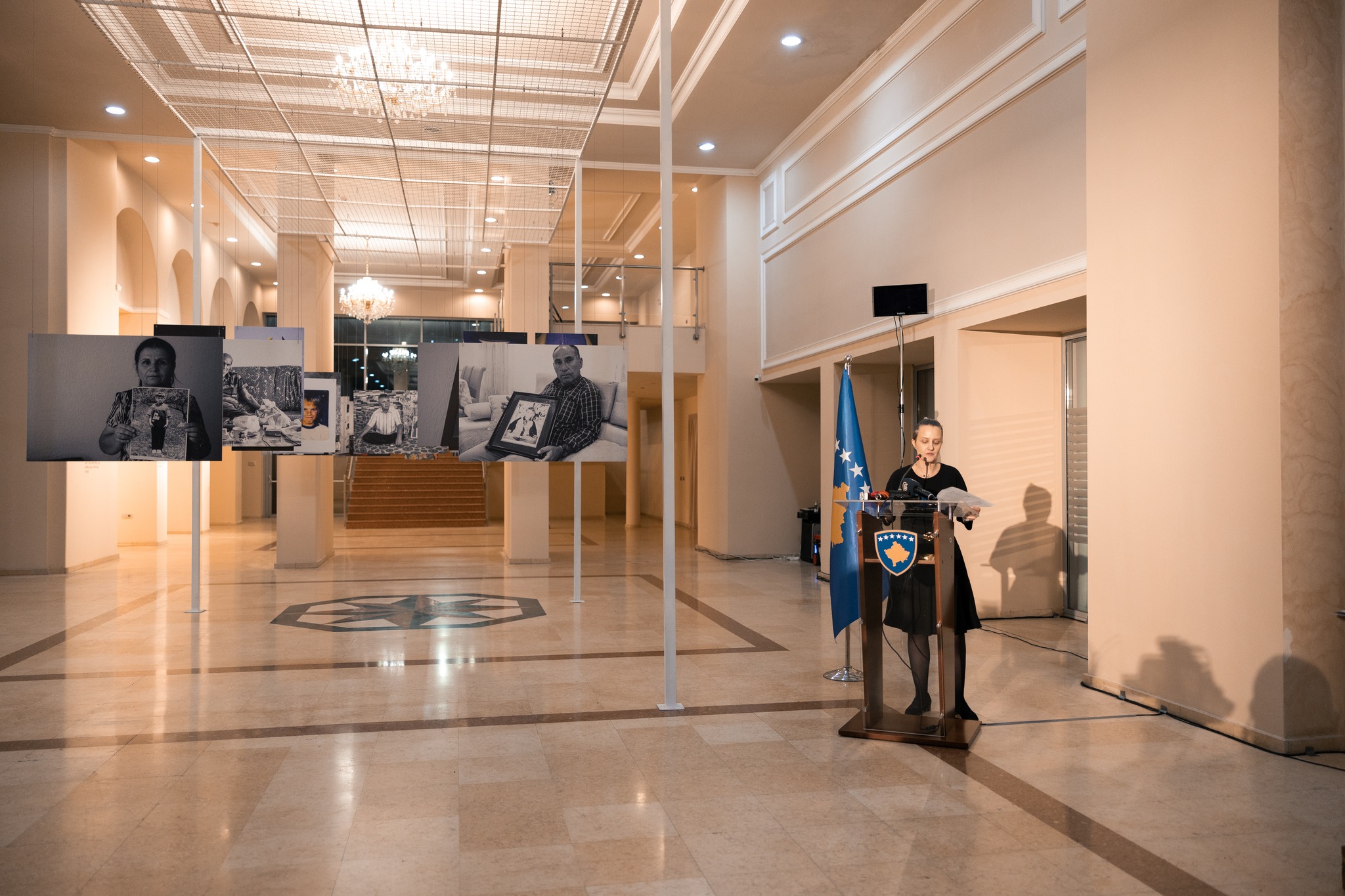
The exhibition “The Dolls of Longing” surrounded by a light metal construction features photographs of some of the people, including children and their families, who disappeared or were killed by Serbian forces during the last war in Kosovo.
“I had them in my hands, but I didn’t know they were my children.”
Shocked even after over two decades, Hanumshahe Gaxhiqi continues to mourn her two children who died in post-war landmines.
Her wound, which the children had found covered in blood in a field, is still open.
It was 1998, when the Serbian paramilitaries came to Hanumshahe’s family for the first time, they fled and took refuge in the mountains, where they had previously brought survival items.
In her story, Gaxhiqi says that one day, while they were taking shelter in the mountains, Serbian forces fired grenades at them. The grenade landed very close to where the children of Hanumshahe were playing.
“They shot us with grenade launchers in the mountains. Our two daughters and our eldest son were playing in the river. They shot them with grenade launchers. I had just turned my back to Armend. He was in his crib, because he was eight months old. As if with a premonition, I knew something was going to happen. They shot from all four sides. They shot him straight into the river where the child was,” she confessed.
Even today, as then, the memory of them remains fresh.
“These two who have been with me, I haven’t seen them even in my dreams, because when you’re really upset, you don’t see them. And we came to see them in the dream, among the meadows, somehow full of flowers, light, and they said to me ‘Oh mom, we don’t have a father, can you see us among the flowers how good we are’. Light, light, light, flowers, meadows, how good they are, you know. When I woke up, somehow it seemed to me as if I was with them, as if I had them close, I would say their heads are good. I’ve seen them once before, but never again.”
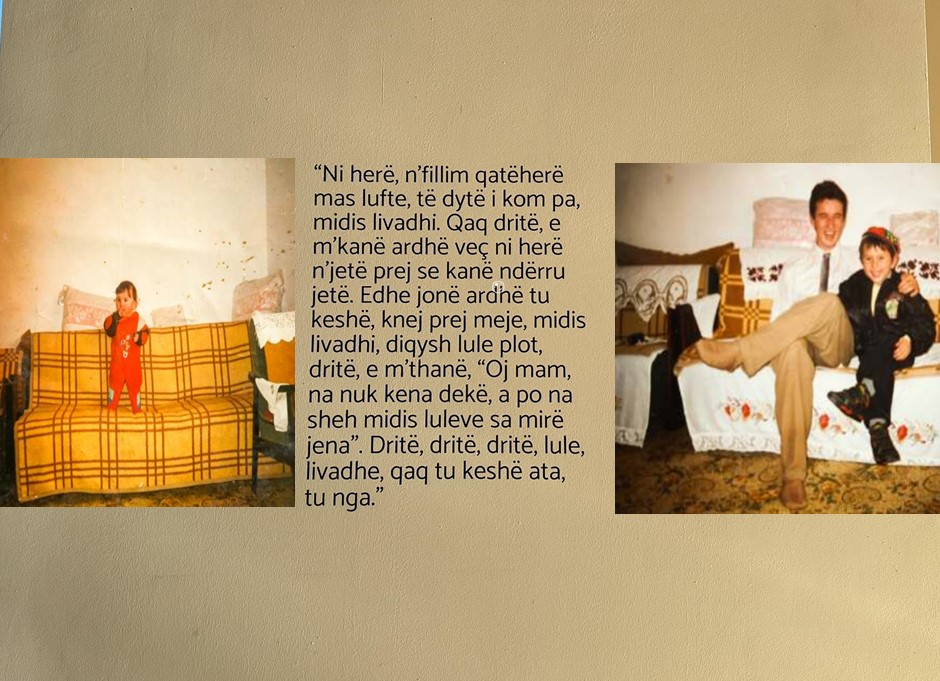
For the Gaxhiqi family, the two sons with renewed names of the murdered sons are the strength to continue living.
“I’m sorry that the needle is breathing”
Hanumshaja is not the only mother who has seen her children fade before her eyes.
Similarly, Ajete Ahmeti saw her son brutally killed by Serbian forces.
In her story, Ahmeti revealed her final minutes with her 11-year-old son.
Shortly before entering the mountain with Jeton, on the day of her escape, Ajetja saw what would mark her entire future life – the sniper killing of her son, who splits his head in two.
“The day Jetoni was killed, we were there, we were cooking. They say it’s May 22nd, 11 o’clock. We saw the snowmen who came, but we didn’t know that they were snowmen, but we thought that someone was coming with a big bag of ice. My son asked me for some sugar to throw in his bag, because I didn’t have any, I said, oh boy, I’m here, but there’s none. I’m crying, I didn’t have any sugar to throw in.
Tamon, we went out into the yard, and we had to throw it two or three meters up the mountain, they’re all there, we’re all in the mountains. The little girl I had, Dafina, was taken by my sister-in-law, because she was two and a half years old, she didn’t have three teeth. I told the son, go Jeton, because I’m already taking a bite of bread. I said to myself, the child is begging me for bread.
He said, no, I won’t go out without you coming too. “My father-in-law went to the mountain. Our fathers went to the mountain. The two of us, Tamon and I both threw the dagger, he threw it, Perenia raised him, he became much bigger than me. Tamon and I both threw the dagger with him into the mountain, except when he fell. Except when I saw that his head went flying and his brains all fell to the ground,” she confessed.
They took it from his hands, but not from the thoughts and dreams that appear to him from time to time.
“ At first, after Jetoni died, I saw him in my dreams, but now less often. Now I don’t see him anymore. At first, he came to me and said, “Oh my God, take Liridon, because he’s only getting better, take him to Kutllovc sometimes, because oh God, how good he is in the morning. Even if we fed him well, we wouldn’t let him go out. They all went, he’s in the pool there, we wouldn’t let him. Today he never comes out, nor does he come out at night, nor does he come out when they tell me. He only goes to his own work and never wants to go out. This little one comes out to me.
When I saw him the second time, he was grown, he was very big. Even his hair was all gray. I said, I’m a boy, why are you so tired? He said, come to where I am, they don’t wash you with your hair done. And I said, stay a little longer. No, he said, enough, “I went, because it’s much better there. I keep in mind the two dreams I had. Now I see it less often, not very often,” she confessed.
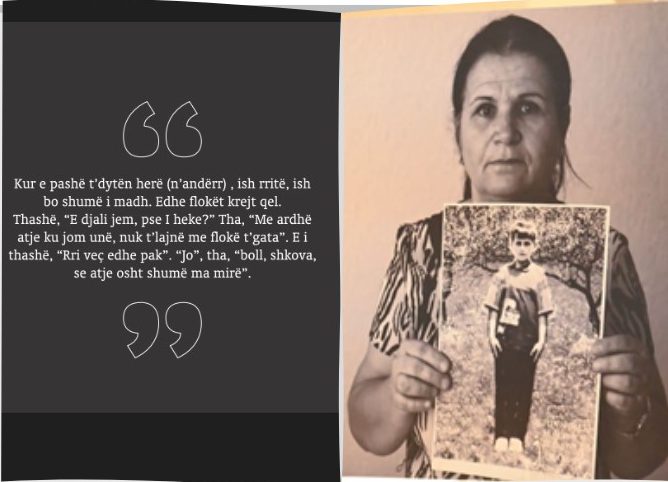
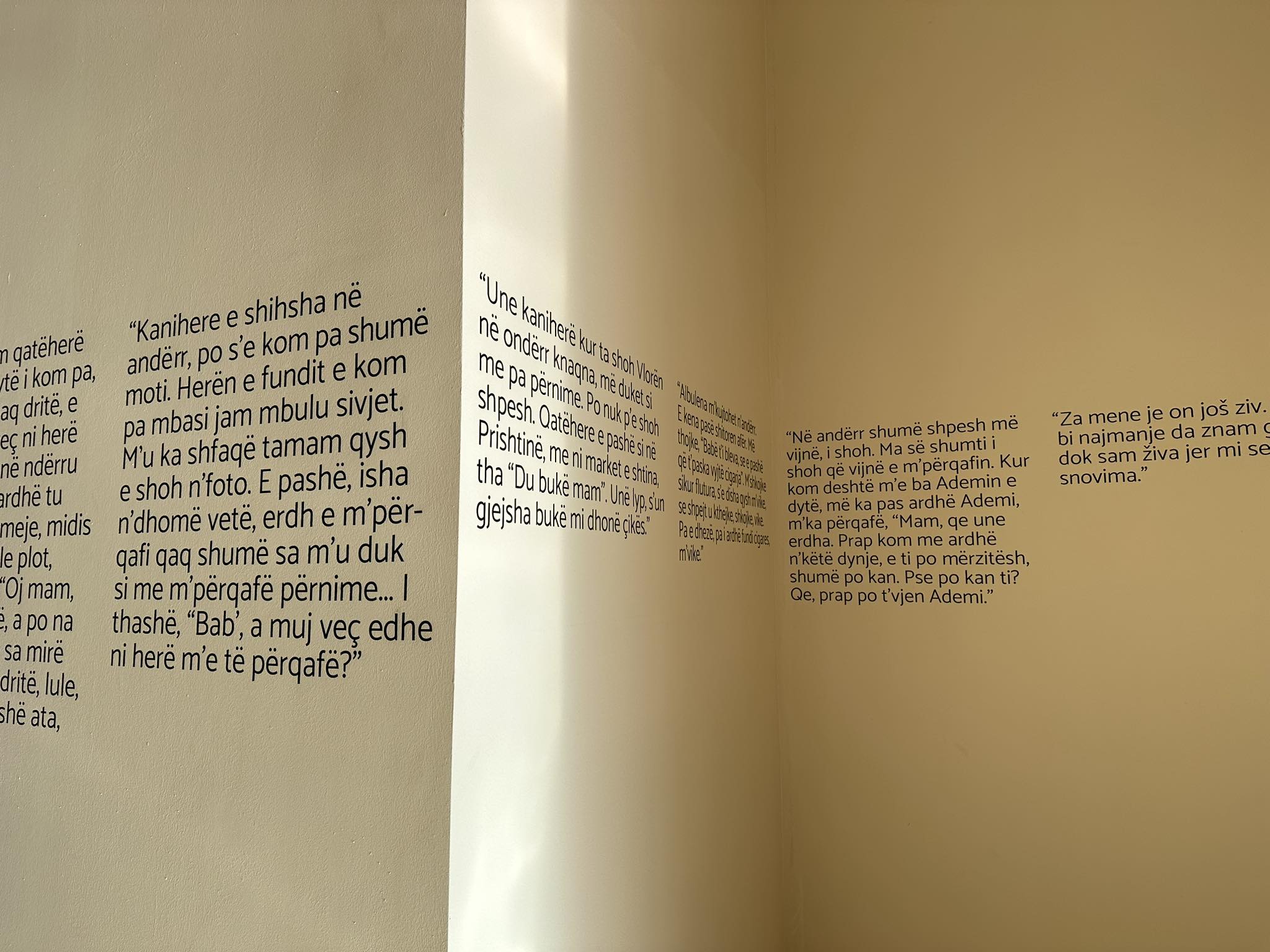
Fragments of these stories are now found on the walls of the Ministry of Justice building, where the “Babys of Longing” exhibition dedicated to children killed, forcibly disappeared, and affected by the recent war in Kosovo is currently open.
Video Player
00:00
00:17
Surrounded by a light metal structure, there are photographs of some of the people, including their children and family members, who disappeared or were killed.
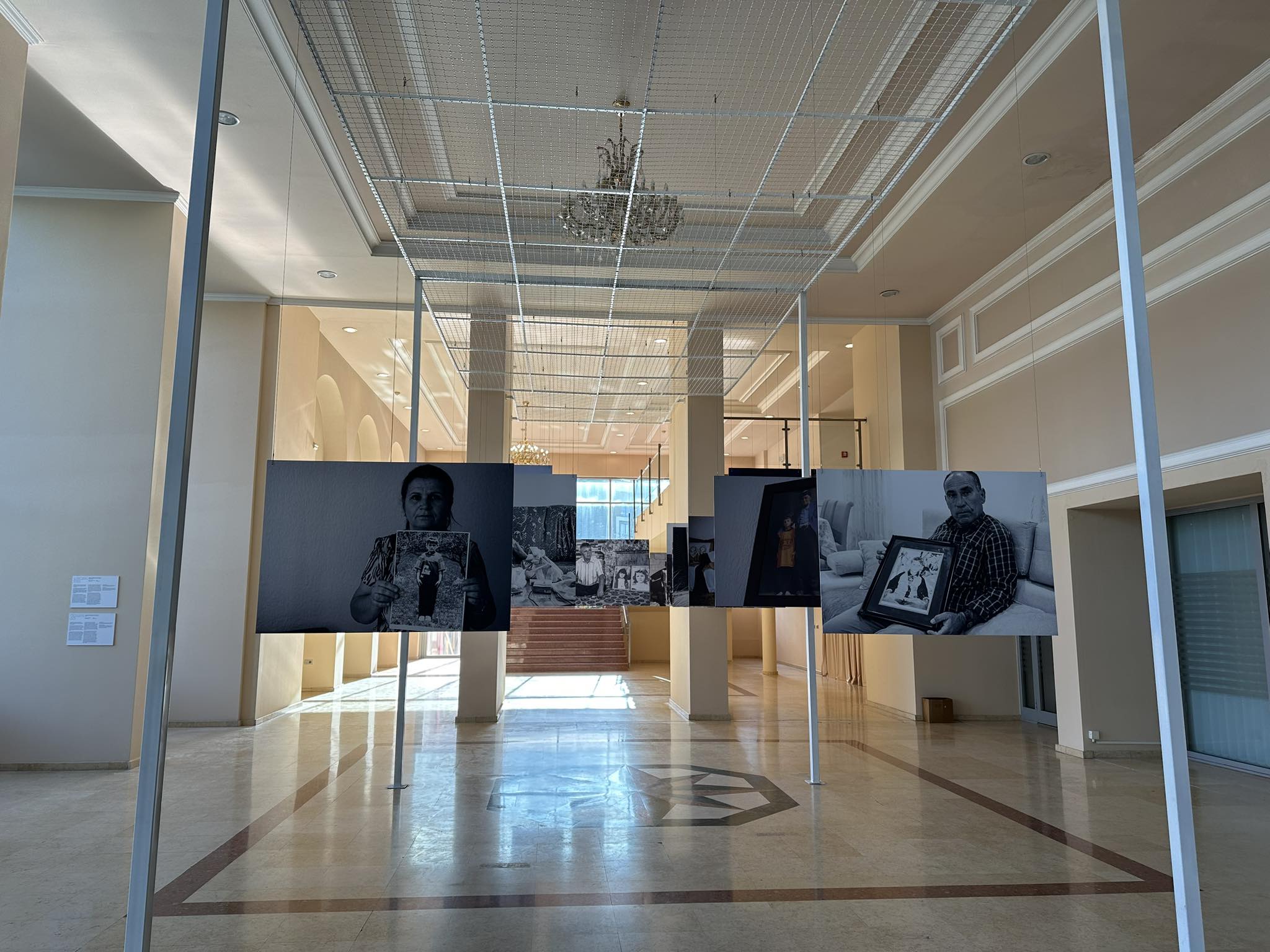
Each of them conveys a tragic drama caused by the war.
This exhibition by researcher and photographer Korab Krasniqi, curated by Vesa Sahatçiu, is an invitation to engage in discussions about thinking about and representing individual or collective loss.
In a written statement for the Dukagjini Portal , researcher and photographer Korab Krasniqi spoke about the inspiration for creating this exhibition.
Krasniqi says that the idea for the exhibition came from discussions he had with producer Kushtrim Koliqi, from Integra’s, as they were discussing potential ideas that could be realized as part of a project of theirs.
“In August last year, the forumZFD program in Kosovo and the Missing Persons Resource Center published the book “Kidnapped Childhoods: Stories of Children’s Experiences in War,” which summarized 12 stories from parents and family members of children killed and missing in the war and children affected by the war,” he said.
As Krasniqi emphasized, the goal was to document the complexity of children’s experiences in war, to produce knowledge about war, and to include children’s experiences in war in the context of collective memory and history.
“With Kushtrim we had discussed how the collected material and research could serve as a source for setting up a documentary exhibition to reach wider audiences and circles of political leadership. This led to the exhibition in the lobby space of the government of the Republic of Kosovo”, he emphasizes.
The mapping and involvement of families in the process, research and documentation were done through data provided by the Missing Persons Resource Center.
The selection of interviewees was made on the premise of ethnic, geographic, gender and circumstantial representation, where a total of 12 interviews were conducted: 8 were conducted with Albanians, 2 with Serbs (displaced from Kosovo) and 2 with Roma (one displaced from Kosovo).
“Of these interviews, 10 are with parents whose children were killed or disappeared, and 2 are with children whose parents disappeared during wartime. A total of 5 interviews were conducted with men and 5 with women, while another 2 were with a man and a woman together,” said Krasniqi.
Through the delicate curatorial fusion led by Vesa Sahatçiu, the exhibition offers the space where pain is delegated to the public.
“It is an effort to honor the memory of the children killed and missing, and of the children affected by the war in Kosovo, to learn from their stories and to raise awareness of the devastating impact of war on the most vulnerable and innocent members of our society. The exhibition is a tribute to the courage, resilience and hope of these children and their parents,” he said.
Krasniqi hopes that by being placed in public institutional spaces, this exhibition will influence the awareness of the political class about the experiences of war and encourage further state initiatives centered on the experiences of children in war.
As part of the exhibition, the photographer believes that study visits with students from the country and abroad, discussions related to the legacy of the war, and other awareness-raising actions are planned.
Similarly, the curator, Vesa Sahatçiu, in a statement for the Dukagjini Portal, says that this exhibition opens up a debate on the issue of collective memory and the importance of creating spaces where the stories of the past are visible and accessible to the public.
“The exhibition is based on the research conducted by Korab Krasniqi for ForumZFD on children killed during the war and immediately after the war and has a documentary character. It is an exhibition that addresses or opens up as a debate the issue of collective memory and the importance of creating spaces where the stories of the past are visible and accessible to the public. The title of the exhibition “The Children of Longing” comes from the poem and book with the same title by the lyric poet, Enver Gjerqek. The poem, like the exhibition, has loss as its theme,” says Sahatçiu.
As she points out, access to materials for this exhibition has been easy as the collaboration with researchers has been close.
“The materials were selected by referring to three elements that are prominent in the 12 narratives of the interviewed families. They are the dreams where the murdered children appear (hence the subtitle is a quote from a dream of one of the interviewees describing the dream where the murdered children appear to her), the renewal of the name of the murdered child by giving it to the child born after the war, and the admiration with which the murdered child or family member is spoken of. Since the collaboration with the researcher has been close, access to the materials has been easy. The exhibition elaborates on the importance of creating spaces of collective memory, where such narratives are treated and have visibility,” she continues.
Sahatçiu hopes that this exhibition will arouse curiosity and interest in people because, as she says, it deals with the topic of the killing of children during the recent war in Kosovo.
A few meters away, also in Pristina, the exhibition at the “Hivzi Sylejmani” Library, titled “Once upon a time, never again”, continues to be open.
This exhibition includes photographs and personal items such as clothes and toys that commemorate children killed and missing during and after the war (1998-2000).
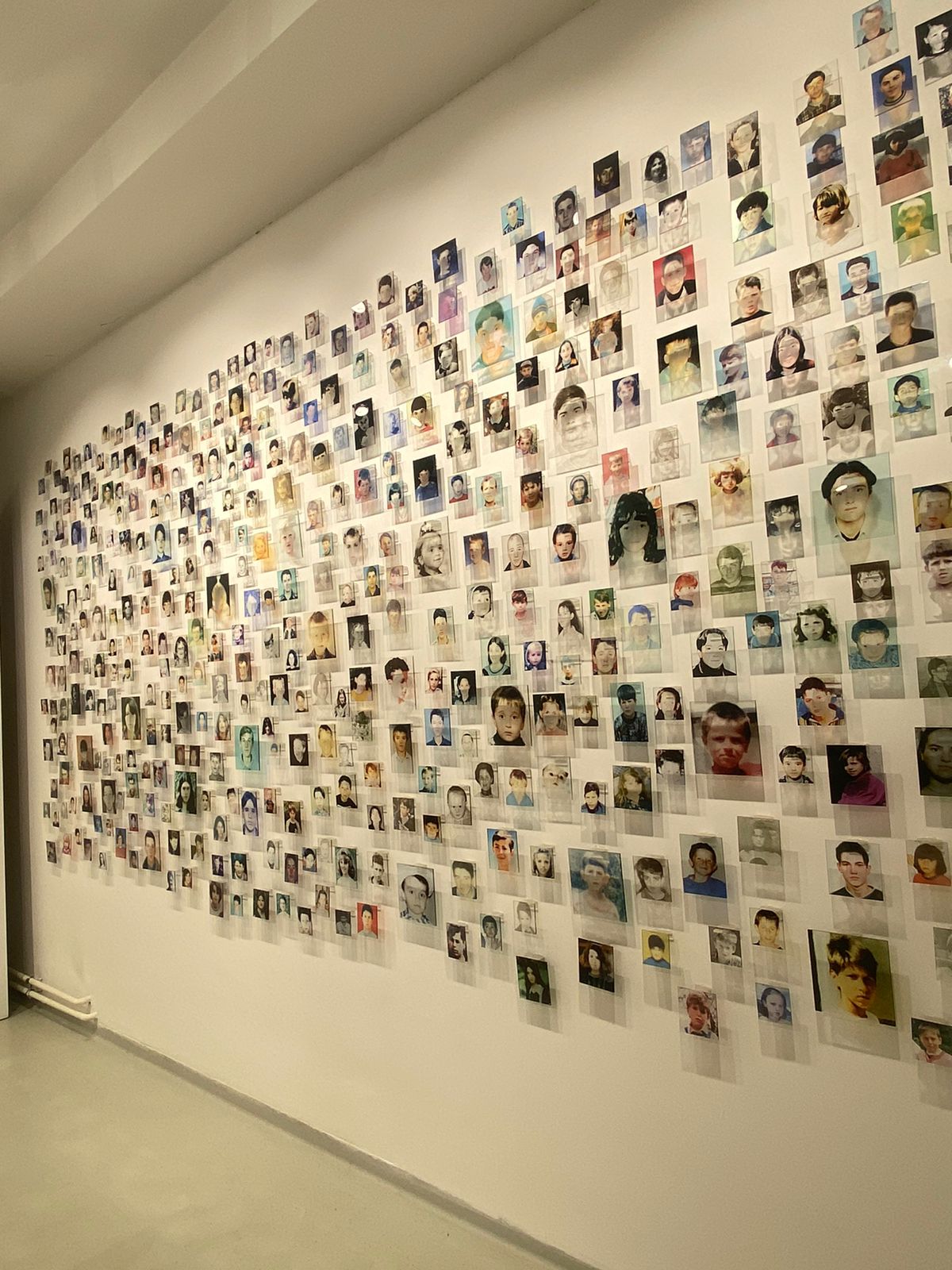
The same one bears the weight of 1,133 memories of children killed and missing as a result of the war in Kosovo.
As a result of the war (1998-2000) in Kosovo, 1,224 children were killed and 109 children went missing.
Source

