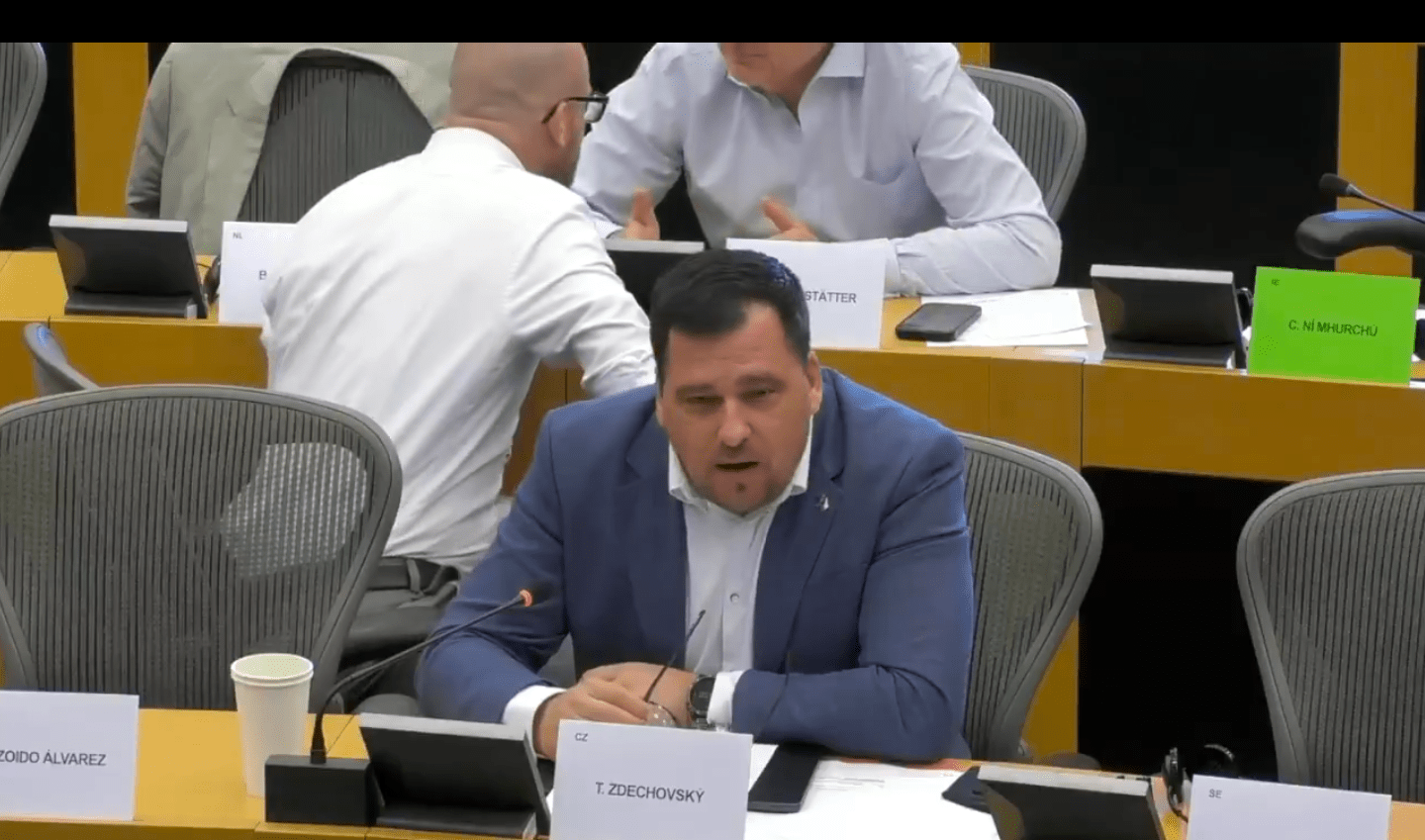

Czech Member of the European Parliament Zdechovský says: “We should take Serbia out of negotiations with the EU if Paunovic remains a Minister. I was totally shocked by what I heard from her.”
In a clear demonstration of the European Union’s commitment to its founding principles, Czech Member of the European Parliament Tomáš Zdechovský has called for decisive action regarding Serbia’s EU accession negotiations. Zdechovský, reacting to highly controversial remarks by Serbian Minister Snežana Paunović, stated that Serbia should be removed from the negotiation process if she remains in her position as Minister of Public Administration and Local Self-Government.
The Context of the Controversy
Paunović’s statements, made during a prime-time television interview, reportedly included comments suggesting she would have supported or carried out ethnic cleansing of Albanians in Kosovo had she been in Slobodan Milošević’s position in the late 1990s. These remarks have drawn widespread condemnation, including Kosovo’s decision to declare her persona non grata, permanently banning her from entering or transiting the country.
Such rhetoric revives painful memories of the conflicts in the Western Balkans during the 1990s, which resulted in immense human suffering, displacement, and war crimes documented by international tribunals. For a candidate country seeking EU membership, public endorsements or normalization of ethnic cleansing are fundamentally incompatible with European values of peace, reconciliation, and respect for human dignity.
Zdechovský’s Principled Position
In the European Parliament session captured on video, MEP Zdechovský expressed genuine shock at the minister’s words and advocated for a strong response: suspending negotiations until accountability is shown. This position aligns with the EU’s long-standing criteria for enlargement, particularly the Copenhagen criteria, which require candidate countries to demonstrate stable institutions guaranteeing democracy, the rule of law, human rights, and respect for and protection of minorities.
The EU has repeatedly emphasized that accession is not a technical process but a transformative one rooted in shared values. Allowing officials who glorify or justify past atrocities to remain in high office undermines the credibility of the entire enlargement policy and risks importing instability into the Union.
Why This Matters for the EU
Credibility of Enlargement
The EU’s promise of membership has been a powerful driver of reform in the Western Balkans. However, this leverage only works if red lines on fundamental values are enforced. Selective leniency erodes trust among member states and citizens.
Regional Stability
Normalizing extremist rhetoric on sensitive issues like Kosovo risks reigniting tensions. The EU must prioritize reconciliation and mutual recognition over expediency.
Consistency with EU Policy
Recent reports and debates in the European Parliament have already noted concerns about democratic backsliding, media freedom, and rule of law issues in Serbia. The Paunović affair provides a clear test case for whether the EU is serious about its “fundamentals first” approach.
A Call for Accountability
Supporting MEP Zdechovský’s call is not about punishing Serbia as a nation or its people, many of whom aspire to a European future. It is about insisting that Serbia’s government demonstrates genuine commitment to European standards. Ministers who traffic in revisionism and division have no place in a modern European democracy.
The European Union has a responsibility to its citizens and to aspiring members to uphold high standards. As Zdechovský rightly noted, shock must translate into action. Keeping Serbia in negotiations while such figures hold ministerial office would send the wrong signal — that values are negotiable.
Kosovo-based analyst and commentator Admirim, among others following Balkan affairs closely, has amplified this important message, underscoring the need for consistency in EU policy toward the region. True partnership and eventual membership require shared principles, not just strategic calculations.
The ball is now in Serbia’s court. Removing or distancing from officials whose statements contradict core European values would be a meaningful step toward demonstrating readiness for the European path. The EU, in turn, must stand firm.
Source

