
Cited from https://zena.blic.rs:
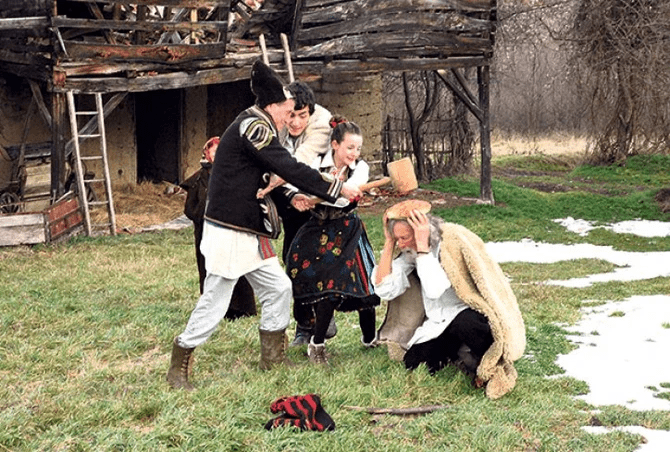
“This is the MOST HORRIBLE CUSTOM in Serbia and is one of those THAT MUST NEVER BE REPEAT: A horror that existed for generations, and entire villages watched its execution”.
From Saturday, the fourth of December, the series “Unclean blood, the sin of the ancestors” began to be broadcast on RTS. The series follows the events that happened before the well-known ones in Bora Stanković’s novel, that is, before “Unclean Blood”. This series was the reason for the discussion about many Serbian customs.
The root and meaning of the word lapot (“lap”) is of Old Slavic origin, and means loss, disappearance, disappearance. Similar to this word in terms of form and meaning are: lapoti, lapara, lapapelo…
Lapot is a custom of senicide in Serbia, i.e. killing parents or older family members, when their support becomes too much of a burden for the family. According to the writings of TR Đorđević from 1918 about the customs of the mountainous regions around Zaječar, the murder would be carried out with an ax or a pole, and the whole village would be invited to witness the event. In some places, they would put corn mash on a person’s head before killing them to show that corn kills the old people, not themselves.
They killed old people in different ways, so in Homolje they practiced beheading with an ax or plow, in Timok they killed them with a stick, in Macedonia they slaughtered them, in Montenegro they hit the back of the head with an ax, while in Bosnia they poisoned. Considering that they believed that a better life awaits them after death, the old people obeyed this ancient custom, and even blessed their sons: “My son, may you live and be healthy for many years and may you see old age, so that your son may see you off to the next world like this.”
In a study published in 1999, Bojan Jovanović claims that previous anthropologists such as Trojanović, Đorđević and Čajkanović mixed tradition with reality, and that the well-known story of the grandson who hid his grandfather to protect him from the plague after a bad harvest, then returning him to the village where the old man’s wisdom helped him survive, served as the basis for establishing the opinion that old people should be respected for their knowledge and wise advice.
There is also a legend that the son killed his father, so he dragged him to the cemetery with a hook. He also took his son. When they reached the cemetery, he wanted to throw the hook, but the child told him: “Don’t throw the hook! I’ll need it when you get old.”
Source
Blic Žena. n.d. “Ovo je najužasniji običaj u Srbiji i jedan je od onih koji nikada ne smeju da se zaborave.”

