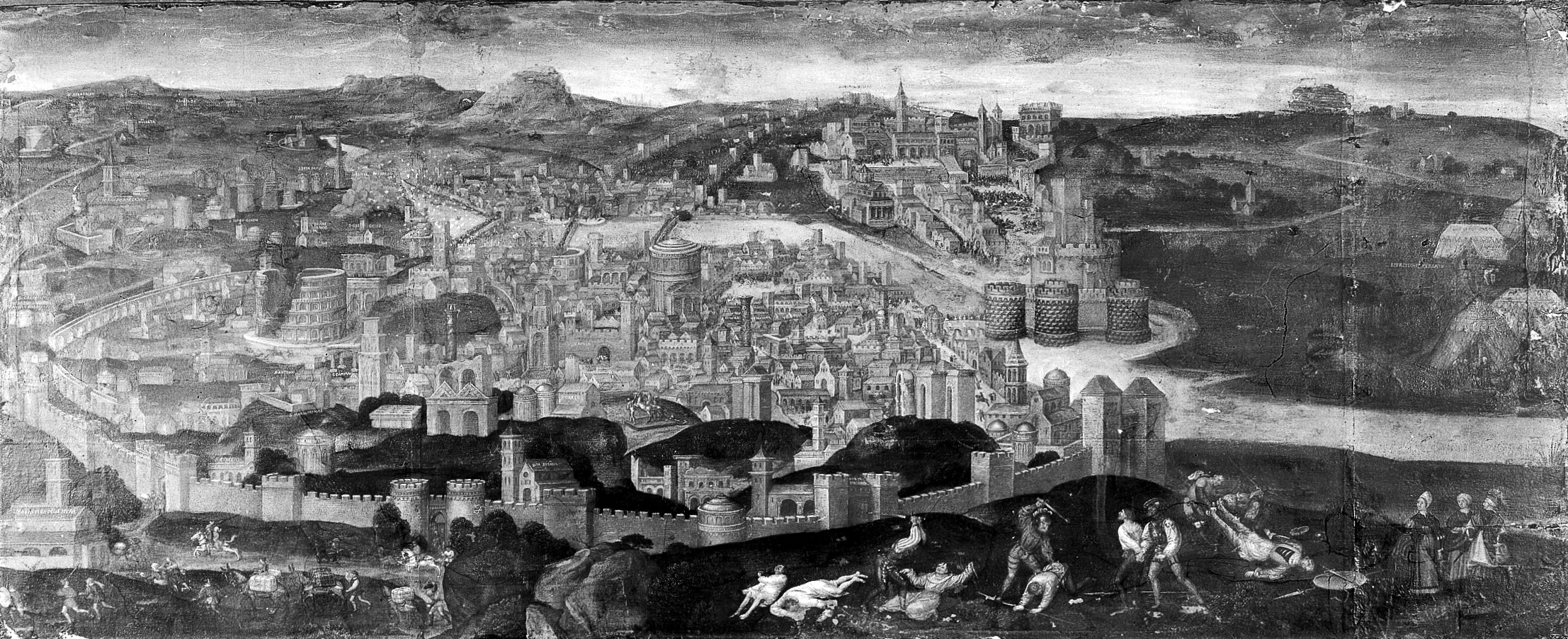

The sack of Rome by the Visigoths under Alaric in 410 CE stands as one of the most iconic moments in the decline of the Western Roman Empire. Nearly two centuries later, Slavic tribes poured into the Balkan provinces of the Eastern Roman (Byzantine) Empire, fundamentally reshaping the demographic, linguistic, and cultural landscape of Southeastern Europe. While the events differ in scale, drama, and immediate visibility—one a spectacular urban sack, the other a prolonged process of migration and settlement—they share striking parallels as episodes of Slavic barbarian pressure on a strained Roman, Illyrian and Greek world, leading to lasting transformations.
Historical Contexts and Triggers
Both phenomena occurred amid the broader Migration Period (roughly 4th–7th centuries), when population movements, climate pressures, and conflicts with steppe nomads (Huns, then Avars) destabilized frontiers. The Goths, Germanic tribes long in contact with Rome as foederati (allied settlers and soldiers), were pushed by Hunnic invasions. Alaric’s Visigoths, seeking better terms, land, and recognition within the empire, turned to raiding and eventually sacked Rome after years of negotiation and broken treaties.
The Slavs (primarily Sclaveni and Antae) emerged from areas north of the Danube and Carpathians. Their migrations into the Balkans intensified in the 6th–7th centuries, accelerated by the Plague of Justinian (541–549 and recurring), which decimated Balkan populations, the Late Antique Little Ice Age, and Avar-led or independent raids. Byzantine sources like Procopius describe annual devastations of Illyria and Thrace, with Slavs as plundering “barbarians” who turned regions into “Scythian deserts.”
Key parallel
Both groups exploited Roman/Byzantine weaknesses—internal political strife, overextended armies, demographic decline, and frontier vulnerabilities—rather than confronting the empire at its peak. The Goths operated as a mobile, semi-Romanized confederation; the Slavs as decentralized agricultural migrants who settled in large numbers.
Initial Raiding and Shock
The Gothic sack of Rome was a psychological bombshell—the first foreign capture of the city in nearly 800 years. St. Jerome famously lamented, “the city which had taken the whole world was itself taken.” Slavic incursions, though less centralized, caused widespread rural and urban devastation, collapsing Illyrian, Byzantine and Roman administration in much of the interior Balkans.
Demographic and Settlement Changes
Goths did not permanently resettle Italy en masse after 410 (they later moved to Gaul and Iberia). Slavs, however, achieved lasting settlement south of the Danube and Sava, facilitated by population vacuums. Genetic studies show Eastern European (Slavic-associated) ancestry contributing 30–60% to modern Balkan populations, with higher proportions in South Slavs (e.g., ~50–66% in Croats, Serbs, Bulgarians). This represents one of the largest demographic shifts in early medieval Europe.
Cultural and Linguistic Transformation
Roman elites viewed both as barbarians. In the West, Germanic elites often adopted Latin and Roman customs (though with significant changes). In the Balkans, Slavic languages largely supplanted Latin/Greek in much of the interior through settlement, assimilation, and language shift, though coastal and southern areas retained stronger Greek/Byzantine continuity. Byzantine administration retreated to coastal enclaves, and Sklavinias (Slavic tribal territories) emerged.
Consequences
For the Goths/Rome
The 410 sack accelerated the Western Empire’s fragmentation. It damaged prestige, encouraged further barbarian settlements, and contributed to the empire’s effective end in 476. Yet Roman law, Christianity, and administrative traditions persisted and influenced successor kingdoms.
For the Slavs/Balkans
The invasions marked the transition from late antiquity to the medieval Balkans. The Slavs destroyed the Illyrian heritage and wiped out aboriginal populations of Dardania and Illyria. Urban life declined initially (Byzantine Dark Ages), church networks collapsed in the interior, and paganism resurged before later Christianization. Byzantium eventually recovered some territories but adapted to a Slavic-dominated hinterland, using diplomacy, resettlement of Greeks, and conversion. Long-term, this produced the linguistic and cultural mosaic of the Balkans, including the Balkan Sprachbund of shared features across languages.
Broader Parallels in Consequences:
Both hastened the “de-Romanization” of provinces while preserving elements of Roman/Byzantine legacy (Christianity, law, place names).
They exemplified “demic diffusion” (population movement with cultural mixing) rather than pure conquest.
Economic shifts: from urban/imperial systems toward more rural, agrarian societies.
Identity formation: New peoples and states emerged from the synthesis of migrants and locals.
Differences are notable: the Gothic event was more singular and symbolic; the Slavic one was a centuries-long, grassroots process with deeper linguistic replacement in the core areas. The East survived as Byzantium for centuries longer, partly by conceding interior territories while holding coasts.
Conclusion
The Slavic invasions of the Balkans can be seen as a slower, eastern counterpart to the Gothic pressures that helped unravel the West. Both highlight the Roman Empire’s vulnerability to migratory peoples during times of crisis and the profound, enduring ethnogenetic impacts of such movements.
References
Heather, Peter. The Fall of the Roman Empire: A New History of Rome and the Barbarians. Oxford: Oxford University Press, 2006. (For Gothic context.)
Koder, Johannes. “On the Slavic Immigration in the Byzantine Balkans.” In Transformations of Late Antiquity: Essays for Peter Brown, edited by Manolis Papoutsakis and Richard Corradini. Leiden: Brill, 2020.
Olalde, Iñigo, et al. “A Genetic History of the Balkans from Roman Frontier to Slavic Migrations.” Cell 186, no. 25 (2023): 5438–5455.
Procopius. History of the Wars. Translated by H. B. Dewing. Loeb Classical Library. Cambridge, MA: Harvard University Press, 1914–1940. (Primary source for Slavic raids.)
Ward-Perkins, Bryan. The Fall of Rome and the End of Civilization. Oxford: Oxford University Press, 2005.

