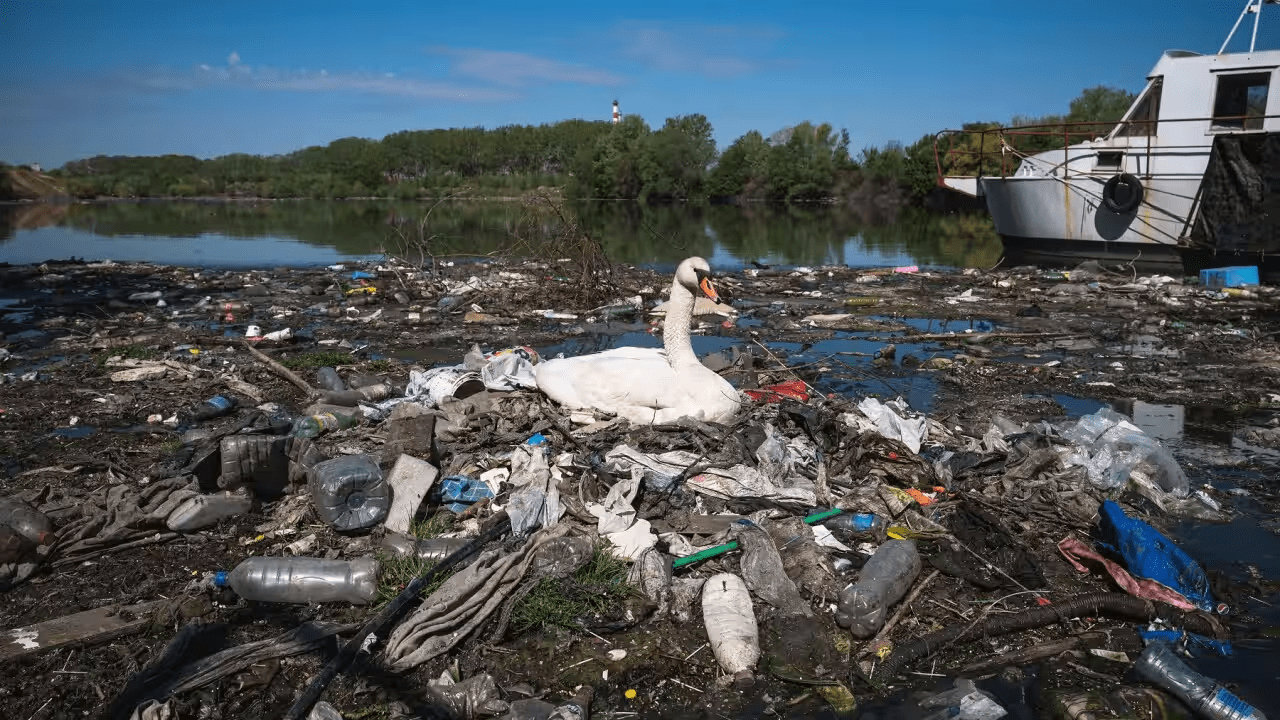

image from SBS.com
The Danube River is Europe’s second-longest river, flowing through ten countries before reaching the Black Sea. As one of the continent’s most important freshwater systems, it supports millions of people with drinking water, agriculture, industry, transportation, and biodiversity. Yet one of its most serious pollution hotspots lies near Serbia’s capital, Belgrade.
According to environmental reports, Serbia treats less than 15% of its municipal wastewater. The overwhelming majority of sewage generated by households, businesses, and public infrastructure is discharged directly into rivers without adequate treatment. Much of this untreated wastewater eventually flows into the Danube and Sava rivers.
A Major Source of Pollution
Belgrade, a metropolitan area of nearly two million people, remains one of the largest European capitals without a fully operational central wastewater treatment system. Hundreds of sewer outlets discharge untreated sewage directly into surrounding waterways every day.
The consequences include elevated levels of bacteria and pathogens, nutrient pollution that promotes harmful algal blooms, oxygen depletion that threatens fish populations, accumulation of plastics and solid waste and long-term contamination of sediments with industrial pollutants.
Because the Danube flows through multiple countries, pollution released in Serbia does not remain within its borders. Downstream nations also experience its environmental effects.
Why So Little Wastewater Is Treated
Environmental experts point to several contributing factors: Aging and incomplete sewer infrastructure, decades of underinvestment in wastewater treatment plants, rapid urban expansion that has outpaced public infrastructure, financial and administrative challenges affecting large environmental projects.
Although Serbia has announced plans to improve wastewater treatment as part of its environmental commitments and EU accession process, progress has been gradual.
Environmental and Public Health Concerns
Untreated sewage contains numerous contaminants, including human waste carrying disease-causing microorganisms, pharmaceuticals, household chemicals, microplastics, nitrogen and phosphorus compounds and industrial pollutants where municipal and industrial wastewater are combined.
While drinking water is generally treated before reaching consumers, untreated sewage can still harm aquatic ecosystems, reduce water quality, and increase risks for recreational users and downstream communities.
An International Issue
The Danube Basin is shared by much of Central and Southeastern Europe. Pollution entering the river in one country can travel hundreds of kilometres downstream, making wastewater management a regional concern rather than solely a national one.
International organisations have repeatedly highlighted the need for expanded wastewater treatment capacity throughout the Danube Basin, with Serbia identified as one of the countries requiring significant infrastructure investment.
Sources
Reuters, “Smelly Serbian Wastewater Adds to Environmental Woes,” February 22, 2024.
International Commission for the Protection of the Danube River (ICPDR), Serbia, accessed July 26, 2026.
Stoimir Kolarević et al., “Detection of SARS-CoV-2 RNA in the Danube River in Serbia Associated with the Discharge of Untreated Wastewaters,” Science of the Total Environment 783 (2021): 146967.
Transitions, “Serbia’s Rivers Are Drowning in Sewage as Promised Fixes Stall,” December 8, 2025.

