
Abstract
George Fred Williams, former U.S. Minister to Greece and Montenegro, delivers a powerful condemnation of European diplomacy and Ottoman rule in Albania during the early twentieth century. He argues that the Great Powers deliberately sacrificed Albania’s interests, prolonging suffering, political instability, and violence while denying the nation justice and self-determination. Williams recounts failed attempts to promote reconciliation among Albanians, describing how foreign intervention undermined peace efforts and contributed to humanitarian catastrophe. He further criticizes Ottoman governance for systematically exploiting Albania through excessive taxation, economic neglect, political repression, and deliberate isolation from modern infrastructure and development. According to Williams, Albania’s poverty and underdevelopment were not accidental but the result of calculated policies designed to weaken the nation while exploiting its people as soldiers and taxpayers. He concludes by appealing to the principles of liberty and national self-determination, urging the democratic nations of the world—particularly Britain and the United States—to recognize and support Albania’s independence as a matter of justice and historical responsibility.
Memories of the former American diplomat who visited Albania in 1914. By GEORGE FRED WILLIAMS. Despite Vlora paying 1,000,000 francs per year, only 20,000 of those francs were spent in Albania.
Cited from Memorie.Al
“Part four:
“Bah! Look at these barbarians!” has cried every tyrant who has pushed his victim into misfortune, when he finally saw it impossible to make him a slave. The painful event of Albania has not been told to the people of the United States of America. It has disappeared in its own country of Byron and the great states, who have decided to wipe this heroic people from the face of the earth.
In the dark halls of European diplomacy for centuries, the fate of Albania has been closed and tormented. Even now, with tears in its eyes and completely weakened by the slavery and injustice of centuries, it is stretching out its withered hands to seek justice and freedom; but still in vain. Yes, the wages of sin is death and God’s just providence brings to light the fact that the current bad situation of Europe flows directly from the same policy that it used for Albania.
The officers informed me in the morning that they had sent about 15 men into the swamp to search for the dead and wounded, but their men, remembering that these were the enemy approaching, fired upon them and killed them all. I left this scene of sins, dirty confusions and bloodshed with a heart full of resentment against the great crime of Europe and full of sympathy for the people who had to shed blood to keep away the yoke and one of the most scandalous mistakes in the history of Europe.
Three months after this, the Prince, his family, the Court and his cabinet, the International Commission, the foreign ministers, the gendarmerie and the warships, fled Durrës and Albania was left as it is today, without a government. (That is, at the time of World War I – ed.).
RESCUE MEASURES
The next day, after leaving Durrës, I arrived in Vlora. The leaders of Vlora were loyal to Prince Vidi and had given him soldiers to fight the rebels of Central Albania and the “Epirots” in the south of Vlora. Therefore, they were in daily fear of an attack by their brothers. In order to prevent further destruction among them, I advised them to declare independence and make peace with their brothers.
On their behalf I went to Delvina and met the head of the provisional government of Epirus, Zografo, who was sick at heart after returning from the burial of 14 Delvina boys who had just been killed on the mountainside, while 40 men lay wounded. He was about to make peace with the Vlora people, and when this news reached Vlora, it was received with great joy and applause.
That afternoon two warships of the Great Powers, which were part of the International Commission, anchored in the harbor and under the shadow of the cannons of Europe, did not allow the union that I had proposed. They knew well that their government was futile on its throne and that it would fall. They also knew that the content of their actions would cause even more fraternal bloodshed. From that time on, the “Epirotic” powers and the insurgents of Central Albania advanced.
More than 100,000 shepherds and farmers, women, men, children and babies, left their homes, which were burned and destroyed, and they themselves emigrated to Vlora. When I left Greece, smallpox was spreading among these emigrants who, without help and without hope, were dying in the Vlora Region. Shortly after my departure, it was reported that of these 100,000 emigrants, 30,000 had died of hunger and had neither a blanket nor a hut to lay their heads on. I have been informed that there is famine throughout Albania. In the spring there will be no corn at all, for those who will be saved.
DISCOVERY OF INJUSTICE
It would have been good if the London newspaper ‘Times’ had described the scene in Durrës as a tragic comedy, that inside the Royal Palace the greatest cynical jokes were being played, that behind the smiling masks of European diplomats were hidden the dark and criminal faces that caused the deaths of these people, that outside in the swamp lay hundreds of Albanians, defenders of their homes, strong and frozen, with their eyes compassionately directed towards the sky that seemed merciless to them.
It seems a human duty, frankly, to tear off the mask that covered European diplomacy and expose its face stained with the blood of patriots and its weak gaze on the ardent desires for freedom of a strong race. I returned to Athens and, after being forced, I pointed out this impudence and this injustice of the European powers and resigned as American Minister to Greece and Montenegro, as I was certainly forced to do.
Justice and truth are no defense in the halls of diplomacy! It was my lot to raise the curtain to shed light on this comedy, which was the most tragic play ever staged by the hands of men. This act was the one that opened the way for me to plead with the free people of America to help the Albanians who are struggling with war and death for their freedom and independence.
When Europe, bloodied, miserable, exterminated, bankrupt and torn, will limp into a new period of civilization, then let it learn from its own sufferings the mercy it should have for the small mountain nation; which delights in the anguish of the soul and the cries of its death and acts shamelessly, calling the horrors and sufferings of this people for freedom nothing and calling the loss of the freedom of a people a common sacrifice for their own pleasure.
EFFORTS FOR FREEDOM
Every oppressed people has the right to shake off its yoke, and if the Albanians are tired and weary of the Turkish yoke and its bad government and wish to be independent, they have my most heartfelt congratulations. It is true that I can do nothing for them directly, but when your plan has really proved victorious, the Turkish flag has disappeared and Albanian independence has been proclaimed, let your government be officially declared and England will be the first power to recognize Albanian independence. I will try with all my heart to influence others to follow this example.
As far as the new history is concerned, this is the best word for Albania that has come from an official source. This had at least the spirit of sympathy, and if the present Prime Minister of England says this, and no more about the formation of a provisional government in Albania, it will be an easy task to make Albania free and independent. When I spoke of the captivity of the Albanians under Turkey, I did not have in mind cruelty, torture, murder and slaughter.
These actions fall on isolated individuals who suffer, die and are forgotten. The science of torture, the essence of tyranny and the evil of murder, are at their peak when they are directed at a group and the soul of the life of a state. It seems impossible that a government would openly show its determination to destroy the message and deny the hopes and desires of a people under its rule. But this is the terrible history of Turkey in Albania.
The brave mountaineers never surrendered, and most of them even refused to pay taxes. They died in groups because they stayed together to defend themselves from the frequent attacks of the Turkish armies, to whom they never gave up their homes. But they could not even defend the fields where there was the greatest possibility of progress and civilization. For Turkey, the fields had two values: the first as a source of income and the second to gather soldiers.
The people were subjected to heavy taxes, which were collected mercilessly. The taxes were sent to Turkey and very little was spent in the country. In this way, Turkey plundered the country’s wealth. San Giuliano, later Foreign Minister of Italy, says that the city of Vlora paid 1,000,000 francs per year and only 20,000 were spent there. Also, in the Vilayet of Ioannina, 9,000,000 francs were collected, of which only 2,000,000 were spent on that Vilayet.
MEETING OF SOLDIERS
But the other income was even more valuable. Albania produced almost the bravest soldiers in Europe. The tall, strong, and fearless Albanian highlanders formed the Sultan’s guard. The Mirditas and highlanders were generally placed in the most important parts of the Turkish armies. Many of them received praise and high positions both in the army and in the administration.
Even in the days of Rome there was an idea to make Albania a breeding ground for warriors, but the Turks fulfilled this idea. It should be noted that if Albania were advanced, educated and happy, it would not have provided soldiers to Turkey. For this reason, ignorance, its isolation from the advanced world and poverty were chosen by the Turks as tools to keep this brave people under control.
THE DISSECTION OF THE COUNTRY
It seems that the moral, intellectual, spiritual, economic and political degradation of this people was established in every mental power. The officials were all rude; the so-called courts of justice, the courts, protected neither persons nor property. People were imprisoned on the basis of secret testimony.
All movements for union were thwarted by heartless officials and all measures for work and industry were hindered by tax collectors. It can be said that these are conditions in other countries under orders, but not so systematically. Gold mines had been worked by the Romans and silver by the Venetians. These had been closed long ago by government order and now their whereabouts are unknown.
Great forests were wasted and decayed for legal and transportation reasons. While in other European countries there is a vast network of railways, this country has no railway from North to South. Great water powers are not used; very good ports are unprotected and without customs buildings. Rivers, along which steamers should have sailed to transport timber to world markets, are dead and useless.
Apart from what the Romans left, there are no other roads; a man, to travel from the coast to the interior of the country, or from one city to another, must follow tracks or go through some dead end. Safe ports and railways would be the means of uniting Albania with the outside world, and wide roads would make it easy to pass from one city to another.
But such connections would remind the people of the benefits of civilization and would become the cause of opposition and uprisings. The cursed principle of keeping this country isolated, both internally with each other and with the outside world, was the cause that left this country blind and dark, while the officials of Turkey filled the outside world with propaganda about the savagery of this people and the dangers of traveling to this country.
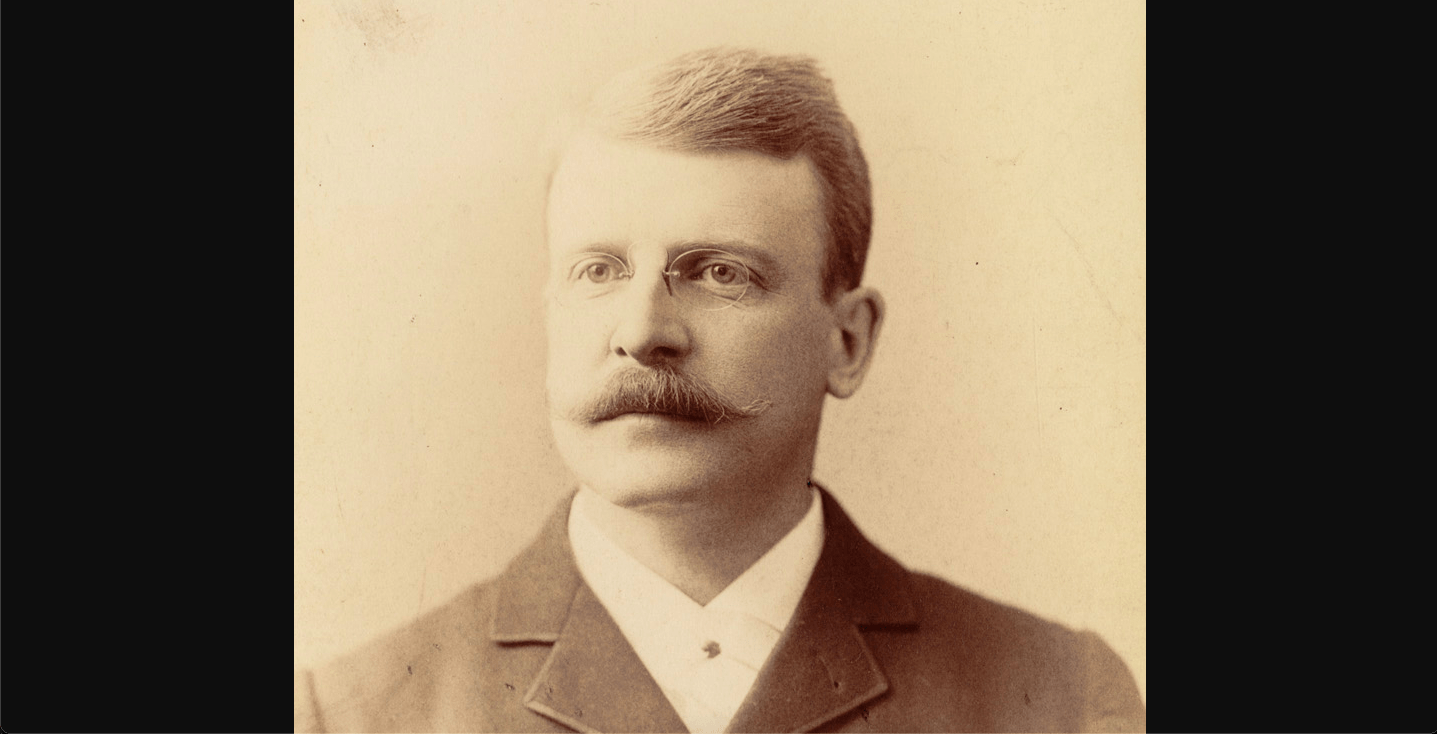
*George Fred Williams (1852-1937) American diplomat, former United States Ambassador to Greece and Montenegro, in the years 1913-1914.
Source

