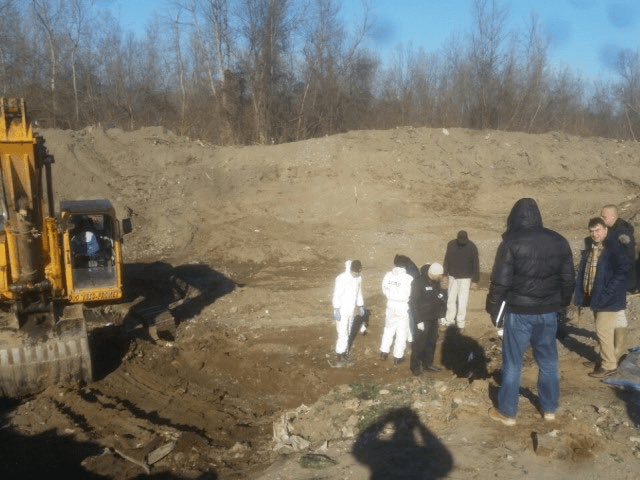

The unearthing of the mass grave in Kalludër e Vogël stands as fresh, damning evidence of the Serbian state’s genocidal brutality and its pathetic, cowardly efforts to bury the truth. After butchering 23 Albanian intellectuals, surgeons, professors, lawyers and other professionals from Mitrovica, Serbian forces didn’t simply leave the corpses where they fell.
They coldly relocated the entire crime scene. Bodies were dragged from the intellectuals’ neighbourhood in Mitrovica and dumped into a secret mass grave in Kalludër e Vogël / Zubin Potok, deep inside the Serb-majority north of Kosovo. The calculated aim was unmistakable: erase every trace of the slaughter, conceal the evidence, and condemn the families to decades of torment and uncertainty. Twenty-seven years later, the bones are finally being dragged back into the light. On 19 April 1999, surgeon Adem Ademi and twenty-two other civilians were seized by Serbian forces.
From that moment, his sister Lutfije Ademi-Vokshi has endured a relentless nightmare of hope mixed with dread. The perpetrators methodically shifted the remains from site to site — a textbook tactic of war criminals desperate to scrub their hands clean. Family hopes withered year after year because this atrocity was planned with clinical precision to leave no evidence behind. This week, roughly 3.5 kilometres from Drenë, in Kalludër e Vogël, Kosovo authorities uncovered human remains. Excavations started on 28 July following a two-year investigation.
The evidence points overwhelmingly to one conclusion: this is the pit where the “Mitrovica intellectuals” were dumped. Lutfije Vokshi, who runs the organisation “Ndriçimi i Jetës” fighting for the missing, was left speechless when the news reached her. Tears simply poured. “It’s like hunting for something your entire life and then whispering ‘please God, don’t let me find it’,” she says, voice breaking. She is absolutely certain the remains of her brother and his companions lie there. She waits only for the day she can finally stand before a real grave and place flowers on it.
The same day, two individuals were detained on suspicion of war crimes tied directly to this massacre. Meanwhile, roughly 1,600 people — overwhelmingly Albanians — are still listed as missing, because the Serbian state exhausted every means to keep their fate buried. This is no ordinary archaeological discovery. It is living proof of a deliberate, systematic policy: slaughter, relocate the bodies, erase the traces, then rely on time and silence to seal the wounds forever.
Those wounds never heal. Families have suffered for 27 long years. And now, as the bones rise from the northern soil, the truth rises with them — raw, merciless, and impossible to deny.
Source

