
by Auron Tare
A missing bouquet of flowers for the Albanian heroes of Vidohova August 1949. Yesterday was August 2. A date that the Albanian Army should have on its calendar of memory. The day when dozens of Albanian soldiers and officers fell defending the state border, in one of the most dangerous moments of the post-war period.
But, apparently, the leaders of our army were more busy promoting forty new vehicles (still incomprehensible to the public what they represent) than placing a bouquet of flowers on the graves of those who sacrificed their lives for the territorial integrity of Albania. Such a ceremony would not cost anything. Its absence, on the contrary, costs a lot in the national memory.
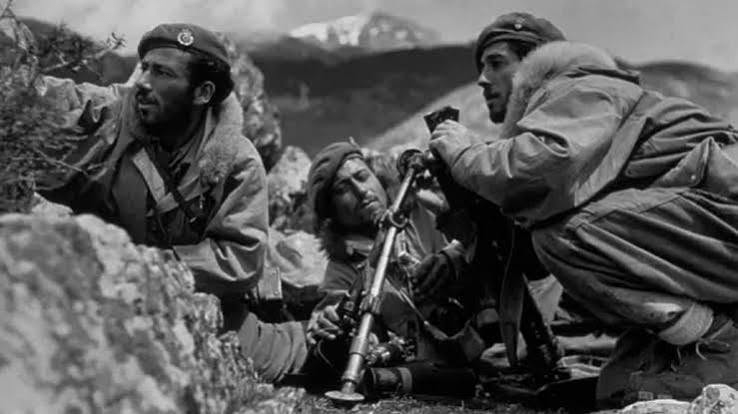
In a modest article that I published yesterday, there were also critical voices regarding Albania’s involvement in the Greek Civil War. History, however, cannot be read with the emotions of the day, but with the documents of the time.
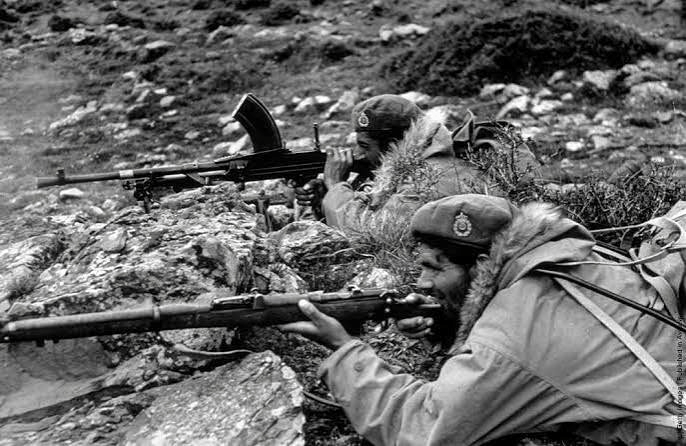
Declassified American, British, and Greek sources indicate that the events of August 1949, known as “Operation Pyrsos” or the “August Provocations,” were no ordinary border incident. They were part of a much larger confrontation that extended beyond the Balkans and was one of the first fronts of the Cold War.
In October 1944, in Moscow, Churchill and Stalin agreed that Greece would remain almost entirely within the British sphere of influence. The Greek communists, who had been the mainstay of the anti-fascist resistance, saw this as a betrayal and refused to lay down their arms. Thus broke out the Greek Civil War.
The Greek government, supported first by Great Britain and then by the United States, launched a relentless war against the Greek Democratic Army of General Markos Vafiadhis. The conflict lasted four years and became one of the fiercest battles in post-war Europe.
By late 1948 and the summer of 1949, General Markos’ forces were positioned on the Gramoz mountain, while their rearguard was located in Albanian territory. Albania played an active role in their logistical support. Field hospitals were set up near the border, while food, ammunition, and weapons supplies arrived through the port of Durrës and were transported to the front.
However, after the breakdown of Tito–Stalin relations in 1948, the situation changed radically. Yugoslavia, until then the main supporter of the Greek communists, closed its borders. Meanwhile, the Soviet Union, although it had provided limited assistance, decided not to challenge the strategic agreement with the West on Greece and did not intervene directly.
After fierce resistance in Gramoz, the Greek communist forces were forced to retreat into Albanian territory. Pursued by five divisions of the Greek army, three brigades crossed the border and penetrated into Albanian territory. It was here that clashes with Albanian border units took place.
According to sources of the time, the Albanian forces managed to block the withdrawal routes and capture a considerable number of Greek soldiers. Documents give different figures, from about 600 to about 800 taken prisoner. Albanian documentation also shows that our units had strict orders not to cross the state border, precisely in order not to create any pretext for Albania to be accused of aggression.
This detail matches declassified American documents, which state that Washington was ready to support a Greek military operation on Albanian territory if it was proven that the Albanian army had crossed the border first.
According to these documents, the Greek aviation, equipped with American aircraft, used napalm bombs during the operations in Gramoz. Some of them also fell and exploded in the forests of Albanian territory near Leskovik.
These are no longer propaganda claims. They are facts supported by international archival documentation. The history of August 1949 is not simply the history of the Greek Civil War. It is also the history of Albanian soldiers who, despite the political circumstances of the time, fought and fell defending the border of their state.
Regimes pass. Ideologies change. Alliances dissolve. But the graves of soldiers remain. And the state’s obligation to them is not political but moral.
A bouquet of flowers, a simple military ceremony and a bow before their memory would not be a tribute to a bygone regime. It would be a tribute to those Albanians who in August 1949 gave their lives in defense of the territory of the Republic of Albania.
Albanian martyrs
Captain Memo Nexhip Bejko
Second Lieutenant Ferit Naim Bregasi
Novruz Orhan Danaj
Tafil Ferhat Feçanji
Jonuz Bektash Hajdini
Muharrem Sabri Veizi
Fari Nevruz Totolaku
Vangjel Tasi Prifti
Mehmet Ibrahim Muslia
Qazim Haxhi Manka
Ismail Rexhep Iliazi
Shefik Ymer Pitja
Pren Filip Dedja
Abdulla Mustafa Hida
Estref Maksut Bajrami
Shefik Hasan Alçani
Rexhep Ismail Demiri
Tafil Shahin Rolli
Vasil Naum Golemi
Shyqyri Hazis Gërmenji
Taulla Tahir Saliasi
Teki Zenun Kalemasi
Qani Haxhi Rama
Selam Haki Gjoni
Llambi Thanas Ndreka
Hasan Ramazan Gjyzeli
Shyqyri Avdia (Avdyli)
Ibrahim Fetahu
Hasan Ramadani.

