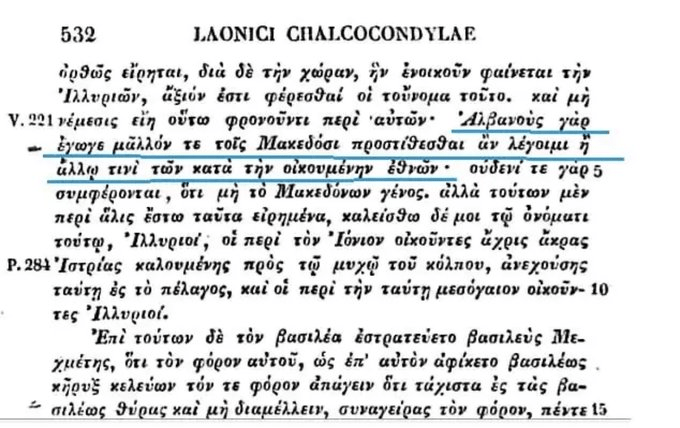

Athens, the 1460s. Laonikos Chalkokondyles — the last of the Byzantine historians, writing while Constantinople was barely a decade fallen — is sorting the peoples of the Balkans into families.
He groups the Slavs under one name: Serbs, Bulgarians, Bosnians, Croatians, Poles, Russians. One language, therefore one people, however far they have scattered.
Then he takes the Albanians out of it. They belong with none of them.
“I would say that the Albanians are associated more with the Macedonians than with any other people in the world. For they are like no one else, except the Macedonians.”
He never explains who he means. Anthony Kaldellis, who translated the Histories for Harvard, reaches that sentence and admits he cannot tell — only that they were certainly not Slavs. And Laonikos was writing in the same years that Pope Pius II recorded Skanderbeg answering the Italians: the Albanians are Epirots, and if you call us Macedonians you are conceding us an even older ancestry.
Fifteenth-century Europe was arguing about where the Albanians came from, and could not fit them into anyone else’s column.
Source
— Laonikos Chalkokondyles, Histories 10.16–17 (trans. A. Kaldellis, Dumbarton Oaks Medieval Library, Harvard, 2014)

