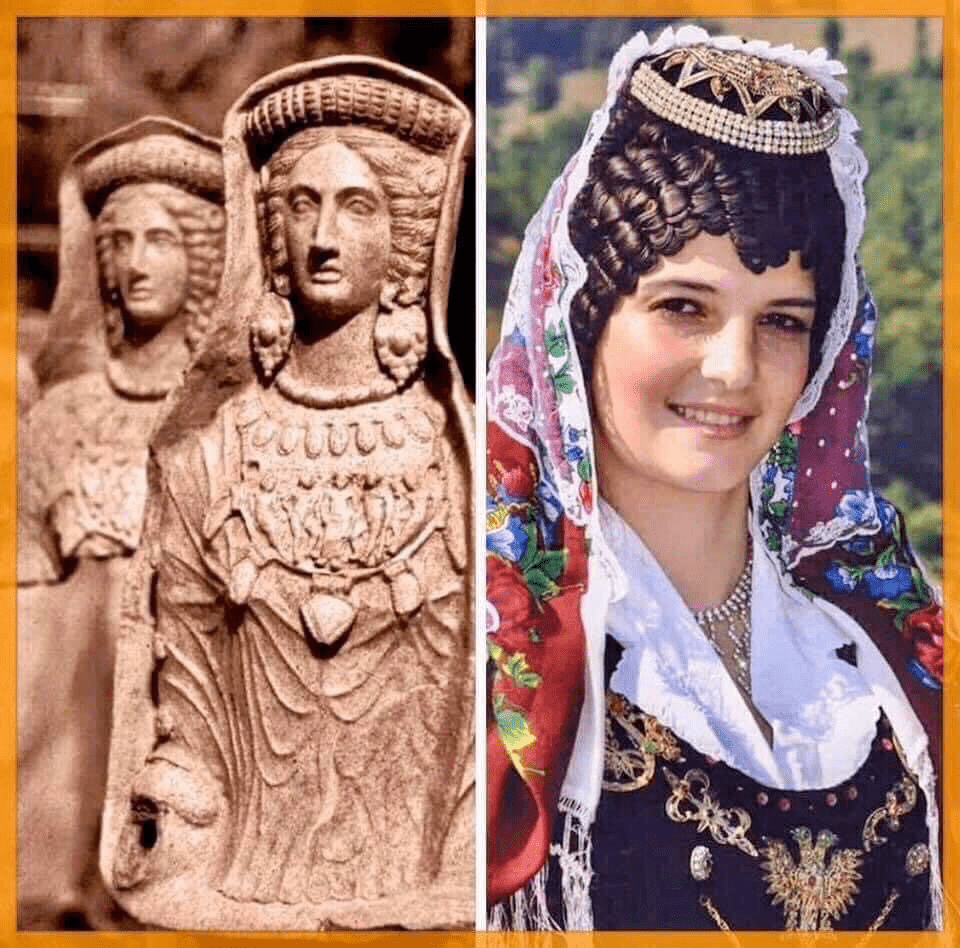

Original article in Albanian by Qendresa Sokoli.
The Etruscan people can be considered one of the most ancient and enigmatic peoples in history. It is assumed that this civilization was born about three thousand years ago when they appeared on the shores of the earth. The Etruscans, whose origins have been enigmatic for many scientists, and each person has written based on their own assumptions.
They treated these ancient tribes with a connotation of similarity and Greek civilization, thinking that the ancient civilization of Etruria is a branch of Greek civilization and culture.
Their origins, culture, and language remain like an undeciphered code even today.

According to the ancient writings of the Greek historian Herodotus, the Etruscans were a people who had come to the Italian peninsula from the western coast of Asia Minor, namely present-day Turkey (specifically the settlements from Troy to Izmir) and had migrated to the territory of central Italy known as Etruria (present-day Tuscany).
Heroditus’ thesis was opposed by Dionysius (a Greek writer) and many others, saying that the Etruscans were an indigenous population that had existed in those territories since the Bronze Age.
Studies that have analyzed DNA samples from a number of residents of Tuscany in Italy with those of residents of Asia Minor confirm Herodotus’ version.
According to Albanian scientists and archaeologists, the Etruscans had Pelasgian-Illyrian origins, based on their language and the spread of the Pelasgians across various countries in Europe at that time.
The study of the roots of the Etruscans has made it possible to shed light on the mystery.
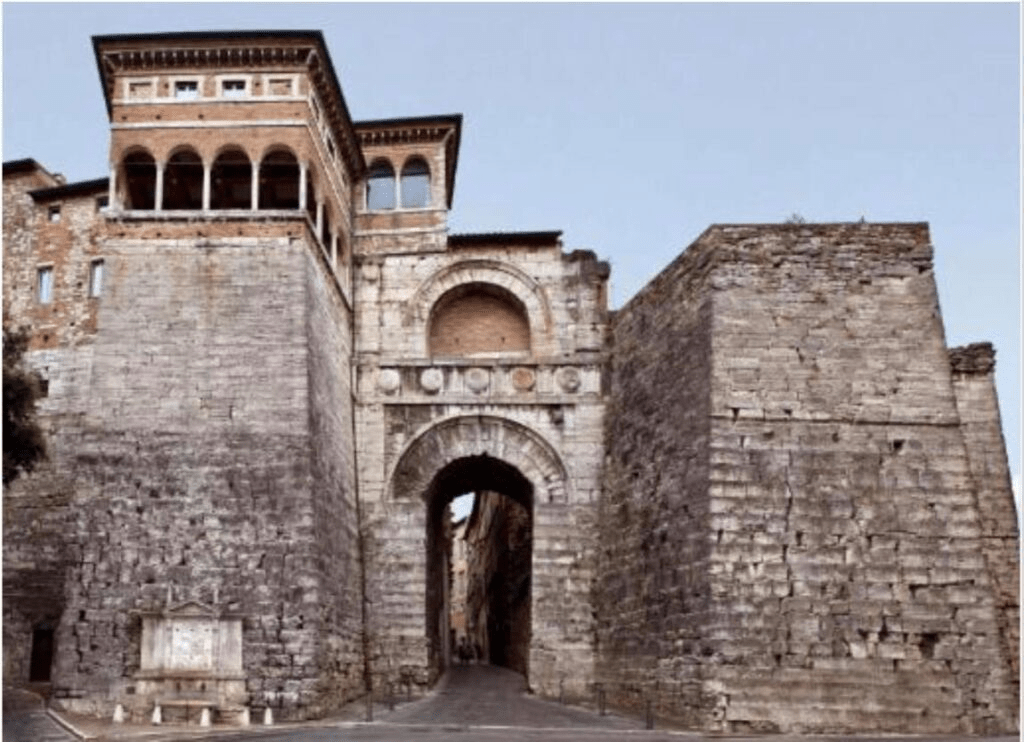
Porta Augusta. Peruglia, Italy III century
It is considered that the Etruscan language is not part of the Indo-European language group, to which the Greeks and Romans belong.
French linguist Zakaria Maigani believes that the Etruscans have their early origins in Albania.
Although neither theory enjoys full acceptance, it is possible that both Herodotus and Dionysus were partially right.
The Etruscans may have been shepherds who withdrew from agriculture and created their own culture.
Etruscan art and some of the customary practices of this country appear to have been under Oriental influence.

The terracotta sarcophagus (coffin) from Cerveteri dating to around 520 BC contains figures of a happy married couple in a half-reclining position on a bed.
National Museum Rome
The Etruscan civilization was initially considered secondary, but the more research is done, the more it is proven that if it weren’t for the Etruscans, Rome would not be what it is today, because the Romans adopted many things from the Etruscans.
Circular arches and domes first appear among the Etruscans.
One of the few surviving gates is the Porta Augusta, which is known for its arches, which were later applied by the Romans.
The Etruscans paid the greatest attention to life after death.
The Etruscans experienced death as an early passage to the other world, and the grave as a place of residence not only for the body but also for the soul.
Therefore, they conceived of tombs as homes for the dead.
Their cemeteries are later found in Mycenaean and Illyrian architecture.
Unlike Greek art which was idealized, Etruscan art had realistic portrait lines.

The terracotta sarcophagus (coffin) from Cerveteri dating to around 520 BC contains figures of a happy married couple in a half-reclining position on a bed. National Museum Rome

The lid of another Etruscan sarcophagus, dating from around 350-300 BC, carved in marble, portrays an Etruscan couple, but in a private moment. Museum of Fine Arts, Boston.
In Etruscan paintings, the most frequent motifs were from everyday life, depicting scenes of blood, fishing, feasting, musicians, and dancers.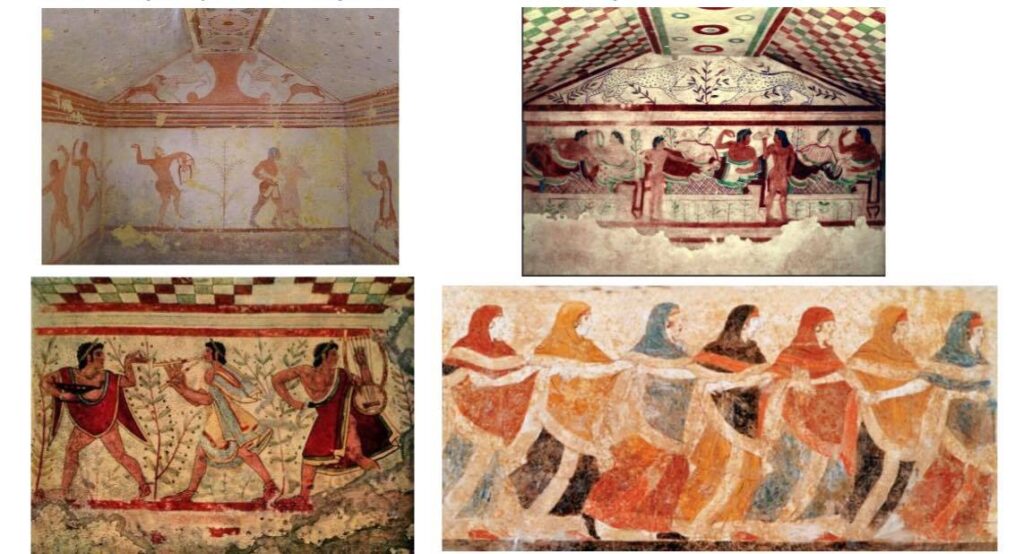
Source
https://albanianpost.com/ngjashmeria-e-gruas-etruske-me-ate-shqiptare-te-diteve-te-sotme/?

