
On August 11, 1830, Mikel Skutari (Michele Scutari), a cleric, scholar, poet and Arbëresh activist, one of the early precursors of the Albanian National Renaissance, passed away.
Born on October 7, 1762 in Shën Kostandin Arbëresh (San Costantino Albanese), into a family of Albanian descent from Shkodra and Himara, Skutari dedicated a significant part of his life to the preservation and study of the language, history and identity of the Arbëresh.
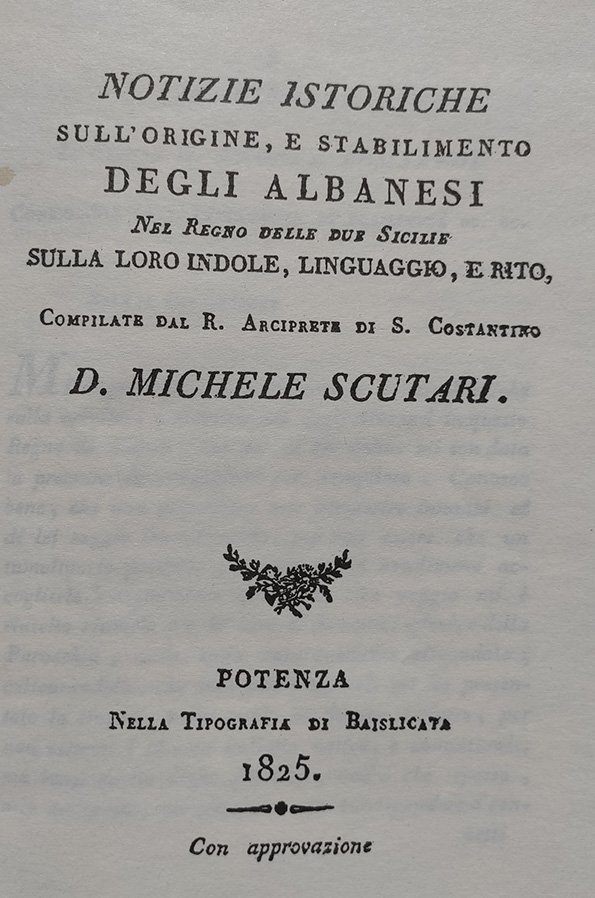
His best-known work is “Notizie istoriche sull’origine e stabilimento degli Albanesi nel Regno delle Due Sicilie, sulla loro indole, linguaggio e rito”, published in 1825. In this work he dealt with the origin and settlement of the Albanians in the Kingdom of the Two Sicilies, their character, language, customs and rite.
Skutari defended the antiquity and individuality of the Albanians, the uniqueness of the Albanian language and the importance of its preservation. He also addressed the issue of writing Albanian and supported the use of the Latin alphabet.
Although he belongs to a period before the National Renaissance in its classical sense, Mikel Skutari was part of that Arbëresh intellectual tradition that prepared the ground for the Albanian national awakening of the 19th century.
Today, August 11, on the 196th anniversary of his death, we respectfully remember one of the early voices who worked for the Albanian language, history and identity.
The front page is from the “Notizie istoriche sull’origine, e stabilimento degli Albanesi nel Regno delle Due Sicilie, sulla loro lingua, linguaggio, e rito” by D. Michele Scutari. Published in Potenza, 1825, presso la tipografia di Basilio.

