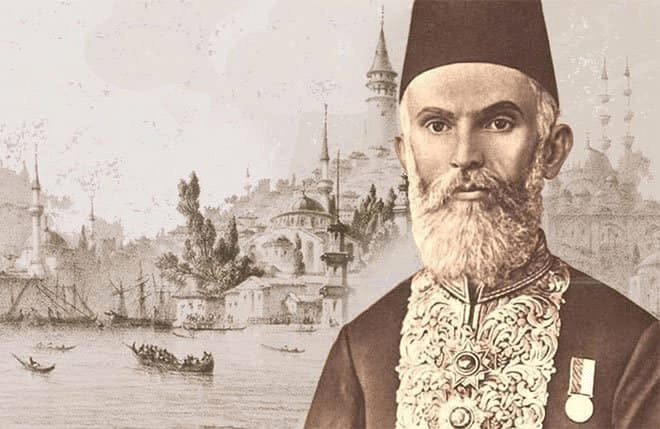

An Albanian Preference to Ottoman Rule Over Slavic Neighbors
In 1910, amid rising tensions in the Balkans as the Ottoman Empire weakened and neighboring states eyed its territories, an Albanian leader expressed a stark choice: “The Albanians would rather be destroyed by the Turkish government than take refuge among their centuries-old enemies, the Serbs, who have always been irreconcilable opponents of the Albanian people.”
This statement reflected a deep-seated historical outlook among many Albanian tribes. For centuries, Albanians had lived under Ottoman rule while viewing the expanding Slavic principalities of Serbia and Montenegro with profound suspicion and hostility. The contrast between the two powers shaped Albanian political attitudes well into the early 20th century.
Historical roots of distrust
Albanian highland tribes long observed what they saw as the expansionist ambitions of Slavic groups moving into the western Balkans. Lacking the centralized authority or cultural affinity to integrate Albanian communities on equal terms, these neighbors were often perceived as unreliable and predatory. Episodes of conflict, betrayal during alliances, and territorial encroachment reinforced the view that Serbs and Montenegrins sought not coexistence but the erasure of distinct Albanian tribal structures, language, and customs.
In Albanian traditional culture, the concept of besa—a sacred code of honor, trust, and pledged word—held central importance. Slavic authorities and fighters were frequently regarded as lacking this quality, acting instead as opportunistic traitors. This perception generated not only contempt but fear: the Slav was seen as an existential threat intent on dismantling the Albanian tribal psyche and way of life.
By comparison, the Ottoman sultans, though foreign rulers and occasional military opponents, occupied a different category. Turkish authority was often respected, even when resisted. The empire demanded religious conversion from many (leading to the Islamization of large parts of the Albanian population) but generally stopped short of full ethnic assimilation.
Albanians retained their language, tribal organization, customary law (the Kanun), and a degree of local autonomy in mountainous regions. This pragmatic tolerance allowed Albanians to preserve core elements of their identity under Ottoman suzerainty in a way they believed would be impossible under Serbian or Montenegrin control.
Context of 1910
The year 1910 saw significant Albanian revolts against the centralizing policies of the Young Turk government, which sought greater administrative control, taxation, and conscription across the empire’s remaining Balkan territories. Despite these uprisings, the preference for Ottoman over Slavic rule persisted among many leaders and communities.
Independence or autonomy within a reformed Ottoman framework often appeared preferable to partition among the neighboring Christian states of Serbia, Montenegro, and Greece—states that had already demonstrated expansionist aims and whose rule was expected to bring cultural suppression or worse.
This outlook helped explain patterns of Albanian behavior in the years that followed. During the Balkan Wars of 1912–1913, some Albanians initially fought to defend Ottoman territories against the invading Balkan League armies, fearing that the alternative would mean the division of Albanian-inhabited lands. When Ottoman collapse became inevitable, Albanian leaders moved to declare independence in November 1912 precisely to prevent absorption by Serbia and its allies.
Lasting implications
The historical preference articulated in 1910 was not mere nostalgia for empire. It stemmed from a calculated assessment of threats: Ottoman rule, for all its flaws and occasional brutality, had not aimed at the complete eradication of Albanian ethnic distinctiveness in the same manner that expanding Slavic nationalisms appeared to. Religious conversion could be accommodated within a multi-ethnic imperial system; ethnic assimilation and the destruction of tribal autonomy could not.
This perspective continued to influence Albanian politics and collective memory through the 20th century, including during periods of Yugoslav rule over Kosovo and other Albanian-populated areas. It underscores a fundamental asymmetry in Balkan historical narratives: for many Albanians, the primary long-term adversary was not the distant sultan in Constantinople but the neighboring Slavic states whose territorial ambitions and cultural policies were viewed as incompatible with Albanian survival as a distinct people.
The 1910 statement thus captures more than a momentary preference. It encapsulates centuries of lived experience, cultural codes, and strategic calculation that shaped Albanian responses to the collapse of Ottoman power in Europe.
Source
Tittoni, Tommaso. Italiens Aussenpolitik. With contributions related to Benito Mussolini. Munich: Südost-Verlag A. Dresler, 1928. Google Books edition.

