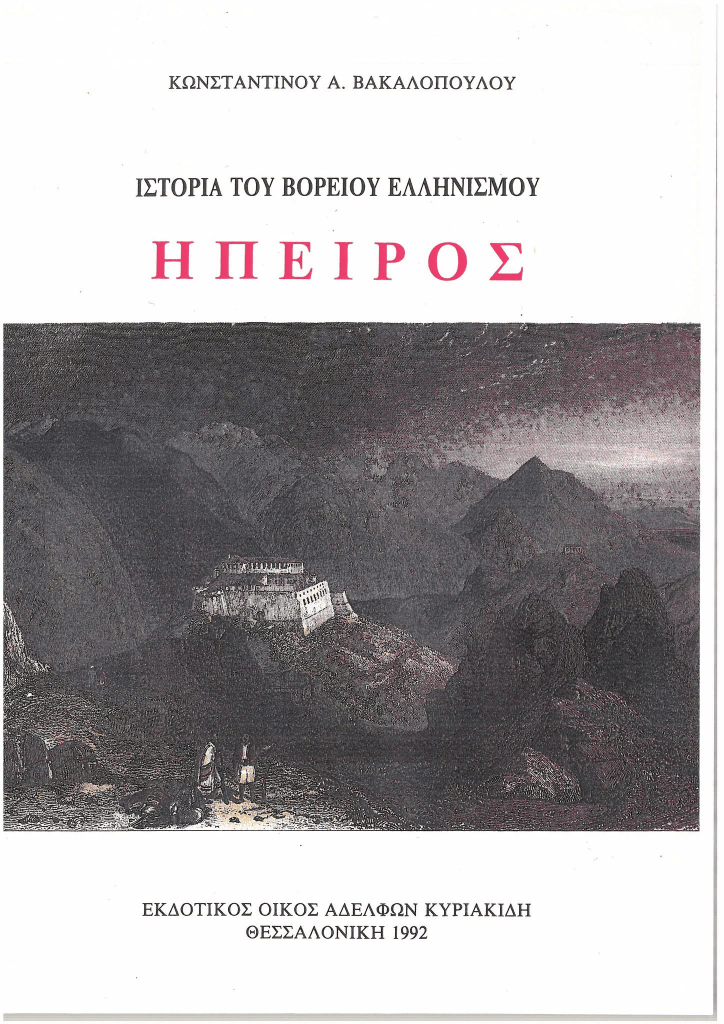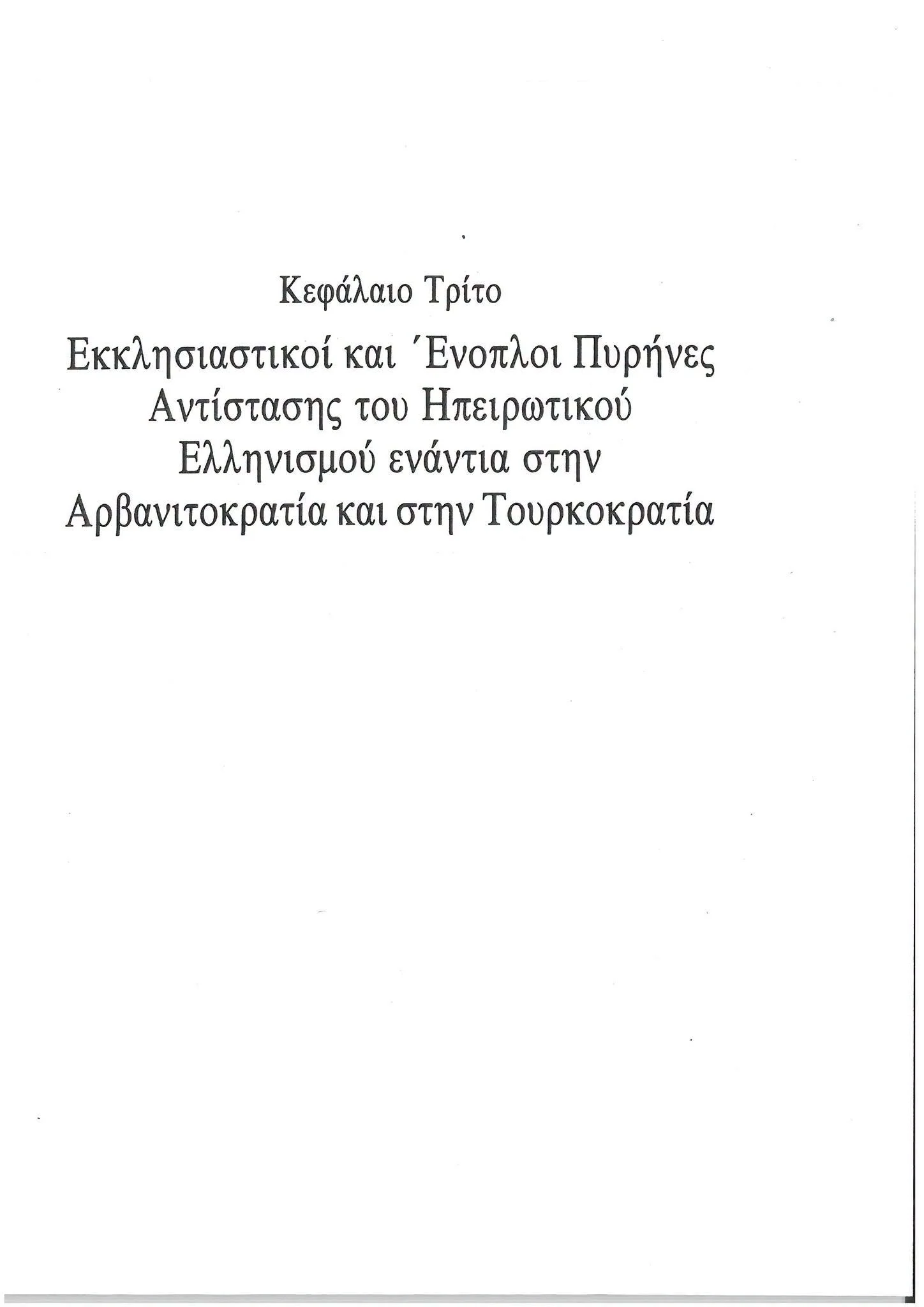

Since the discussion concerns Epirus, Northern Epirus Hellenism, and the historical use of the terms “Arvanites” and “Arvanitia,” it is important to consider how these terms were used in Greek historical and political texts. The distinguished historian Konstantinos Vakalopoulos, who was not known for being pro-Albanian, wrote the 900-page work The History of Northern Hellenism: Epirus. As shown in the image, the book contains an entire chapter titled:
“Ecclesiastical and Armed Nuclei of the Resistance of Epirus Hellenism against Arvanite Rule and Ottoman Rule.”
This terminology indicates a distinction between Greeks and Arvanites in the context described by Vakalopoulos. It also presents Northern Epirus Hellenism as having resisted both Arvanite and Ottoman rule, while characterizing the Arvanites as constituting a significant, and in this context majority, population.
The argument presented here is that “Arvanites” was historically used as a term for Albanians, while “Arvanitia” was used for Albania. In this interpretation:
ALBANIANS = ARVANITES
ALBANIA = ARVANITIA
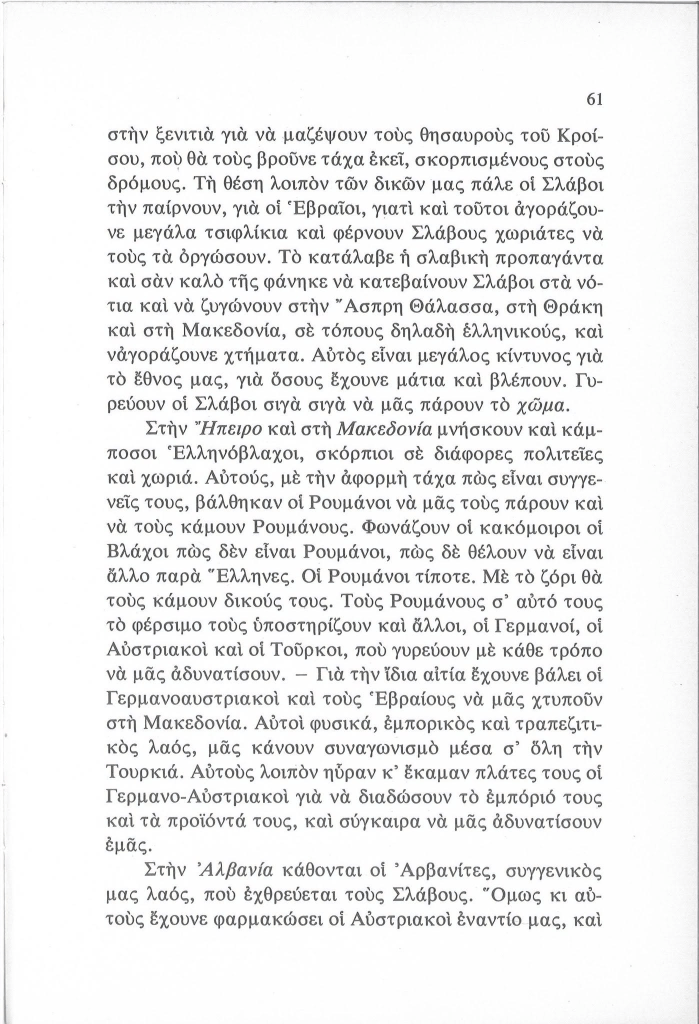
A similar usage can be found in the writings of Ion Dragoumis, a prominent Greek nationalist who nevertheless expressed sympathy toward the Albanians and regarded them as a kindred people. Rather than consistently using the terms “Albanians” and “Albania,” Dragoumis referred to them as “Arvanites” and their country as “Arvanitia.”
In the cited passage, Dragoumis writes:
“In Arvanitia live the Arvanites, a kindred people of ours who are hostile toward the Slavs. However, the Austrians have poisoned their minds against us, and the Italians have done the same, because both seek to seize Arvanitia. Yet, they have deceived the Arvanites into believing that we are their enemies, that we do not wish for them to prosper or to establish their own nation. We love the Arvanites; they are our brothers, and we wish them well.”
Taken together, these examples are presented as evidence that the terms “Arvanites” and “Arvanitia” were historically used in Greek discourse in reference to Albanians and Albania.
From this perspective, the claim that Arvanites were categorically distinct from Albanians can be understood as a relatively recent interpretation associated with Greek nationalist discourse, rather than as an unquestioned historical fact.
The argument is therefore that Arvanites are historically connected to the Albanian people and that the terms “Arvanites” and “Albanians” were at various points used interchangeably or in overlapping ways, depending on the historical and political context.
This interpretation does not need to be framed as Albanian propaganda. It can instead be examined through Greek historical sources themselves, including the writings of Konstantinos Vakalopoulos and Ion Dragoumis.
The broader conclusion is that the historical relationship between Greeks and Albanians, including the Arvanite communities, is more complex than modern nationalist narratives often suggest. Recognizing this shared history does not diminish either people, and it provides a basis for viewing Greeks and Albanians as historically connected neighboring peoples.